


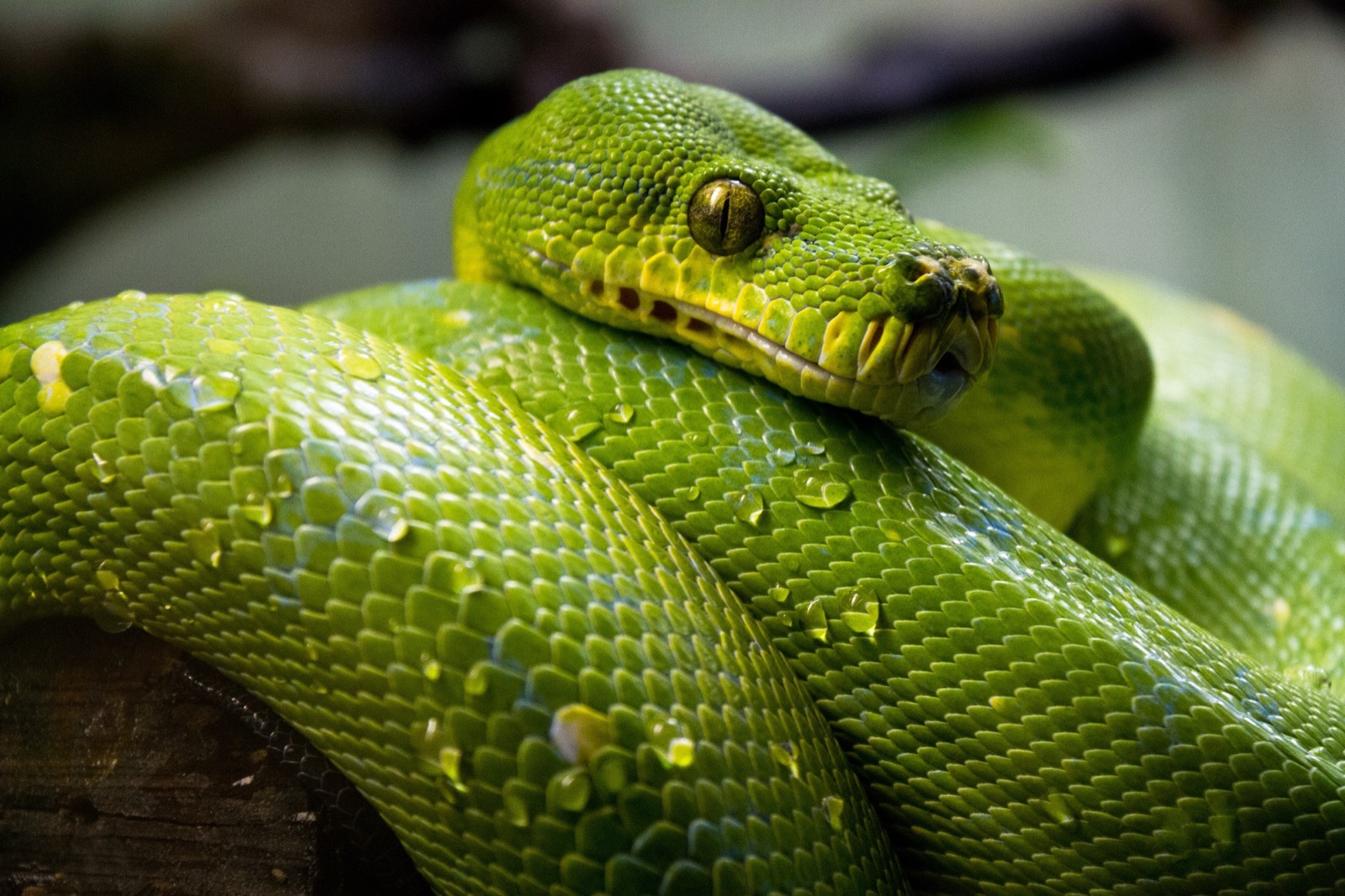
The sight of a snake effortlessly ascending a tree trunk or even a rough wall can be quite startling for many, who typically envision these legless reptiles as strictly ground-dwelling creatures. However, despite their lack of limbs, snakes are incredibly accomplished climbers, thanks to a suite of unique anatomical and physiological adaptations. Their ability to move vertically is not due to sticky pads or suction cups, as is sometimes mistakenly believed, but rather a sophisticated and powerful use of their entire body.
At the heart of a snake's climbing prowess are its specialized ventral, or belly, scales. These broad, overlapping scales are distinct from the smaller, often keeled dorsal scales and play a crucial role in providing traction. A snake can subtly angle these scales, lifting their posterior edges to catch on even minute irregularities in a surface. This creates friction and allows the snake to 'hook' itself into the texture of a tree bark, a rough stone wall, or even a chain-link fence, preventing it from slipping downwards.
Complementing the scales is the snake's formidable musculature. A snake's body is comprised of hundreds of vertebrae, far more than most other animals, with each segment connected by numerous powerful muscles. These muscles allow for incredible flexibility and strength, enabling the snake to contract and expand its body with precision. When climbing, these muscles work in coordinated waves, generating the force needed to push the body upwards or pull it along a surface, effectively overcoming gravity with sheer strength and control.
Snakes employ several distinct gaits for climbing, depending on the surface. For vertical surfaces like tree trunks or rough walls, they often use a method called 'concertina' locomotion. In this technique, the snake bunches up a section of its body to create an anchor point, then extends the front portion upwards, finds a new grip, and subsequently pulls the rear portion of its body to meet the front. On branches, they might use a powerful wrapping or coiling action, using their entire body as a prehensile grip, similar to how they constrict prey, to secure themselves firmly.
While snakes can conquer many textured surfaces, exceptionally smooth surfaces like polished glass or perfectly smooth, vertical plastic present a significant challenge. Without microscopic imperfections for their ventral scales to grip, most snakes cannot climb such surfaces. Any rare instances where a snake appears to climb glass usually involve a subtle texture, a narrow crevice it can wedge into, or a rough edge it can use for leverage. The persistent myth of snakes possessing 'sticky' properties or suction cups is entirely unfounded.
Many arboreal snake species, those that spend the majority of their lives in trees, exhibit even further specialized adaptations for climbing. These can include more slender and lighter bodies for better balance, highly keeled ventral scales that provide enhanced grip on bark, and in some cases, partially or fully prehensile tails. A prehensile tail acts as an additional limb, capable of grasping branches tightly, offering extra stability and support as the snake navigates the complex canopy environment.
Understanding how snakes climb not only highlights their incredible adaptations but also helps us appreciate their presence in various environments, from backyard trees to dense forests. If you encounter a snake climbing, remember to observe it from a safe, respectful distance. For identification purposes, capture a clear photograph without approaching the animal. The SerpentID app can then help you compare its markings against likely local species. If the snake is venomous or in a location where it poses a risk, contact your local wildlife services for safe and professional assistance.