


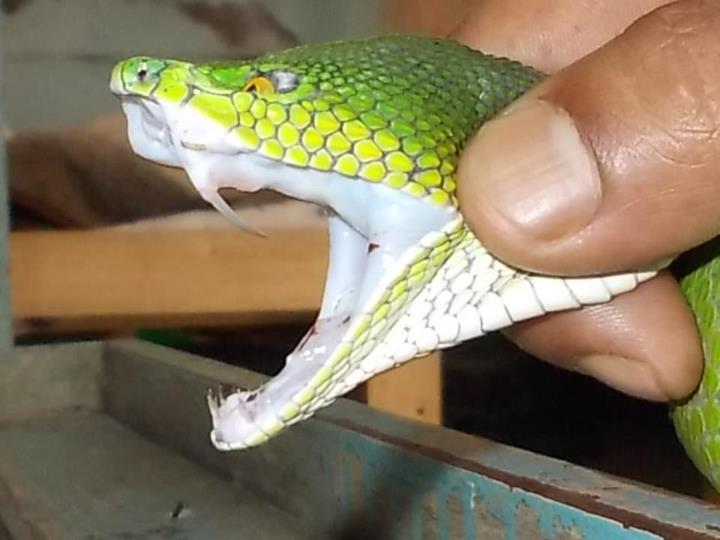
One of the most astonishing sights in the natural world is a snake consuming prey many times wider than its own head. Whether it's a python swallowing a deer or a common garter snake ingesting a large frog, the question often arises: how do they manage to breathe with such a massive obstruction in their throat? Unlike mammals, whose windpipe is fixed and would be easily compressed by a large meal, snakes have evolved a truly remarkable anatomical adaptation that ensures continuous airflow during their prolonged feasting.
The key to this feat lies in the snake's trachea, or windpipe. In most vertebrates, the trachea is a rigid tube that runs down the neck, but in snakes, it possesses extraordinary flexibility and mobility. Instead of being firmly anchored, a snake's trachea is a semi-rigid tube supported by incomplete cartilaginous rings, allowing it to be compressed or stretched without collapsing completely. Crucially, it can also be moved independently of the esophagus, the tube that carries food to the stomach.
When a snake begins to swallow a large meal, its esophagus stretches enormously to accommodate the prey. If the trachea remained in its usual position, it would quickly be blocked, leading to suffocation. To prevent this, the snake performs what is known as a 'tracheal shift.' It can extend its trachea forward, sometimes protruding it out of the side of its mouth, past the bulk of the swallowed prey. This keeps the opening of the windpipe clear and allows the snake to continue drawing breath, even as its head and throat are distended around its meal.
This incredible adaptation is not merely a convenience; it is a vital necessity for survival. The digestion of a large meal can take a considerable amount of time for a snake, often hours or even days, depending on the size of the prey and the ambient temperature. Without the ability to breathe continuously throughout this process, many snakes would simply suffocate before their meal could be fully ingested or moved further down the digestive tract. It is a testament to the evolutionary pressures that have shaped these efficient predators.
The tracheal shift is a common feature across a wide range of snake species, particularly those known for consuming proportionally large prey, such as pythons, boas, and many vipers. While the extent to which the trachea can protrude may vary slightly between species, the fundamental mechanism ensures that respiration is not compromised during the most vulnerable part of their feeding cycle. This allows them to exploit a broader range of prey items and maintain their position as apex predators in their respective ecosystems.
Beyond this fascinating breathing adaptation, snakes possess an array of other physiological marvels that enable their unique predatory lifestyle. Their incredibly flexible jaws, which can disarticulate to allow independent movement of the upper and lower halves, and their highly elastic skin are also crucial for engulfing oversized meals. These combined features underscore the snake's mastery of consuming prey much larger than itself, a strategy that maximizes caloric intake from a single successful hunt.
Understanding these intricate adaptations helps us appreciate the complexity and resilience of snakes. When you encounter a snake, especially one that may have recently eaten, remember to observe it from a respectful and safe distance. If you need to identify a snake in your yard or on a trail, the SerpentID app can help you compare markings against local species. If you suspect a snake is venomous or in distress, contact local wildlife services for assistance, rather than attempting to approach or handle it yourself.