


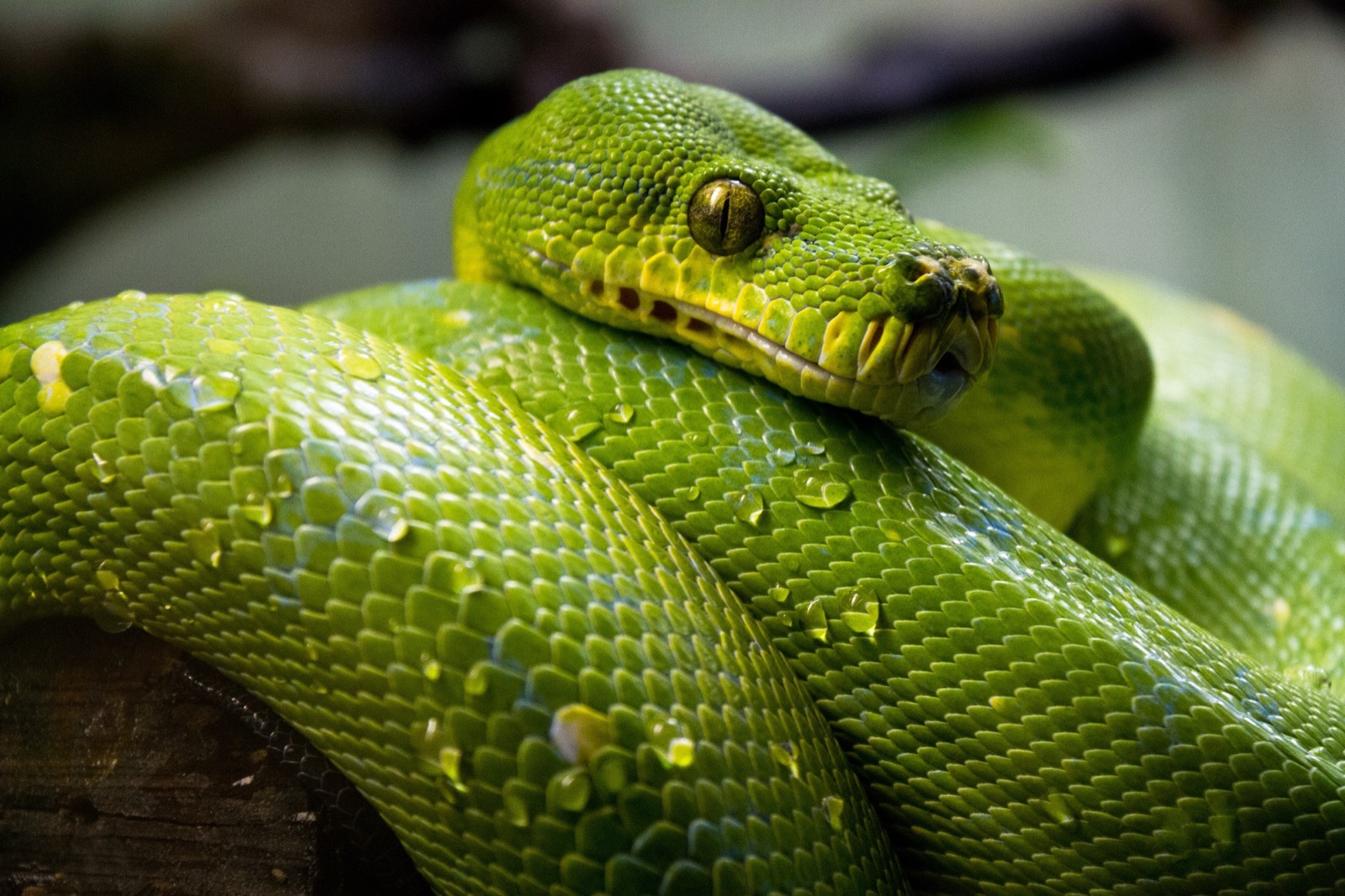
It's a question many people ponder when observing a snake: how do these legless creatures manage to move with such grace and stability, especially when climbing trees, navigating uneven ground, or even striking from a coiled position? The answer lies in a complex interplay of internal sensory systems and incredible muscular control. Snakes are masters of proprioception – the sense of where one's body parts are in space – combined with a highly developed inner ear and tactile feedback from their scales, all working in concert to maintain equilibrium and orientation.
At the core of a snake's balance system is its inner ear, a structure remarkably similar to that found in other vertebrates, including humans. While snakes lack external ear openings and do not perceive airborne sounds in the same way we do, their inner ear contains semicircular canals and otolith organs. These components are vital for the vestibular system, which detects head rotation, linear acceleration, and the pull of gravity. This allows a snake to know its head's position relative to the ground, even in complete darkness, providing a foundational sense of up, down, and movement through space.
Beyond the inner ear, the snake's entire body acts as a sophisticated sensory organ. Their elongated spine, composed of hundreds of vertebrae, is incredibly flexible, allowing for intricate bends and twists. Each segment of this spine, along with the numerous muscles attached to it, contains stretch receptors that constantly send information to the brain about the body's posture and movement. This constant feedback, known as proprioception, allows the snake to make continuous, unconscious adjustments, ensuring that every inch of its body is precisely positioned for optimal balance and locomotion.
Tactile sensation from their scales also plays a critical role in how snakes maintain their footing. The ventral (belly) scales are particularly important, providing a broad contact surface with the ground. As a snake moves, these scales provide continuous information about the texture, angle, and friction of the surface. This sensory input helps the snake determine how much grip it has, allowing it to adjust its muscle contractions and body shape to prevent slipping, whether it's gliding over smooth rock, gripping rough bark, or pushing through loose sand.
Visual cues, though varying in importance depending on the species and its activity patterns, also contribute to a snake's spatial awareness. While many snakes do not possess the sharp, detailed vision of some birds or mammals, their sight is sufficient for detecting movement, changes in light, and general environmental features. This visual input helps them assess distances, identify obstacles, and navigate complex three-dimensional environments, such as intertwining branches in a tree canopy or the varied topography of a forest floor.
The seamless integration of these senses – the vestibular system for head orientation, proprioception for body awareness, and tactile feedback for surface interaction – creates an incredibly robust and adaptable balance system. This allows snakes to perform feats of agility that seem impossible for a limbless creature, from climbing sheer surfaces to striking with pinpoint accuracy from a seemingly unstable coil. It's a testament to the power of evolutionary adaptation, enabling them to thrive in virtually every terrestrial and many aquatic environments.
Understanding how snakes balance offers a deeper appreciation for their unique biology. When you encounter a snake, observing its movements from a safe distance can be fascinating. If you need help identifying a snake you've seen, capture a clear photo from a safe distance and use the SerpentID app. It can help you quickly compare markings against likely local species. If the snake is identified as venomous, or if you are unsure, contact local wildlife services for safe and professional removal without attempting to handle or approach it.