


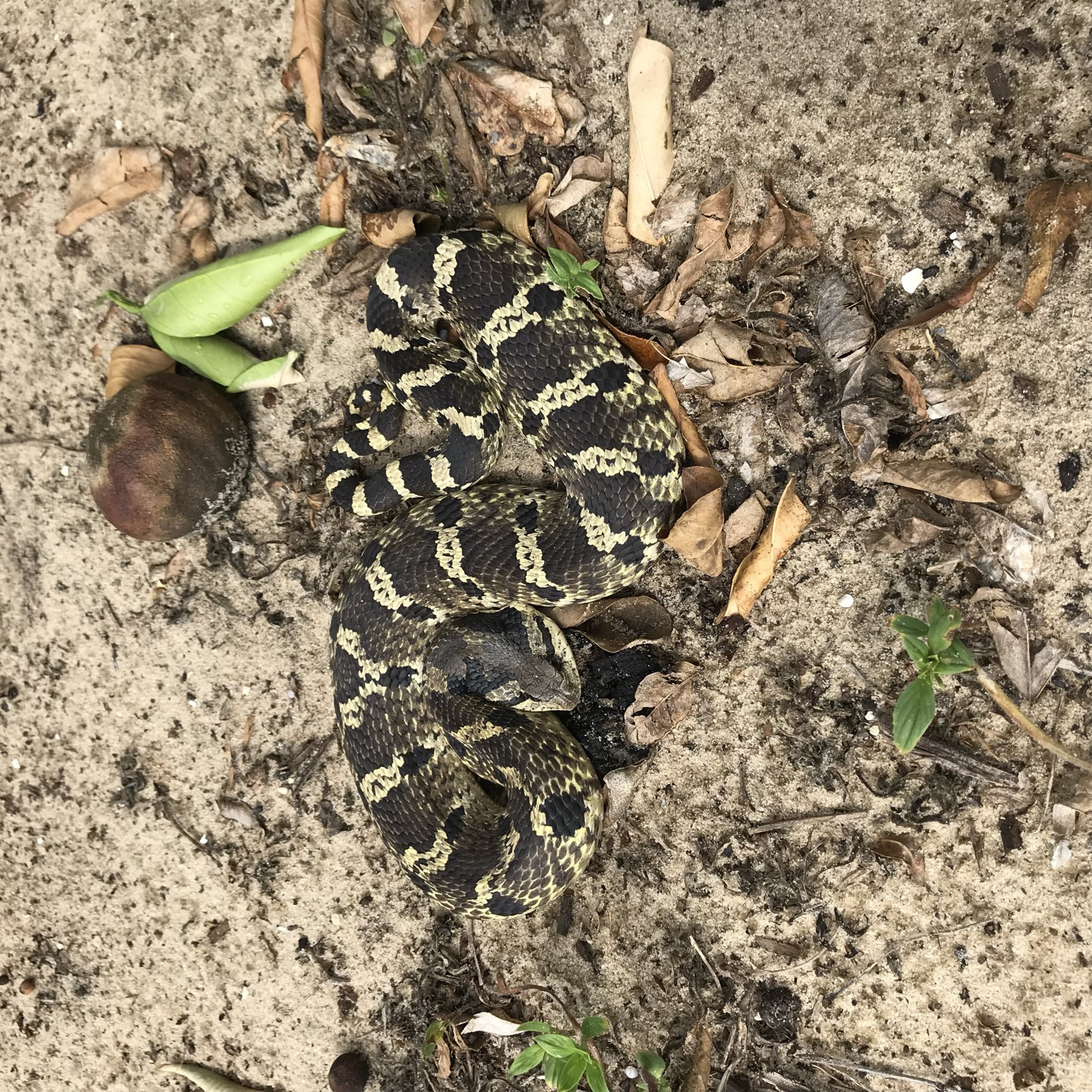
Hognose snake vs copperhead is a strong search topic because eastern hognose snakes put on one of the most convincing defensive performances in North America. They hiss, flatten the neck, and can look far more threatening than a calm field guide photo suggests.
The best separating marker is not attitude. It is structure. Hognose snakes often show an upturned snout and a different facial profile from a copperhead, plus a body pattern that reads more blotchy and irregular instead of the classic copperhead hourglass effect across the whole body.
People also over-trust the triangular-head idea here. Defensive posture can make many harmless snakes widen the neck and throw a shadow that looks viper-like. That is why head shape alone is one of the weakest shortcuts in a stressful encounter.
Habitat overlap adds to the confusion because both species can show up around woodland edges, sandy cover, or suburban margins. If you only see a partial body in leaf litter, false certainty is easy. A safer comparison uses the full body, snout shape, and whether the markings stay consistent from neck to tail.
SerpentID is useful in this exact scenario because it can surface eastern hognose as a realistic option when a person would otherwise default to copperhead. But if the app suggests copperhead or confidence stays low, the field decision remains conservative: give the snake room and avoid trying to move it yourself.