


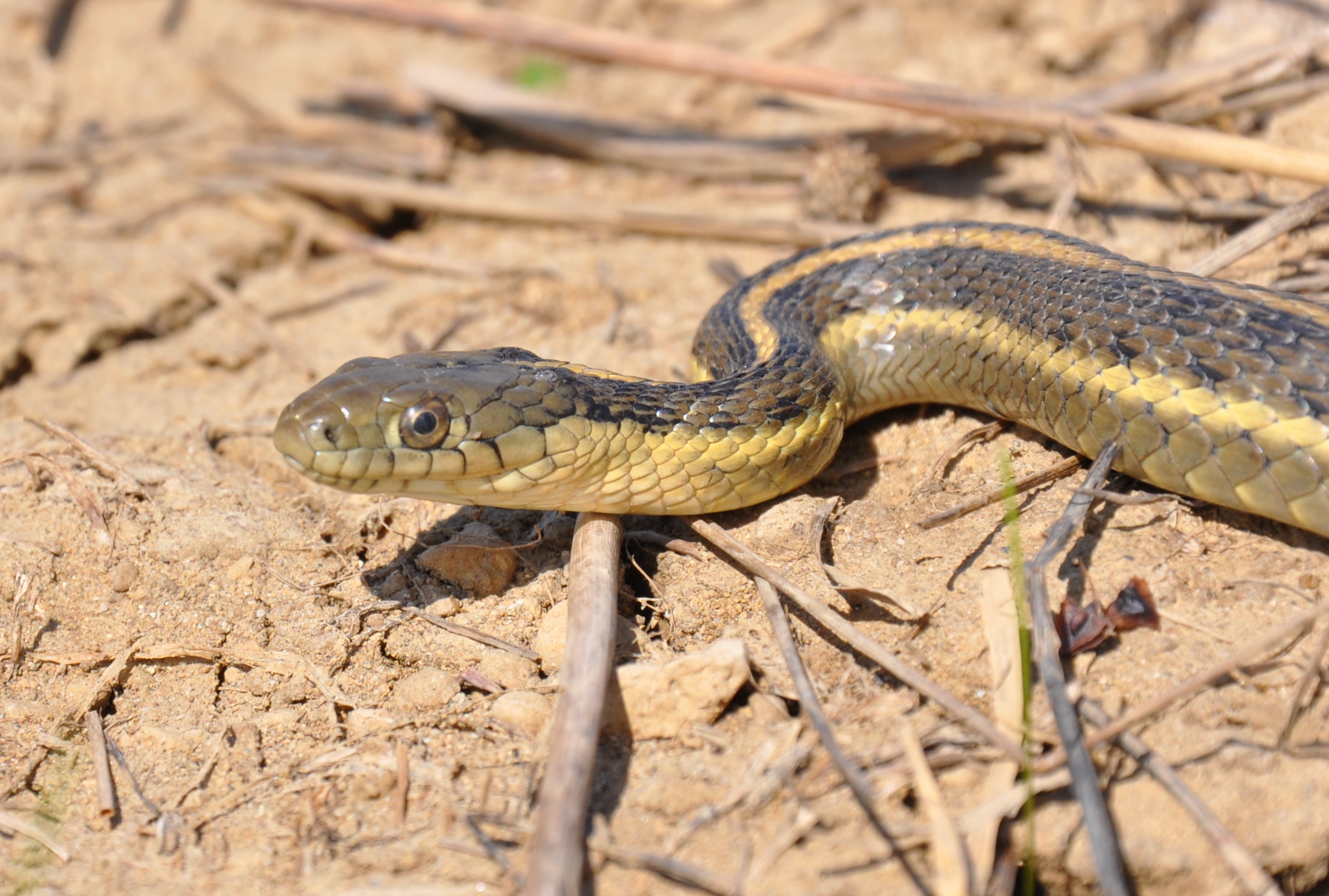
Garter snake vs copperhead is a practical homeowner query because many yard sightings happen fast, under imperfect light, with only a partial view through grass, mulch, or garden edging. Fear compresses the decision into one question: is this a common harmless yard snake or something that changes how the whole area needs to be handled?
The cleanest difference is the pattern logic. Garter snakes usually show longitudinal striping that runs with the length of the body. Copperheads usually show crossbands that cut across the body, creating that familiar hourglass-style rhythm instead of continuous stripes. Even when colors are muted, the direction of the pattern often stays visible.
Body impression helps reinforce the call. Garter snakes often read lighter, slimmer, and more active in motion. Copperheads usually look heavier through the middle with a more compact build. That full-body silhouette is more dependable than trying to judge the head from a single overhead photo.
Scene context matters too. Garter snakes regularly turn up in lawns, irrigation edges, gardens, and mixed suburban cover because they use broad everyday habitat. Copperheads can use yards as well, but the encounter more often feels tied to concealed ambush cover such as deep leaf litter, brush piles, and shaded edge habitat.
SerpentID can quickly reduce this comparison to a more useful shortlist when you capture one safe photo. If the app still returns copperhead as a likely match, treat the scene conservatively anyway. Good identification supports judgment, but the first rule remains space, caution, and no handling.