


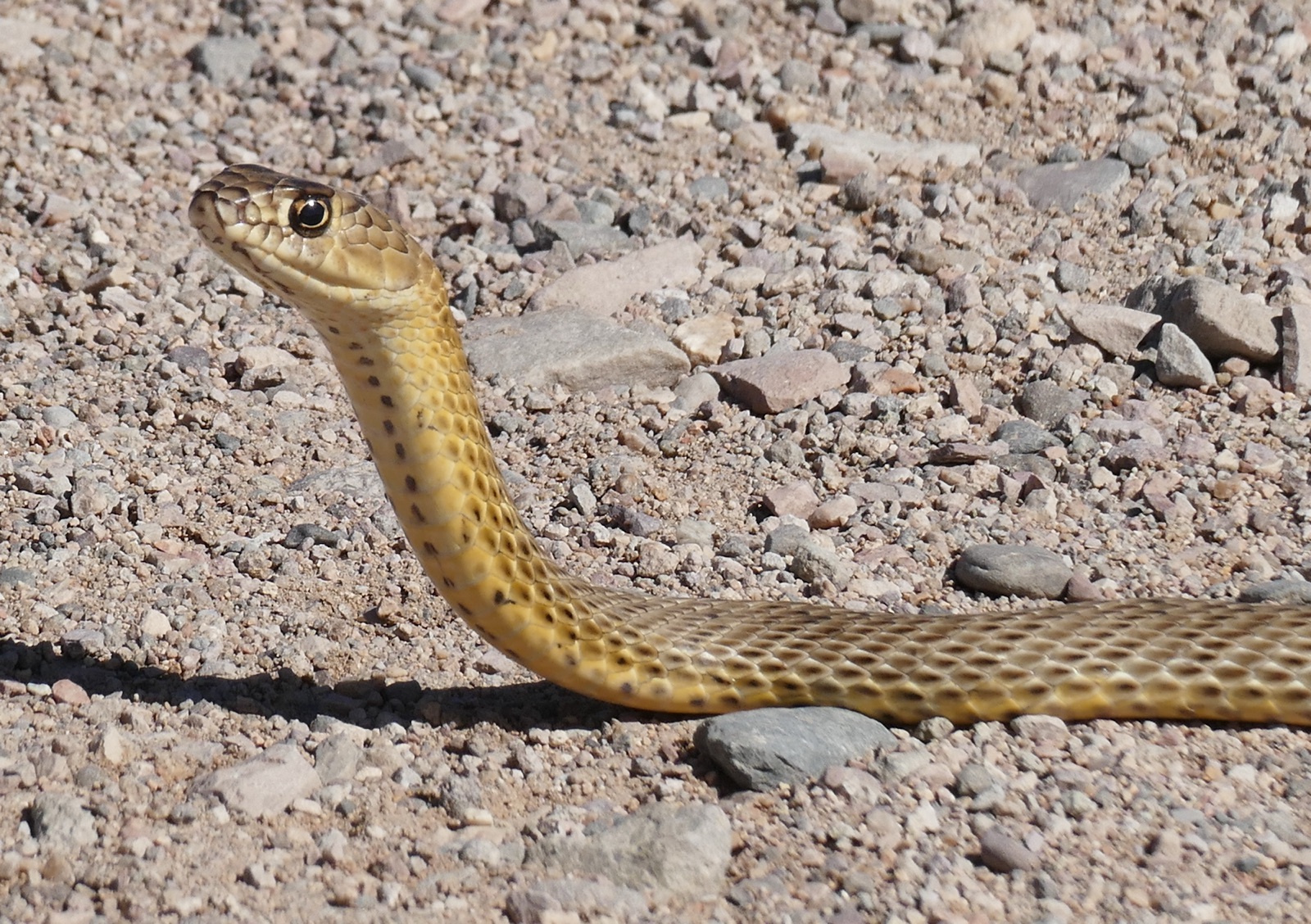
The eastern brown snake (Pseudonaja textilis) is one of the most frequently encountered dangerous snakes in Australia. It lives across much of the eastern half of the continent, from Queensland through New South Wales and Victoria into South Australia, with populations reaching into the Northern Territory. Unlike many venomous snakes that stay in remote bushland, it does well in farmland, grassy paddocks, and the edges of towns and suburbs. That overlap with people is why it accounts for a large share of serious snakebites in Australia, and why learning to recognize it, and its look-alikes, is useful for anyone who lives, works, or walks in its range.
The first thing to understand is that the name is misleading. Eastern brown snakes are often some shade of brown, but adults can be pale fawn, tan, orange-brown, olive, dark chocolate, or nearly black. Most adults have plain upper bodies without strong bands or blotches, although some show faint speckling or light cross-banding. The belly is usually cream to yellowish and is often marked with orange, pink, or darker spots. Adults are commonly around 1.5 metres long and occasionally grow beyond 2 metres. The body is slender, the scales are smooth and can look glossy in good light, and the head is small and only slightly wider than the neck. Color alone is not reliable, because several other Australian snakes, some harmless and some highly dangerous, share these tones.
Juveniles can look quite different from adults, which causes a lot of confusion. Young eastern brown snakes often have a dark or black patch on the head and a dark band across the nape, and some show distinct dark bands along the body. These markings usually fade as the snake grows. A small, banded snake with a dark head in a garden or shed is easy to dismiss as something harmless, but a juvenile brown snake already has functional venom. Size tells you very little about danger, so a small snake deserves the same distance and caution as a large one.
Behavior can offer clues, but only from a safe distance. Eastern brown snakes are mostly active during the day and are known for tolerating warm conditions that send other snakes into shelter. They are fast, alert, and usually try to escape when they detect a person. If cornered, stepped near, or harassed, an eastern brown snake may raise the front of its body off the ground in a tall S-shaped curve, sometimes with the neck slightly flattened and the mouth open. This is a defensive warning, not an attack, but it signals a snake that is ready to bite if the threat continues. The correct response is to back away slowly and give it a clear escape route. Brown snakes are drawn to places with mice and rats, which is why they turn up around sheds, haystacks, feed stores, chicken runs, and rubbish piles.
Several animals are commonly mistaken for eastern brown snakes, and the mix-ups go both ways. Other members of the brown snake group, such as the western brown snake (gwardar) and the dugite in Western Australia, look very similar and are also dangerous. The mulga snake, often called the king brown, is a different, heavier-bodied species with its own serious venom. Unbanded tiger snakes and Australian copperheads can also appear plain brown. On the harmless side, legless lizards such as Burton's legless lizard are frequently reported as baby brown snakes. Legless lizards usually have external ear openings, a broad fleshy tongue rather than a deeply forked one, and a tail that is long relative to the body. Even so, these features require a close look, so the safest practice is to treat any uncertain brown snake as potentially dangerous until it is identified from a photo.
Eastern brown snake venom is among the most potent of any land snake tested in laboratory studies and strongly affects blood clotting. The fangs are relatively small, and bites can be painless with marks that are hard to see, so a person may not realize how serious a bite is. Most bites happen when people try to catch, move, or kill the snake. All native snakes are protected in Australia, and attempting to kill one is both illegal and one of the most reliable ways to get bitten. If anyone is bitten, or might have been bitten, call 000 and seek professional medical help immediately. Do not try to catch or photograph the snake up close to bring along, because hospitals can manage brown snake bites without the animal.
If you see a snake that might be an eastern brown snake, stop, keep at least a few metres away, keep children and pets back, and let it move off on its own. When it is safe, take a photo from where you are standing, using zoom rather than stepping closer, and try to capture the body color, head shape, and any bands. SerpentID can compare those markings against the species most likely to occur in your area and help you tell a brown snake from its look-alikes. If the snake appears venomous, or if it is inside a house, shed, or somewhere people need to use, contact a licensed snake catcher or your local wildlife service rather than dealing with it yourself.