


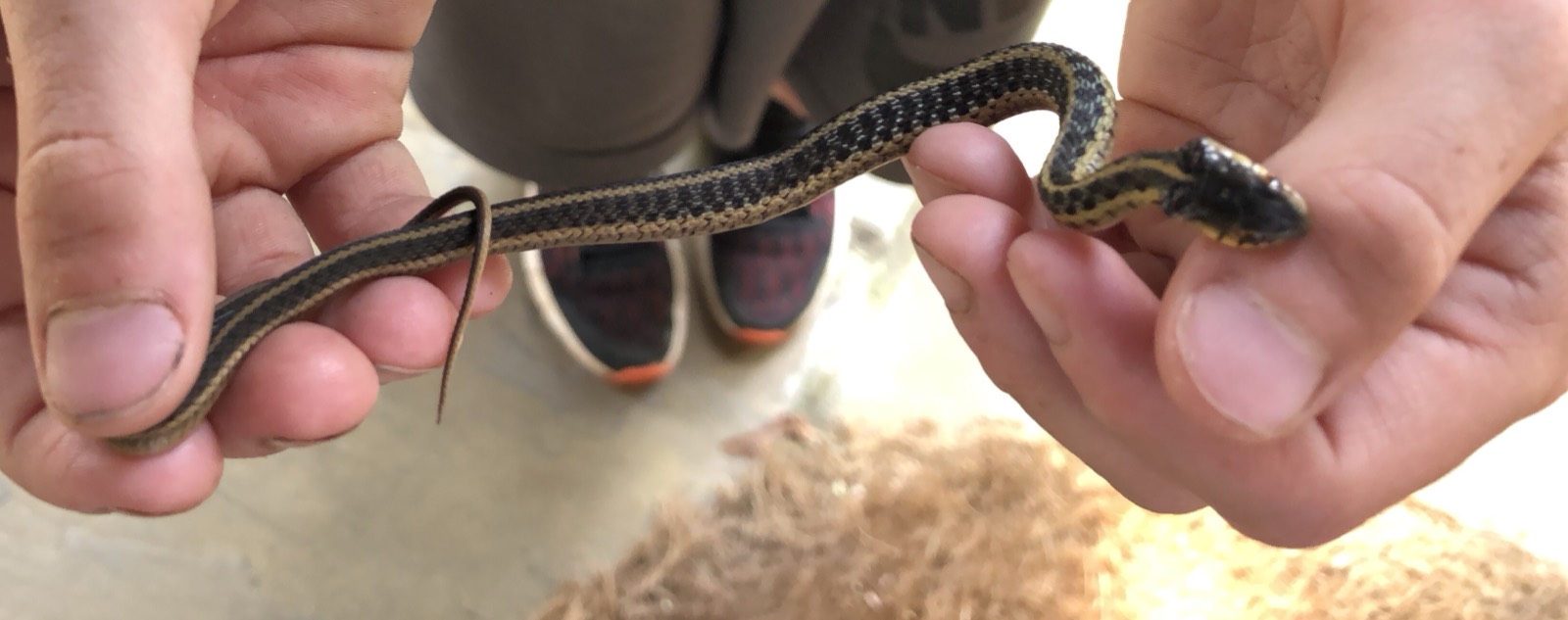
The idea of animal parents nurturing their young is deeply ingrained in our understanding of the natural world, but for most snake species, this concept simply doesn't apply. Unlike mammals or birds, the vast majority of snakes provide no active parental care once their offspring have hatched or been born. From the moment they emerge, baby snakes are almost entirely self-sufficient, relying on instinct and their own capabilities to navigate a dangerous world. While there are a few fascinating exceptions where a mother snake might guard her eggs, the notion of a snake "family" or a parent actively raising its young is largely a myth.
For oviparous snakes, which lay eggs, the mother's involvement typically ends shortly after the eggs are deposited. She will find a suitable, often hidden, location such as a rotting log, a burrow, or beneath leaf litter, where the eggs can incubate safely and at a stable temperature. Once the clutch is laid, the female usually departs, leaving the developing embryos to their fate. The eggs are equipped with enough yolk to sustain the embryos until hatching, and the warmth and humidity of the chosen site are crucial for their successful development. There is no further parental investment in incubation, protection from predators, or assistance with hatching.
However, a few notable exceptions exist, primarily among larger constrictors like pythons and some vipers. Female pythons, for instance, are known to coil around their clutch of eggs, not only protecting them from predators but also generating heat through muscular contractions – a process known as shivering thermogenesis – to keep the eggs warm. Some venomous snakes, like certain vipers, may also remain coiled near their eggs for a period to deter threats. While this offers a degree of protection, it is a limited form of parental care. Once the eggs hatch, these mothers, too, will typically leave their offspring to fend for themselves, without any further guidance or provisioning.
Many snake species, particularly in cooler climates, are live-bearers, meaning they give birth to live young rather than laying eggs. This includes ovoviviparous snakes, where eggs hatch internally and live young are born, and viviparous snakes, which have a more direct placental connection to the mother. Even in these cases, the parental investment ceases at birth. The neonates are born fully developed, often resembling miniature versions of the adults, and are immediately capable of hunting, hiding, and defending themselves. There is no period of maternal feeding, teaching, or protection after birth; the young are dispersed and begin their solitary lives within hours.
The independence of baby snakes is a remarkable adaptation. They emerge with all the necessary instincts for survival: they know how to hunt their appropriate prey, how to locate safe shelters, and how to employ defensive behaviors, including biting and envenomation if they belong to a venomous species. Their small size makes them vulnerable to a wider range of predators, but they compensate with excellent camouflage and a strong drive to disperse and find their own territories. This early self-sufficiency is a cornerstone of snake life history, allowing them to rapidly integrate into the ecosystem without prolonged reliance on parental figures.
The common misconception that snakes care for their young often stems from misinterpretations of snake behavior. Seeing multiple snakes in one location, for example, is usually an aggregation around a den site for brumation (winter dormancy), a communal basking spot, or a mating event, not a family unit. Similarly, reports of a mother snake "swallowing her young for protection" are entirely unfounded and belong to folklore; snakes do not engage in such behavior. These observations are typically confused with a snake eating prey, or a female simply being near her offspring by coincidence, perhaps in a shared shelter.
Understanding that most snakes are independent from birth or hatching is crucial for appreciating their unique biology and for interacting with them safely. Whether you encounter a tiny hatchling or a full-grown adult, every snake is capable of defending itself. If you spot a snake, remember that it is a wild animal relying on its instincts for survival. The best course of action is always to observe from a safe distance, allowing the snake to go about its business undisturbed. If you need help identifying a snake, especially a young one whose markings might be less distinct, safely photograph it from a distance and use a tool like SerpentID to compare its features against local species. If the snake is venomous or you are unsure, contact local wildlife services for assistance, rather than attempting to approach or handle it.