


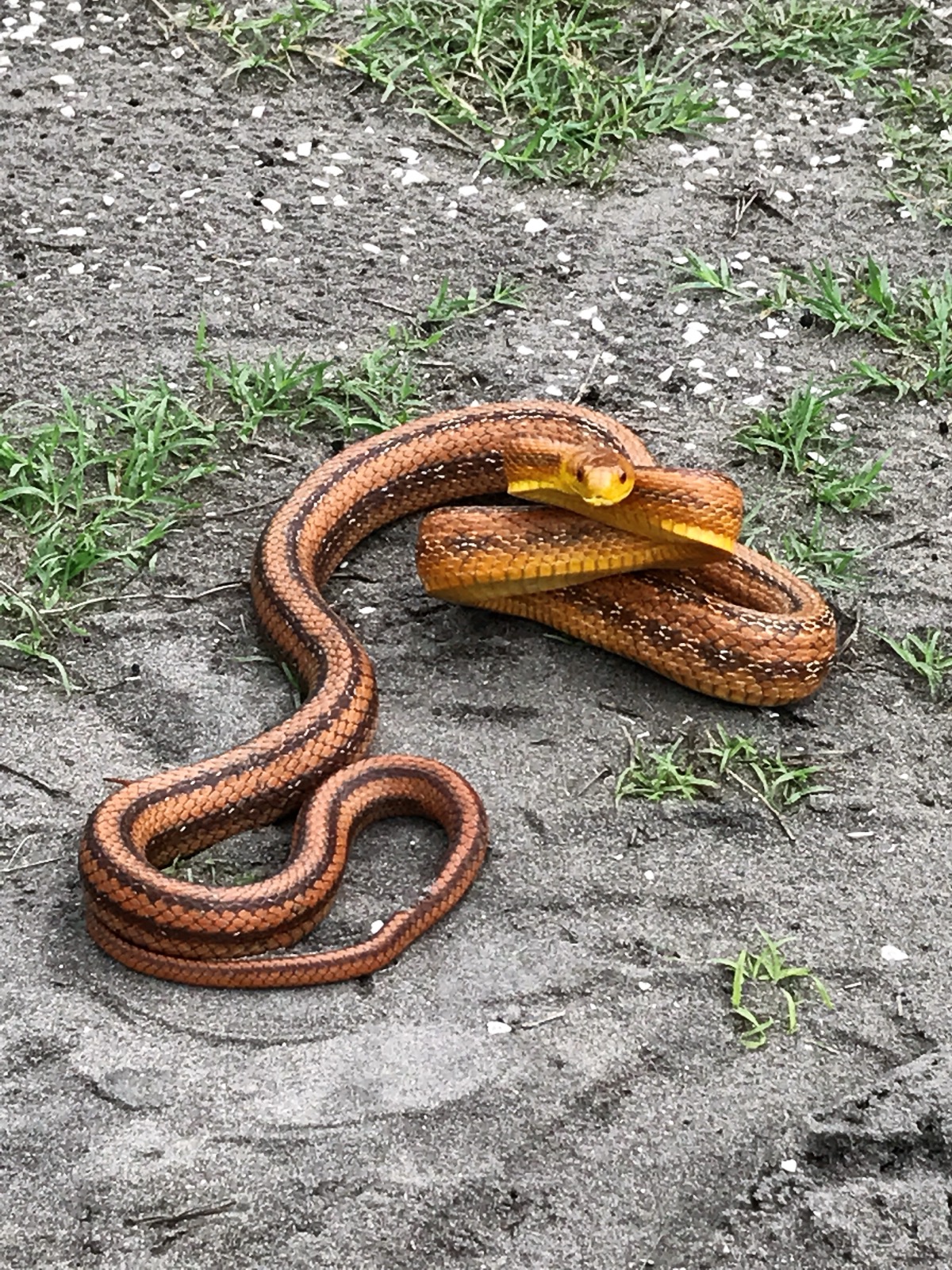
One of the most widely shared urban legends about reptiles claims that a pet python or wild snake will lie perfectly straight next to a sleeping human, stretching out to measure whether the person is small enough to be swallowed. According to the folklore, the snake stops eating for several days beforehand to clear space for the oversized meal. While this story has circulated through campfire tales, social media posts, and online forums for decades, it is entirely untrue and biologically impossible.
When a snake stretches out completely flat or straight, it is usually engaging in basic thermoregulation or resting comfortably. Reptiles rely on outside temperatures to manage their internal body heat, and laying extended on a warm rock, wooden deck, or cool soil maximizes the surface area of their belly scales against the ground. Stretching out also allows a snake to distribute weight comfortably after feeding, move through narrow vegetation, or simply relax its body muscles while remaining vigilant.
The idea that a snake plans a meal by physically measuring its prey ignores how snake senses actually work. Snakes do not conceptualize length or calculate body volume before hunting. Instead, they assess prey in real time using their chemical senses, vision, and thermal receptors. By flicking their forked tongue, snakes detect odor molecules in the air and transfer them to the vomeronasal organ in the roof of their mouth, identifying what type of animal is nearby and whether it fits their standard dietary instincts.
From a biological perspective, snakes are opportunistic ambush or active foragers that strike when prey comes within immediate reach. They do not possess the cognitive capacity for forward planning, such as intentionally starving themselves for days while calculating how to consume a specific target. Furthermore, even large constrictors face strict physical limits determined by shoulder width and rib flexibility, and an adult human's broad shoulders make swallowing impossible for nearly every snake species on Earth.
If you encounter a snake stretched out in your yard, along a trail, or under a porch, there is no reason to believe it is sizing up its surroundings for food. The snake is almost certainly basking to raise its body temperature or waiting quietly for small rodents or bird prey to pass by. Photographing the snake from a safe distance allows SerpentID to analyze its pattern, scale texture, and head structure against common local species. If the photo suggests a venomous snake near a living area, contact your local wildlife control or professional relocation services rather than trying to handle or move the animal yourself.