


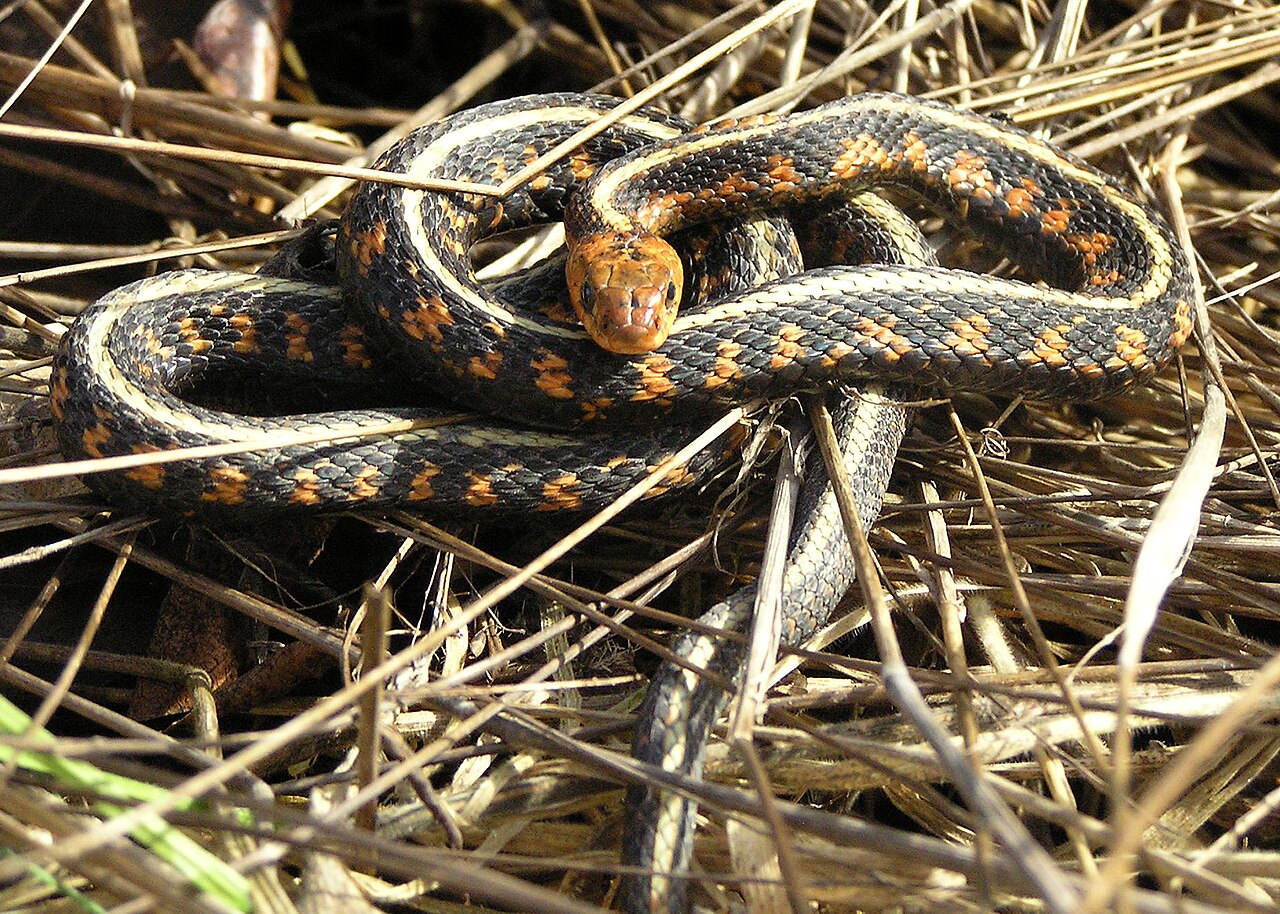
Do snakes sleep is a fair question to ask about an animal that never closes its eyes and can sit motionless for hours. The answer is yes: snakes rest in genuine sleep-like states, with reduced activity and lowered responsiveness, even though they do not act out the obvious 'curl up and shut your eyes' routine we associate with sleeping mammals. A snake at rest is sleeping in its own way, just without the cues we instinctively look for.
The reason a sleeping snake still looks alert is anatomy. Snakes have no movable eyelids; instead each eye is covered by a clear fixed scale called the spectacle or brille. There is no lid to lower, so a resting snake keeps its eyes 'open' the entire time. You cannot tell a sleeping snake from an awake one by the eyes alone, which is part of why a still snake is so easy to misread.
When snakes rest, they tend to settle into cover and hold a coiled or tucked posture in a sheltered, temperature-stable spot — under a rock, in a burrow, beneath a log, or in a quiet corner of a structure. Because they are ectotherms that depend on outside warmth, their rest also tracks temperature: a cool snake becomes sluggish and inactive, and a warm one is more alert. Rest and body temperature are tied together in a way they never are for us.
Timing depends on the species and the season. Many snakes are most active at the times of day that suit their hunting and their climate — some by day, some at dusk or night, and many shift to nighttime activity in hot weather — and they rest in between. On a longer scale, snakes in cold regions enter brumation, a winter-long period of dormancy that is deeper than ordinary sleep, slowing their metabolism dramatically until warmth returns in spring.
A resting snake is emphatically not a safe snake to handle. Because the eyes never close and the body can stay coiled and quiet, a snake that appears to be 'sleeping' is often only seconds away from striking if it is touched or startled. The calm pose is not an invitation; an undisturbed snake is best left exactly where it is, and reaching toward one because it 'looks asleep' is how a lot of avoidable bites happen.
Whether a quiet, coiled snake is harmless or dangerous comes down to the species, not the posture. If you find one resting in or near your space and need to know what you are dealing with, photograph it from a safe distance rather than nudging it awake, and let SerpentID compare its markers against likely local species — then decide whether to simply give it room or to call local wildlife help.