


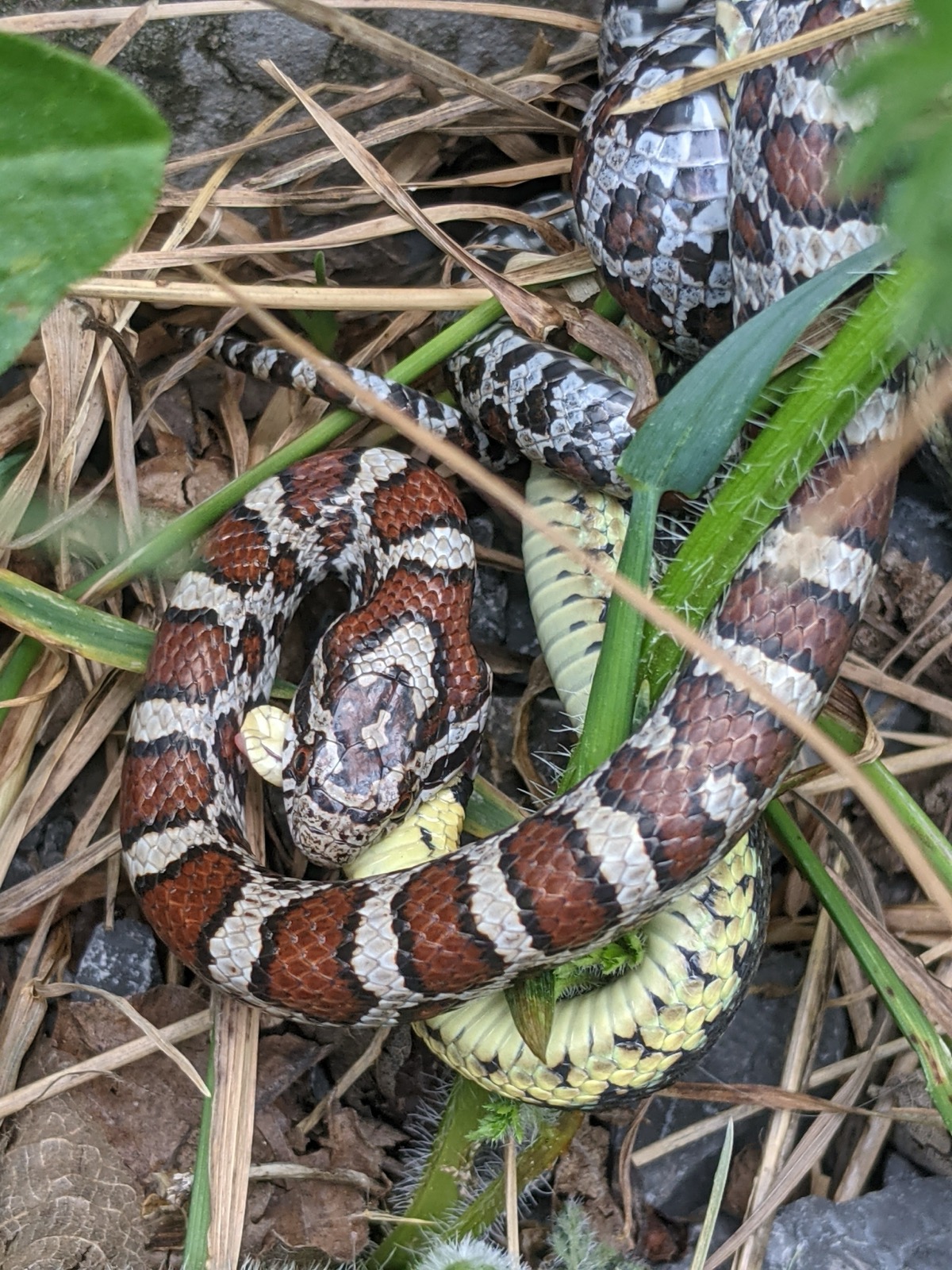
If you notice a snake appearing near the same garden wall or woodpile every spring, it is very likely not a coincidence. Herpetologists have long documented that many snake species demonstrate remarkable site fidelity, returning repeatedly to specific locations for brumation, basking, hunting, and mating throughout their lives. Rather than wandering aimlessly across the landscape, snakes typically operate within defined home ranges where every rock, rodent burrow, and water source is thoroughly mapped in their sensory memory.
The strongest driver of site fidelity in temperate climates is the winter shelter, known as a hibernaculum. Because suitable underground chambers below the frost line are relatively rare, generations of snakes often share and return to the exact same den sites year after year. Rattlesnakes, garter snakes, rat snakes, and milk snakes are particularly famous for traveling miles across challenging terrain each autumn just to retreat into the very same crevice or foundation gap where they spent the previous winter.
Navigation across these distances is accomplished through a combination of complex sensory systems. Snakes rely heavily on tongue-flicking to pick up chemical trails left by themselves and other members of their species in previous seasons. Research suggests that many snakes also utilize visual landmarks, solar positioning, and localized magnetic fields to maintain their sense of direction when moving between their winter retreats and summer feeding grounds.
This strong attachment to a specific geographic footprint is why long-distance relocation often proves fatal for wild snakes. When a snake is captured and released miles away from its established home range, it typically spends its energy wandering endlessly in search of familiar landmarks and scent trails rather than establishing a new home. This disorientation leaves them highly vulnerable to dehydration, vehicle strikes, thermal stress, and starvation.
For homeowners, understanding snake home ranges offers valuable perspective when dealing with repeated backyard sightings. A snake seen repeatedly in your yard is usually utilizing a specific resource, such as an abundant rodent population, a reliable water source, or a cool shelter under a shed floor. Modifying those habitat features by removing brush piles, sealing structural gaps, and reducing pest activity is far more effective at discouraging snake presence than simply moving the animal away.
Whenever you spot a snake in your yard or along a trail, the safest approach is always to give it plenty of space and observe from a respectful distance. You can take a clear photograph from a safe distance and upload it to SerpentID, where smart pattern recognition and local species databases help quickly confirm whether the visitor is a harmless rodent control partner or a venomous species. If you identify a venomous snake near high-traffic areas, contact local wildlife professionals who are trained to handle relocating the animal safely.