


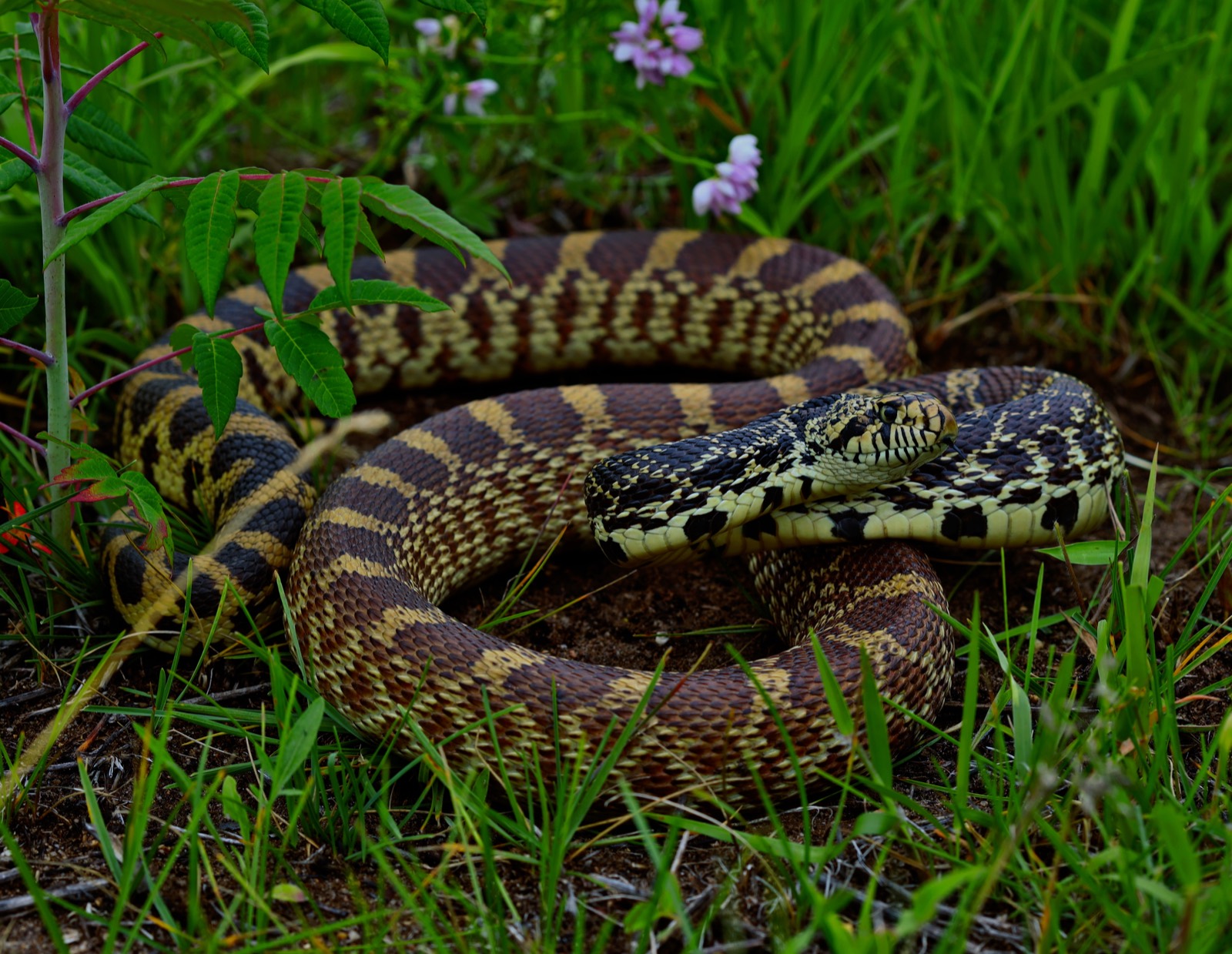
Do snakes hibernate is one of the questions that gets the most confused answers online, partly because the precise term for what reptiles do in winter is brumation rather than hibernation. Hibernation is a mammalian response with deep sleep cycles, dropped heart rate, and stored fat metabolism. Brumation is the reptile equivalent: a long period of greatly reduced activity, slowed metabolism, and minimal feeding, but with the animal still aware enough to drink water on warmer days and shift position inside its shelter. Practically, snakes disappear from the surface for weeks or months at a time in cold regions and reappear at predictable thaw windows.
Snakes brumate in shared underground shelters known as hibernacula. A hibernaculum can be a rocky south-facing slope with deep crevices, an abandoned rodent burrow system, a foundation crack that leads under a slab, a septic field disturbance, an old well or cistern, or even space inside a stone retaining wall. Many species congregate, and a single den can hold dozens of garter snakes, several rat snakes, the occasional copperhead or rattlesnake, and unrelated species like skinks and salamanders sharing the deeper, frost-free zone. This is why spring emergence on south-facing slopes can produce several snakes visible at once.
The temperature trigger for brumation is not a single calendar date but a sustained drop in soil temperature below roughly fifteen Celsius for several consecutive days. In the southern United States, mild winters interrupt brumation repeatedly: snakes emerge on warm afternoons in January, bask on a sunny driveway or wall, then return to shelter as the temperature falls. That is why people in Texas, Florida, Georgia, Louisiana, the Carolinas, southern California, and Arizona can encounter active snakes in winter, while homeowners in the upper Midwest or Northeast rarely see one between November and March. SerpentID's species result combined with the calendar and your region gives a much better sense of how surprised you should be by a winter sighting.
Brumation behavior has real implications for homeowners. Foundation cracks, unsealed crawl-space vents, gaps around utility penetrations, and disturbed garage thresholds become attractive precisely because they offer the consistent, frost-free temperatures snakes need to overwinter. A homeowner who finds a single snake in a basement in late October may be looking at the leading edge of a brumation site rather than an accidental wanderer. Sealing exterior gaps wider than a pencil before mid-autumn is far more effective than removing one snake after the den is already established, because once a hibernaculum is in use, more snakes follow the same scent trails the next year.
Spring emergence happens at predictable spots in March, April, or May depending on latitude. If you see one snake on a south-facing wall on the first warm afternoon, you may see several more over the following two weeks as the den empties. None of those snakes are necessarily a threat, and most will disperse to summer territories within a few days, but the pattern is a strong signal that the structure or hillside is being used as a hibernaculum. Document the location, photograph the snakes from a safe distance for SerpentID to identify, and plan exterior sealing work for late summer rather than mid-emergence when sealing a den entrance can trap animals inside.