


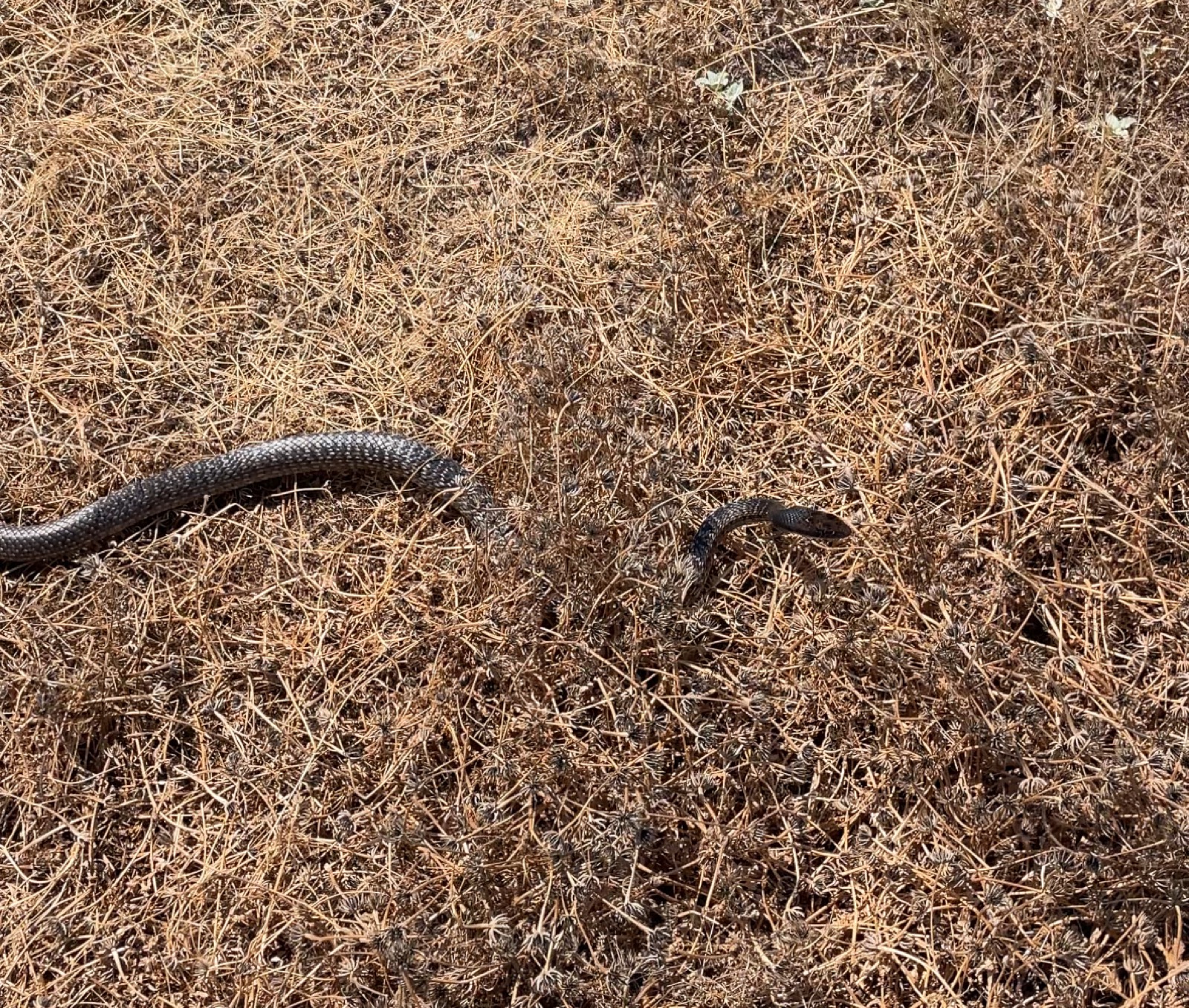
One of the most distinctive and often misunderstood features of a snake is its tongue. Many people observe the rapid, darting movement of a snake's tongue and its split, two-pronged appearance, leading to the common misconception that snakes possess two separate tongues. However, this is not the case. Snakes have only one tongue, but it is deeply forked or bifurcated at the tip. This unique design is not for delivering venom or any aggressive purpose; rather, it is a highly specialized sensory organ essential for their survival in the wild.
The evolutionary advantage of a forked tongue lies in what is known as 'stereo olfaction' or 'stereo chemoreception.' Much like how our two eyes provide stereoscopic vision, allowing us to perceive depth and distance, the two tips of a snake's tongue enable it to pick up scent particles from two slightly different points in space. By comparing the concentration of these chemical particles on each tip, the snake can determine the direction from which a scent is originating, making it incredibly efficient at tracking prey, finding mates, or detecting predators.
The process begins with the snake flicking its tongue out into the environment. This rapid movement allows the moist tongue to collect microscopic chemical particles present in the air or on surfaces. Upon retracting the tongue, the two tips fit precisely into two small openings in the roof of the snake's mouth. These openings lead to a specialized sensory organ called the vomeronasal organ, also known as Jacobson's organ. It is within this organ that the chemical signals collected by the tongue are analyzed and interpreted by the snake's brain.
It's important to understand that this method of sensing is distinct from how humans or most other animals perceive smells. While snakes do possess nostrils and breathe through them, their primary and most acute sense of 'smell' for detailed environmental cues comes from this sophisticated tongue-Jacobson's organ system. Their nostrils are predominantly used for respiration, whereas the tongue acts as a highly sensitive chemical detector, constantly sampling the world around them.
This unique sensory apparatus plays a critical role in almost every aspect of a snake's life. For hunters, it is vital for following the faint scent trails left by rodents, birds, or other prey. For reproduction, snakes rely heavily on pheromones – chemical cues released by potential mates – which are detected by their forked tongue. Furthermore, this system helps them to identify and avoid predators, navigate complex terrain, and locate suitable shelters and basking sites, making it an indispensable tool for survival.
Despite its unusual appearance, the snake's forked tongue is a delicate and entirely harmless sensory organ. It is not used for biting, stinging, or any form of attack, and it certainly does not deliver venom. Observing a snake flicking its tongue is simply witnessing it actively "reading" its environment, a natural and essential part of its behavior. The rapid, continuous flicking is a sign that the snake is alert and engaged with its surroundings, gathering as much information as possible.
If you encounter a snake, observing its fascinating adaptations, such as its forked tongue, can be a rewarding experience when done from a safe distance. Remember that a snake's active tongue flicking means it is assessing its surroundings, including your presence. If you can safely capture a photograph without approaching too closely, the SerpentID app can help you identify the species. Should it be a venomous snake, contacting local wildlife services for guidance is always the safest course of action.