


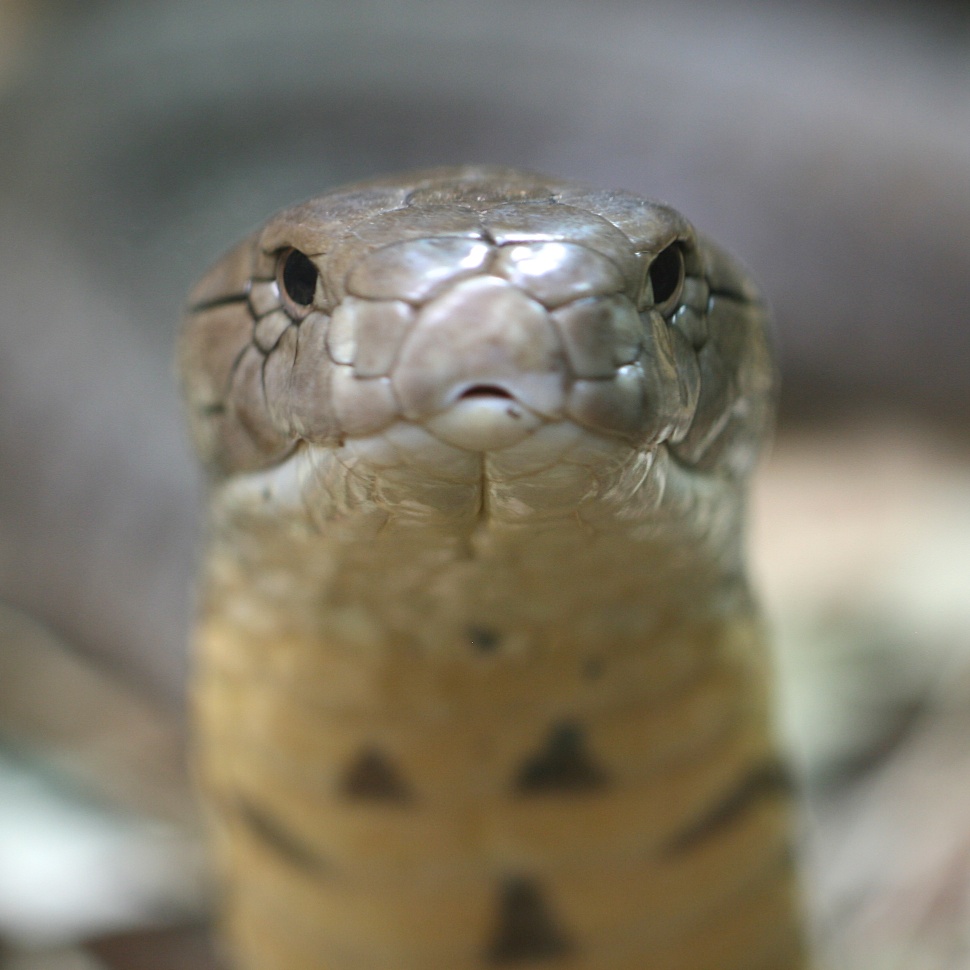
When we think about enjoying a meal, we think of flavor. Humans chew their food slowly, allowing thousands of taste buds on the tongue and throughout the mouth to detect sweet, salty, sour, bitter, and savory notes. Snakes, however, live in a completely different sensory world. Because they are famous for swallowing their prey entirely intact without chewing, it raises a fascinating anatomical question: do snakes actually have taste buds, or is their dining experience entirely flavorless?
Anatomical studies show that snakes do possess taste buds, but they are sparse, simple, and poorly developed compared to those of mammals. Interestingly, these taste buds are not located on the snake's famous forked tongue. The tongue itself is highly cornified, dry, and designed purely as a mechanical tool for gathering microscopic scent particles from the air. Instead, a snake's rudimentary taste buds are scattered along the lining of its oral cavity, particularly on the palate and near the protective sheath that houses the tongue when it is retracted.
Because these oral taste receptors are so limited, they do not provide the rich tapestry of flavors that we associate with eating. Instead, a snake's primary way of evaluating food relies on the vomeronasal organ, also known as the Jacobson's organ. When a snake flicks its tongue, it collects chemical molecules from its surroundings and delivers them to two tiny pits in the roof of its mouth. This system is essentially an incredibly advanced, three-dimensional sense of smell that allows the snake to identify prey, track mates, and navigate its environment with extreme precision.
From an evolutionary standpoint, a highly refined sense of taste would be largely wasted on a snake. Since they do not masticate their food, prey items spend almost no time in contact with the oral cavity before being pushed down the esophagus by muscular contractions. The few taste receptors they do have are not meant for culinary enjoyment, but rather for basic survival. These receptors help the snake quickly determine if an object in its mouth is appropriate to swallow or if it is potentially toxic, allowing them to reject harmful substances before it is too late.
This reliance on chemical signatures rather than taste explains why snakes can be incredibly picky eaters, especially in captivity. A snake does not choose its food based on how delicious it might taste, but rather on whether it smells exactly right. If a rodent lacks the correct scent profile, a snake may refuse to eat it entirely. Reptile keepers often have to trick a picky snake by rubbing a preferred prey item against a new food source, transferring the scent and convincing the snake's Jacobson's organ that the meal is safe and familiar.
Understanding how snakes perceive the world through scent and chemical cues helps demystify these quiet, efficient predators. If you happen to encounter a snake in your yard or on a local trail, remember that it is simply using its senses to evaluate its surroundings and does not view humans as prey. The safest way to handle any encounter is to photograph the snake from a safe distance and let SerpentID compare its markings against likely local species. If you suspect the snake is venomous, leave it alone and contact local wildlife services to have it safely relocated.