


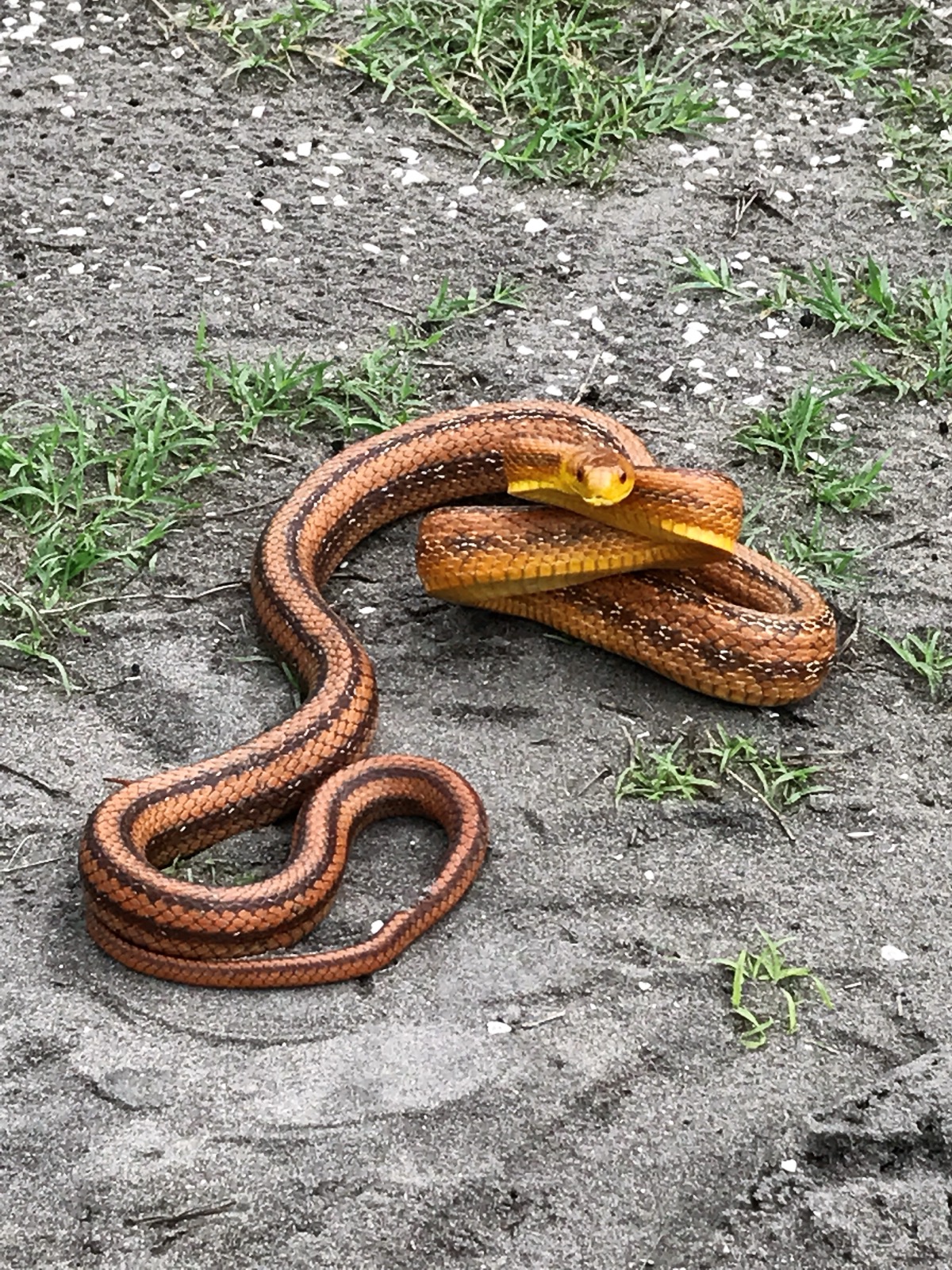
One of the most fundamental questions about snake anatomy, often asked by those observing these fascinating reptiles, is whether they possess a tail. The answer is unequivocally yes, snakes do have tails. However, unlike many other animals where the distinction is obvious, defining the exact start of a snake's tail can be less intuitive. From a biological standpoint, a snake's tail begins immediately after its vent, which is the cloacal opening located on the underside of the snake. Everything from this point to the tip of the body is considered the tail.
The snake's body is broadly divided into two main sections: the trunk and the tail. The trunk houses all the vital organs, including the heart, lungs, liver, stomach, and intestines. In contrast, the tail section is primarily composed of muscle and vertebrae, lacking these major internal organs. While the trunk often features paired rows of scales on its underside, many non-venomous snakes exhibit a single row of scales, known as subcaudal scales, along the length of their tail, a subtle anatomical clue for those who know what to look for, though this is not a universal rule or a reliable identification method for all species.
Despite its lack of internal organs, a snake's tail is far from vestigial; it plays a critical role in various aspects of the snake's life. For many species, the tail is essential for locomotion, providing balance and stability as the snake glides across surfaces, climbs trees, or navigates uneven terrain. Arboreal snakes, in particular, often possess highly prehensile tails, which they use to grasp branches, providing a secure anchor as they move through the canopy or strike at prey. This ability highlights the tail's importance in adapting to diverse environments.
Beyond movement, the tail is also a vital tool for defense and communication. The most famous example is the rattlesnake, which uses its specialized tail to produce a distinctive warning rattle, signaling its presence and deterring potential threats. Other species, even those without a rattle, may mimic this behavior by rapidly vibrating their tails in dry leaves or grass, creating a similar rustling sound to ward off predators. Some snakes also use their tails in a more direct defensive manner, thrashing them or even displaying bright colors on the underside to startle attackers.
The tail also plays a role in reproduction. Male snakes house their hemipenes, which are paired reproductive organs, within the base of their tail. During mating, these are everted from the vent. While not a primary storage site, some fat reserves can be found in the tail, though the main fat bodies are located within the trunk. The length and robustness of a snake's tail can vary significantly between species, from the short, blunt tails of some vipers to the long, tapering tails of many colubrids, each adapted to the snake's specific lifestyle and habitat.
A common misconception, possibly stemming from observations of lizards, is that snakes can detach their tails as a defense mechanism (autotomy). While a few rare snake species exhibit a limited form of this, it is not a widespread or typical behavior for snakes. Once separated from its tail, a snake does not regenerate it in the way many lizards do. This underscores the tail's integral importance to the snake's overall survival and well-being, as it is a permanent and crucial part of its anatomy.
Understanding the anatomy of a snake, including the often-overlooked tail, enriches our appreciation for these remarkable creatures. The tail's diverse functions, from aiding movement to signaling danger, are vital for a snake's survival in its environment. If you encounter a snake and wish to identify it, remember to observe from a safe distance. Capture a clear photograph, if possible, allowing SerpentID to analyze its unique markings and characteristics, including tail features if visible, to help you safely identify the species and understand its role in your local ecosystem.