


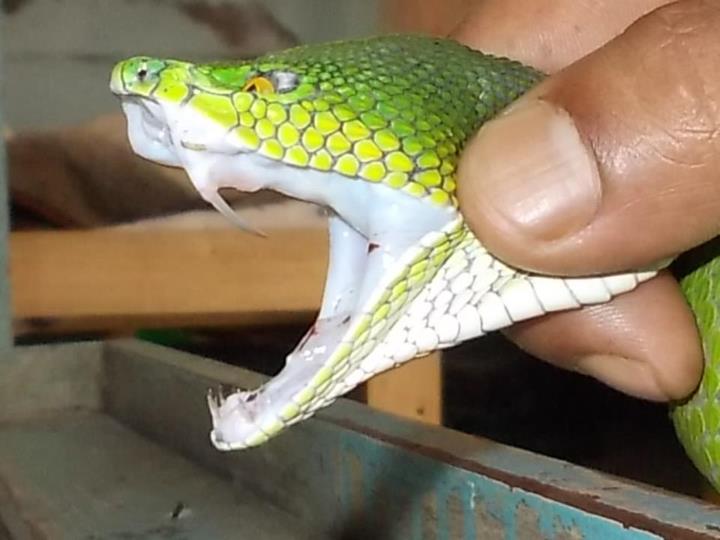
Yes, snakes do have saliva, though their oral chemistry and function differ significantly from human spit. Mammalian saliva is produced continuously by major salivary glands to start digesting carbohydrates during chewing and to keep the oral cavity lubricated. Because snakes do not chew their food, their salivary glands are structured differently, producing lubricative mucus and digestive fluids tailored to swallowing large meals in a single piece.
The primary job of snake saliva is lubrication. Swallowing an animal that may be several times wider than the snake's own head creates immense friction against the lining of the throat. Specialized mucosal glands lining the mouth secret thick, slippery fluid that coats the prey as it is dragged inward by alternating jaw movements. Without this lubrication, feathers, fur, and dry scales could easily tear delicate oral tissues or cause the prey to become stuck mid-swallow.
Beyond simple lubrication, snake saliva plays an evolutionary role in prey capture and digestion. Snake saliva contains various proteins and enzymes, such as amylase and soft tissue breaking compounds, that begin chemical breakdown inside the prey item. In fact, herpetologists trace the origin of snake venom back to modified salivary glands. Over millions of years, toxic proteins present in ancestral reptile saliva became concentrated and specialized into the modern venoms found in pit vipers, cobras, and rear-fanged species today.
Unlike dogs or mammals, healthy snakes rarely drool, foam at the mouth, or produce visible bubbles of spit. Their mouths remain lubricated internally without liquid accumulating externally. If you ever observe a wild or captive snake with excessive bubbles, stringy mucus, or clear liquid dripping from its snout, this is usually a sign of a respiratory infection or oral rot, rather than normal salivation. Under normal conditions, a snake's mouth appears clean and relatively dry to the naked eye.
Understanding the mechanics of a snake's mouth helps demystify how these legless reptiles handle prey and defend themselves in the wild. If you encounter a snake in your yard, garden, or along a local trail, keep a respectful distance rather than attempting to inspect its head or mouth. You can snap a clear photo from several feet away and upload it to SerpentID to quickly compare its physical features against known local species. If the snake turns out to be venomous or is located in an unsafe area, contact your local wildlife control experts to relocate it safely.