


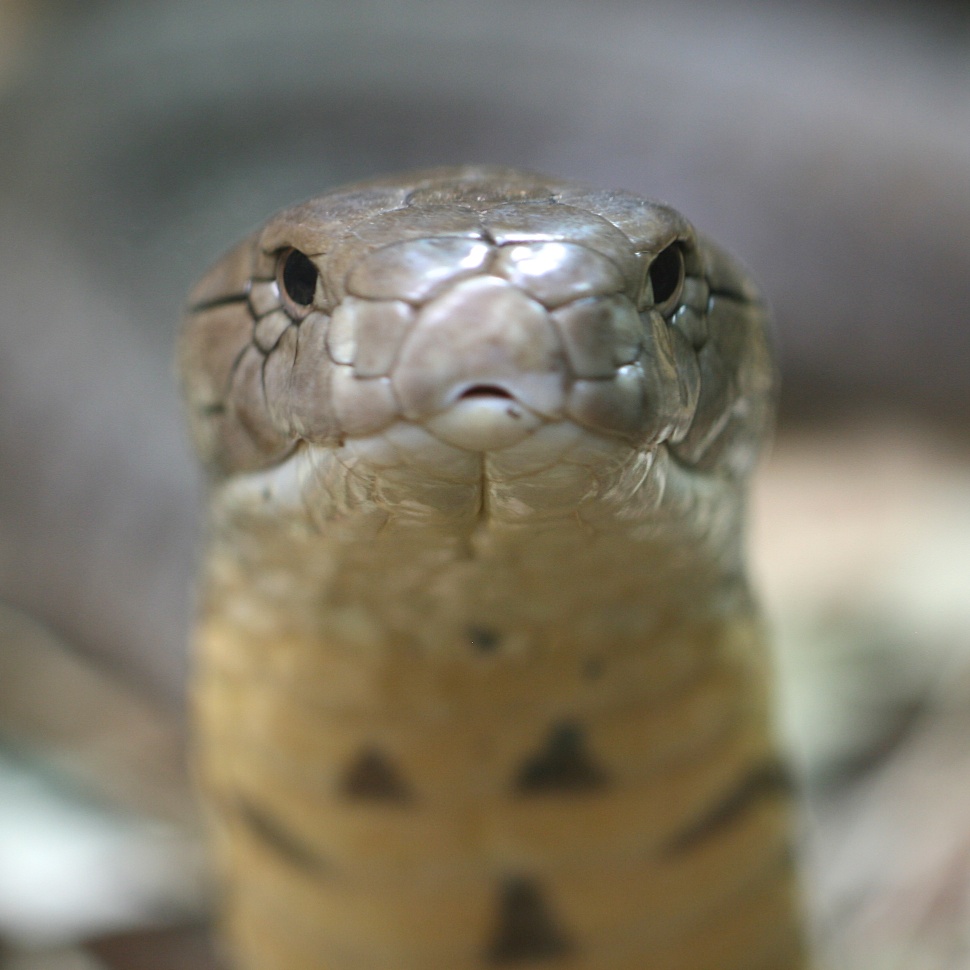
While snakes may not recall past events with the emotional depth or narrative complexity of humans, scientific research indicates they certainly possess memory. This memory is fundamental to their survival, allowing them to navigate their environment, locate resources, and avoid dangers. Rather than remembering faces or holding grudges, a snake's memory is rooted in practical, adaptive learning, enabling them to respond to their world in ways that maximize their chances of survival and reproduction.
One of the most significant aspects of snake memory is spatial memory. Snakes are highly adept at remembering the layout of their territories, including the locations of prime hunting spots, safe basking areas, suitable dens for shelter, and escape routes. They use a combination of visual cues, scent trails detected by flicking their forked tongues, and even subtle vibrations to build a detailed mental map of their surroundings. This intricate knowledge allows them to efficiently move through their habitat, even in complete darkness or when navigating complex burrows.
Snakes also exhibit associative learning, meaning they can learn to connect specific stimuli with outcomes. For instance, a snake might learn to associate a particular scent or sound with the presence of prey, making it a more efficient hunter. Conversely, if a snake has a negative encounter in a certain area—perhaps a near-miss with a predator or an uncomfortable human interaction—it may learn to avoid that location in the future. This form of memory is a powerful tool for adapting to changing environmental conditions and minimizing risks.
Habituation is another observed form of learning and memory in snakes. This is the process by which an animal learns to ignore a non-threatening stimulus after repeated exposure. For example, a snake living near human activity might initially react defensively to a person's presence, but over time, if the person consistently poses no threat, the snake may habituate and become less reactive. It's important to understand this isn't a sign of 'friendship' or 'recognition' in a human sense, but rather a learned indifference based on repeated, harmless encounters.
It's crucial to distinguish reptilian memory from mammalian or avian memory. A snake's brain is structured primarily for processing sensory information and executing instinctual behaviors essential for survival. Their memory serves these functions, focusing on patterns, locations, and associations directly relevant to finding food, avoiding predators, and reproducing. They do not engage in complex social learning, abstract reasoning, or long-term planning in the way many mammals do.
Despite their sophisticated survival-oriented memory, snakes remain wild animals driven by instinct and learned associations. They do not harbor complex emotions or personal attachments. Understanding their memory helps us appreciate their adaptive intelligence without anthropomorphizing their behavior, which can lead to dangerous misconceptions. Always treat snakes with respect for their wild nature, regardless of any perceived familiarity.
When you encounter a snake, remember that its behavior is guided by its survival instincts and learned experiences, not by personal recognition. The safest approach is always to maintain a respectful distance. If you need to identify a snake you've encountered, take a clear photo from a safe distance, and use the SerpentID app to compare its markings against local species. If you suspect a snake is venomous, contact local wildlife services for expert assistance; never attempt to handle or approach it.