


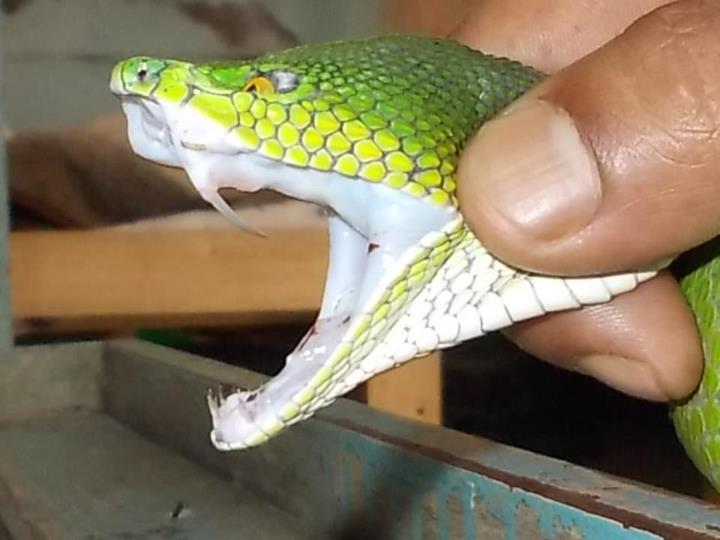
The idea of snakes 'seeing' heat, much like a thermal camera, is a fascinating concept that often sparks curiosity. While it's a common misconception that all snakes possess this ability, it is true for a significant group: the pit vipers. These remarkable snakes, which include rattlesnakes, copperheads, and cottonmouths found across the Americas, as well as many species in Asia, have developed a highly specialized sensory system that allows them to detect infrared radiation, essentially giving them a unique form of 'thermal vision'. This sense is not about seeing light, but rather about perceiving temperature differences in their surroundings, a crucial adaptation for nocturnal hunting.
The key to this incredible ability lies in what are known as 'pit organs'. These are small, deep depressions located on each side of the snake's head, precisely positioned between the eye and the nostril. Each pit organ contains a highly sensitive membrane, richly supplied with nerve endings, which can detect even minute changes in temperature. Unlike eyes, which respond to photons of light, these pits respond to the radiant heat energy emitted by warm-blooded objects, such as a mouse or a bird. The presence of two pits provides a stereoscopic thermal sense, allowing the snake to pinpoint the exact direction and distance of a heat source with remarkable accuracy.
The mechanism behind this thermal detection is extraordinarily refined. The pit membrane is so thin and sensitive that it can register temperature differences as small as 0.003 degrees Celsius, far beyond the capabilities of human skin. When a warm-blooded animal enters the snake's vicinity, the infrared radiation it emits strikes the membrane, causing a localized temperature increase. This change is instantly converted into neural signals that are sent to the snake's brain, where they are processed to create a 'thermal image' of the prey. This allows a pit viper to strike with deadly precision even in absolute darkness, where its eyes would be useless.
This specialized infrared sense plays a vital role in a pit viper's hunting strategy. Many pit viper species are ambush predators, lying in wait for unsuspecting prey. With their pit organs, they can detect the presence of a rodent or bird moving nearby, even if it is completely hidden from view or if the ambient light is too low for visual hunting. This thermal sense works in conjunction with other sensory inputs, such as chemoreception (smell, detected by tongue flicking) and vibrations, to provide a comprehensive picture of the environment, making them incredibly efficient predators in diverse habitats.
It's important to note that while pit vipers are the most well-known for their advanced pit organs, some other snake groups also possess similar, though generally less complex, heat-sensing structures. Certain boas and pythons, for instance, have labial pits along their upper or lower lips. These pits serve a similar function, allowing them to detect radiant heat, but they are typically less developed and distributed differently than the distinct pit organs of vipers. Most other snake families, however, rely primarily on their vision, sense of smell, and ability to detect ground vibrations to navigate and find food, lacking any specialized infrared sensing capability.
The 'heat vision' of pit vipers is a testament to the incredible adaptations found in the natural world, but it's crucial to distinguish it from the fictionalized versions often portrayed in popular culture. Snakes do not see a brightly colored, glowing outline of their prey against a dark background in the same way a human might use night-vision goggles. Instead, it's a highly acute thermal perception that provides a detailed temperature map, allowing them to orient themselves towards the warmest part of a potential meal. This sophisticated sense makes them formidable hunters, expertly attuned to the subtle thermal signatures of their environment.
Understanding the extraordinary senses of snakes like pit vipers reinforces the importance of maintaining a respectful distance when encountering any snake. Their ability to detect and react to their surroundings, even those hidden from our own perception, means they are always aware of potential threats or opportunities. If you encounter a snake, the safest approach is always to observe it from a distance, take a clear photograph if possible, and use a reliable identification app like SerpentID to compare its markings against local species. If it is identified as venomous, contact local wildlife services for assistance, and never attempt to approach, handle, or harm the snake.