


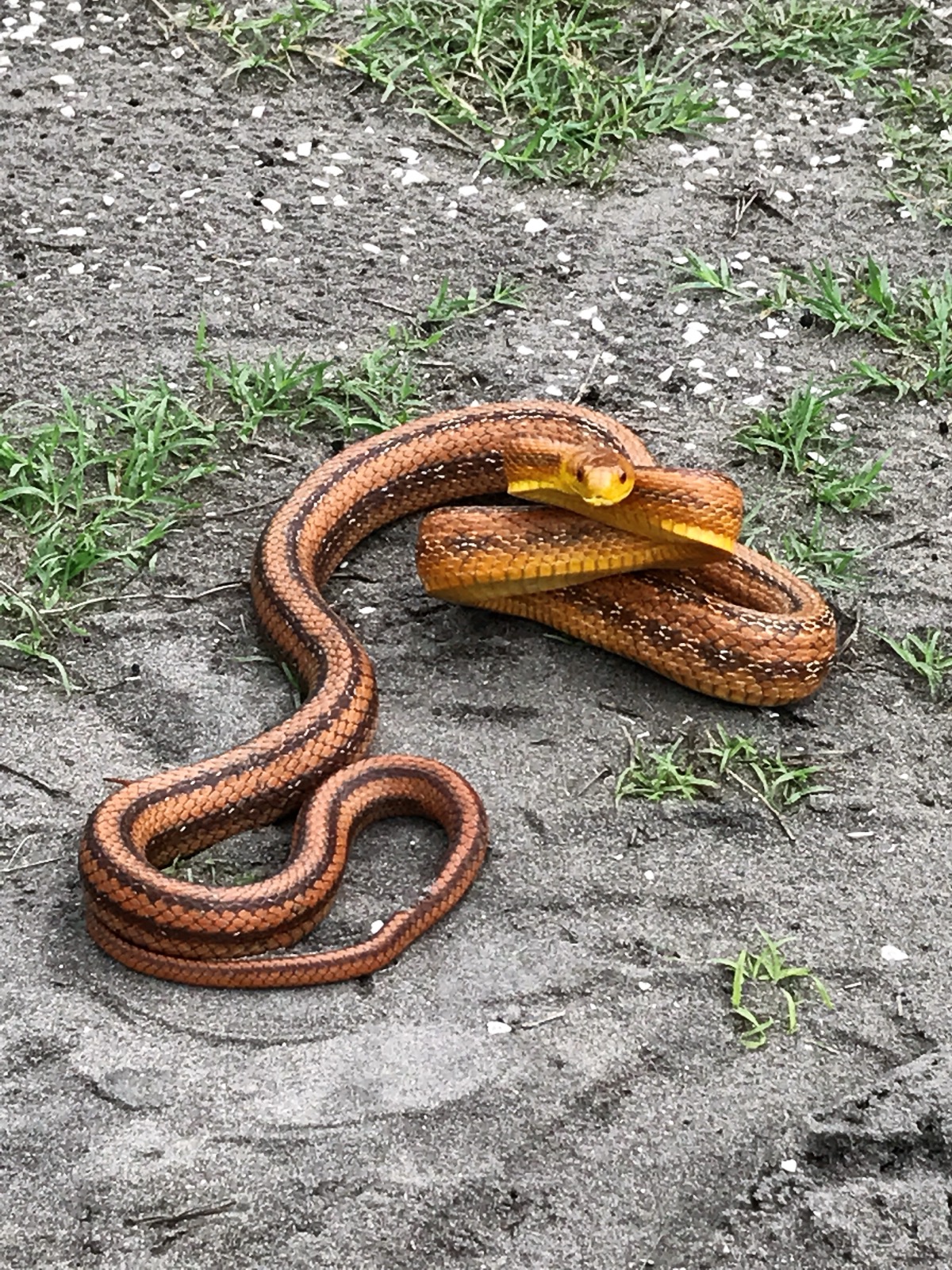
One of the most fascinating aspects of snake biology is their unique pattern of growth. Unlike mammals and birds, which reach a fixed adult size and then stop growing, snakes exhibit what is known as indeterminate growth. This means that throughout their entire lifespan, as long as they are healthy and have access to sufficient resources, they will continue to increase in length and mass. While the rate of growth significantly slows down once a snake reaches sexual maturity, it never truly ceases, making the oldest snakes often the largest ones of their species.
The mechanism behind this continuous growth involves the constant production of new cells and the elongation of their skeletal structure. A snake's body is composed of many vertebrae and ribs, and new bone and tissue can be added to these structures over time, allowing the snake to lengthen. This growth is also intimately linked with the process of shedding, or ecdysis. As a snake grows, its outer skin becomes too tight, prompting it to shed this old layer to accommodate its expanding body. While shedding itself doesn't cause growth, it is a necessary event that allows the snake to continue growing unhindered.
Several factors influence how quickly and how large a snake will grow. Primary among these are food availability and environmental temperature. As ectothermic animals, snakes rely on external heat sources to regulate their body temperature, which in turn affects their metabolism and digestion. A snake in a consistently warm environment with a steady supply of food will generally grow faster and larger than one in a cooler, resource-scarce habitat. Genetics also play a role, with some individuals naturally predisposed to reach greater sizes than others within the same species.
Growth rates are typically most rapid during a snake's juvenile years, when energy is primarily directed towards increasing size. After reaching sexual maturity, a greater proportion of energy is diverted towards reproduction, causing growth to slow down. However, even mature snakes will continue to add a small amount of length and mass each year. This continuous growth means that in many species, an older individual is almost invariably a larger individual, a testament to its long-term survival and successful foraging.
The implications of indeterminate growth are often seen when comparing wild snakes to those kept in captivity. Captive snakes, often provided with consistent warmth, regular feeding, and protection from predators, can sometimes reach lengths and weights that exceed average wild specimens. However, it's a misconception that snakes only grow to the size of their enclosure; this is a sign of neglect and stunting, not a biological limit. A healthy snake will continue to grow, and cramped conditions can lead to severe health issues.
Understanding that snakes never truly stop growing helps to debunk common myths and appreciate their unique biology. It highlights their adaptability and the incredible efficiency with which their bodies can continuously develop. It's a reminder that a snake seen today, if conditions are favorable, will be slightly larger if encountered years down the line, an ongoing process of development that spans their entire life.
Given that snakes continue to grow throughout their lives, encountering a large, unfamiliar snake can be a significant event. If you encounter a snake and are unsure of its species, it's crucial to observe it from a safe distance. Photographing the snake without approaching it allows you to use tools like the SerpentID app to compare its markings against local species, helping you understand if it's a harmless resident or a potentially venomous one. If it's a venomous species, contact local wildlife services for safe removal, ensuring both your safety and the snake's well-being.