


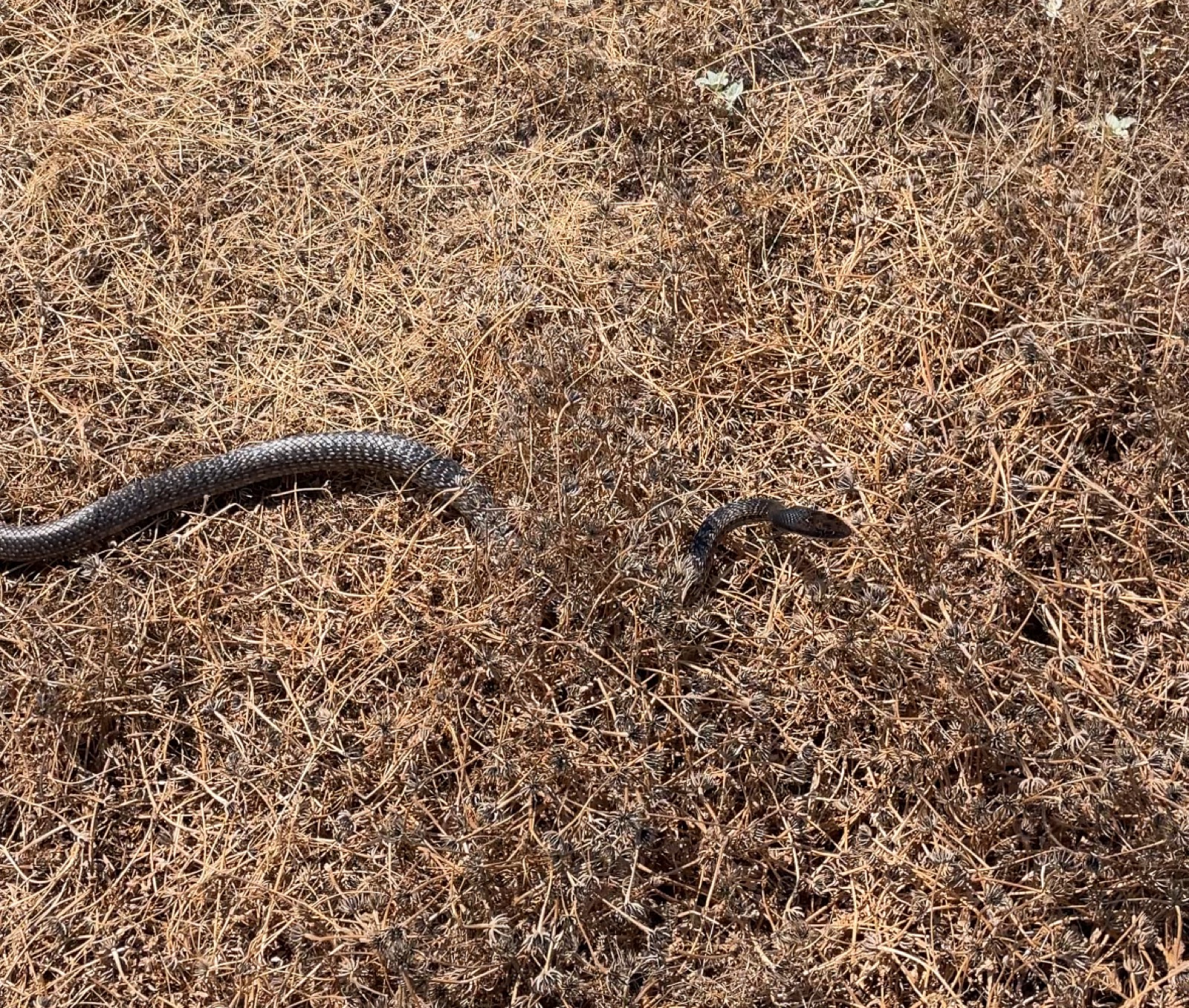
Snakes and lizards are close relatives, both belonging to the reptile group called squamates, but that family connection does not stop a great many snakes from eating them. Lizards are abundant, active in daylight, often small enough to swallow whole, and found almost everywhere snakes live, from American deserts to Australian backyards to Indian village walls. For a hungry snake of the right size, a skink, anole, or gecko is a practical meal. Some snakes eat lizards only now and then as part of a broad diet, while others depend on them so heavily that lizard populations shape where those snakes can live.
In the United States, the clearest lizard specialists are the fast, sight-hunting snakes of open country. Coachwhips and whipsnakes cruise through sunny habitat with their heads raised, spot a running lizard, and simply outpace it. North American racers do much the same in fields and yard edges, taking lizards along with insects, frogs, and rodents. Patch-nosed snakes in the Southwest hunt whiptail lizards and dig up reptile eggs. Kingsnakes, including the small scarlet kingsnake of the Southeast, readily eat skinks and their eggs. Even rattlesnakes and copperheads lean on lizards when they are young, because a newborn viper is too small for most mice but can easily handle a skink or fence lizard. As these vipers grow, their diet usually shifts toward mammals, which is one reason the same species can turn up in different places at different life stages.
Young pit vipers also show one of the most interesting lizard-hunting tricks in the snake world, known as caudal luring. Juvenile copperheads and cottonmouths often have a brightly colored yellow or greenish tail tip, which they wriggle slowly while the rest of the body stays hidden. To a lizard or frog, the tail looks like a caterpillar or worm, and when it comes close to investigate, the snake strikes. Australia's death adders use the same tactic throughout life, lying buried in leaf litter or sand and twitching a slender, grub-like tail to draw in skinks and small birds. Caudal luring is well documented by herpetologists and is a good reminder that a still, half-hidden snake may be actively hunting rather than resting.
Australia is especially rich in lizard eaters because it is especially rich in lizards, particularly skinks. Whip snakes in the genus Demansia are slender, fast, daytime hunters that chase skinks across warm ground, and several species are mildly venomous but not considered highly dangerous. Young eastern brown snakes feed heavily on small reptiles before moving on to rodents as adults, and the eastern brown is among the most medically significant snakes in the country at every age. Many small, secretive Australian elapids also prey on skinks in garden beds, rockeries, and under timber. A yard full of skinks can therefore support snakes, which is worth knowing if you live in a region where brown snakes or other dangerous elapids are common.
In India, the relationship between snakes, lizards, and houses is particularly important. House geckos gather around lights and walls to catch insects, and the common wolf snake follows them, slipping into homes, storerooms, and wall crevices at night. The wolf snake is harmless to people, but its dark body with pale crossbands is often confused with the common krait, which is highly dangerous and also enters homes at night. The common krait eats mainly other snakes, but it will also take lizards and small rodents. Out in gardens and trees, the bronzeback tree snake hunts lizards and frogs by sight during the day, and juvenile Russell's vipers take small lizards as well. Because a gecko-hunting snake and a deadly krait can look so similar in poor light, a banded snake indoors in India should always be treated as potentially dangerous until it is properly identified.
A few common myths are worth setting aside. Lizards do not protect a home from snakes, and having many geckos or skinks around tends to attract lizard-eating snakes rather than repel them. A lizard dropping its tail is a real escape trick that sometimes works against snakes, but it does not mean the snake will give up hunting in that area. It is also worth remembering that not every legless reptile is a snake; glass lizards and Australia's legless lizards are lizards themselves, and some of them are eaten by snakes too. If you notice lots of lizard activity around porch lights, walls, or rock gardens, the practical takeaway is that snakes may visit for the same food, so wear shoes outdoors at night, use a flashlight, and avoid reaching into gaps and crevices with bare hands.
If you see a snake hunting lizards near your home or on the trail, give it space and let it move on in its own time. Do not try to handle it, corner it, or kill it, since most bites happen when people interfere with a snake. Instead, take a photo from a safe distance, ideally showing the body pattern, head, and tail, and let SerpentID compare its markings against the likely local species in your area. If the result suggests a venomous species, or if the snake is inside your home, contact local wildlife services or a licensed snake catcher. If anyone is bitten, seek professional medical help immediately.