


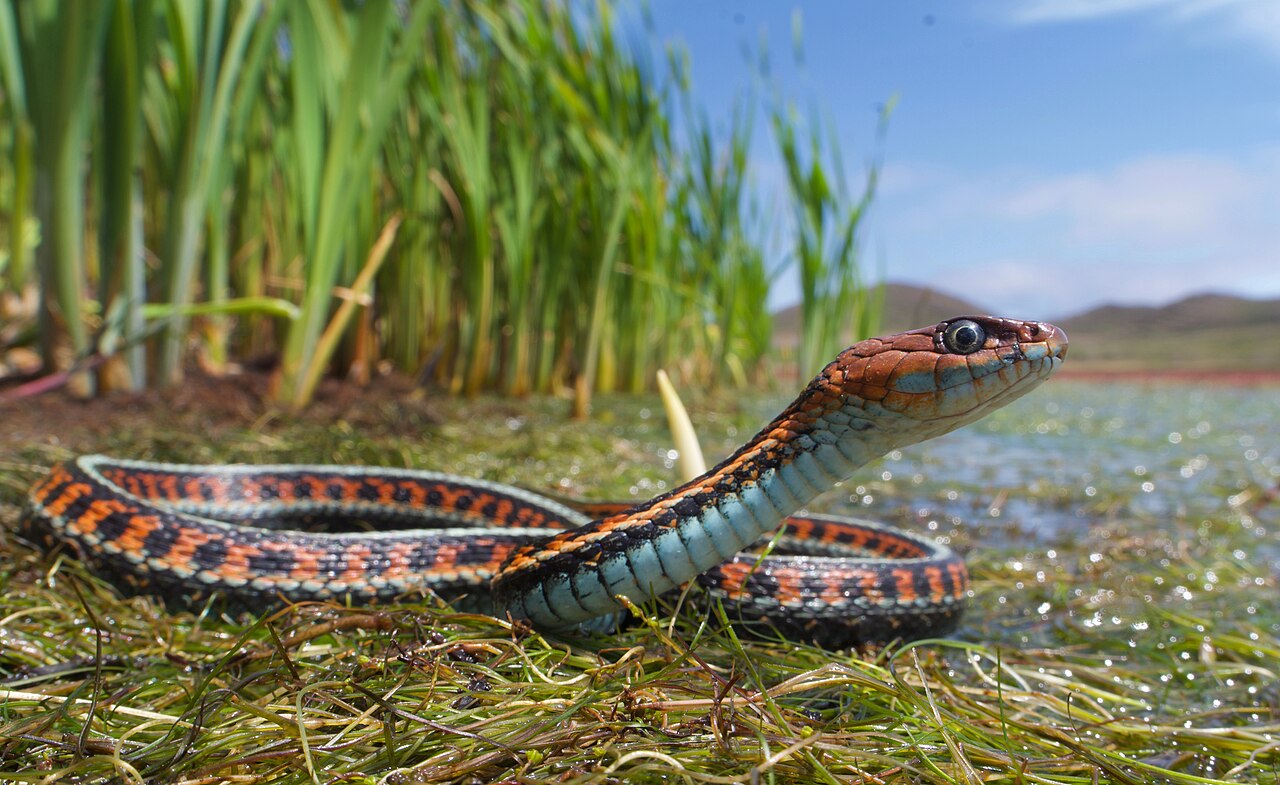
Frogs are one of the most important food sources for snakes on almost every continent. They are abundant, they gather predictably around water, and most have no venom or armor to defend themselves. For many small and medium-sized snakes, frogs are a staple rather than an occasional snack. People often first learn this the hard way. They hear a frog giving a loud, drawn-out distress scream from the edge of a pond, then find a snake holding it by a hind leg. That scene is unsettling, but it is a completely normal part of how wetland food webs work.
In the United States, the most familiar frog eaters are garter snakes, ribbon snakes, and the many species of water snakes in the genus Nerodia. Ribbon snakes in particular feed heavily on frogs, tadpoles, and salamanders. Water snakes take frogs and fish in roughly equal measure depending on what the habitat offers. Cottonmouths and copperheads also eat frogs, especially when they are young. Hognose snakes are best known for eating toads, but they take frogs too. In Australia, the keelback is a notable frog specialist, and green tree snakes and red-bellied black snakes also eat many frogs. In India, the checkered keelback is one of the most common snakes around paddy fields and village ponds and eats large numbers of frogs. Rear-fanged vine snakes and cat snakes pick frogs off vegetation, often at night.
Most frog-eating snakes do not constrict. Garter, ribbon, water, and keelback snakes usually grab the frog and begin swallowing it alive. They often start with whichever end they caught, and the snake's backward-curving teeth stop the slippery prey from pulling free. Frogs fight back by kicking, puffing up with air to make themselves harder to swallow, and screaming, which can occasionally startle a predator into letting go. Some snakes manipulate the frog until they can swallow it headfirst, which folds the limbs neatly against the body. Rear-fanged species may use mild venom to quiet struggling prey, but the snakes in this group that people meet are generally not considered dangerous to humans.
Not every frog is safe to eat, and this is where the relationship gets more complicated. Cane toads, which are technically toads, have devastated some Australian snake populations because the toxins in their skin glands can kill predators that have not evolved to cope with them. Red-bellied black snakes and some other native species have suffered where cane toads spread. The keelback is a partial exception, because it tolerates cane toad toxin better than most native snakes, although it still tends to prefer native frogs. The relationship also runs the other way. Large frogs such as the American bullfrog regularly eat small snakes, including baby garter snakes and water snakes.
For homeowners, the practical takeaway is simple. Anything that supports frogs will also support the snakes that eat them. Garden ponds, water features, bog gardens, leaky irrigation, and lush damp borders all draw frogs, and in many regions they become hunting grounds for garter snakes, water snakes, or keelbacks within a season. Most of these visitors are harmless and help keep the local ecosystem in balance. However, cottonmouths in the southeastern US, red-bellied black snakes in eastern Australia, and venomous species around Indian paddy fields and ponds can also follow frogs. It is wise to watch where you step and reach around water edges, especially at dusk and after rain, when frogs are most active and snakes come to hunt them. If you see a snake catching a frog, do not try to rescue the frog or pull the snake away. A snake busy with prey is still capable of defensive bites, and interfering puts you at risk for no benefit to either animal.
A myth worth clearing up is that a snake near water must be a dangerous water moccasin, or that any snake eating frogs is aggressive. Frog-eating behavior tells you about diet, not danger, and most snakes seen hunting frogs in yards are non-venomous species. Because harmless and venomous frog eaters can share the same pond edge, appearance and behavior alone can mislead you. The safest approach is to stay at least a couple of body lengths back and take a clear photo from that distance. Then let SerpentID compare the markings, head shape, and pattern against the species most likely in your area. If the result points to a venomous snake near your home, contact your local wildlife service or a licensed snake catcher rather than trying to move it yourself. If anyone is bitten, seek professional medical help immediately.