


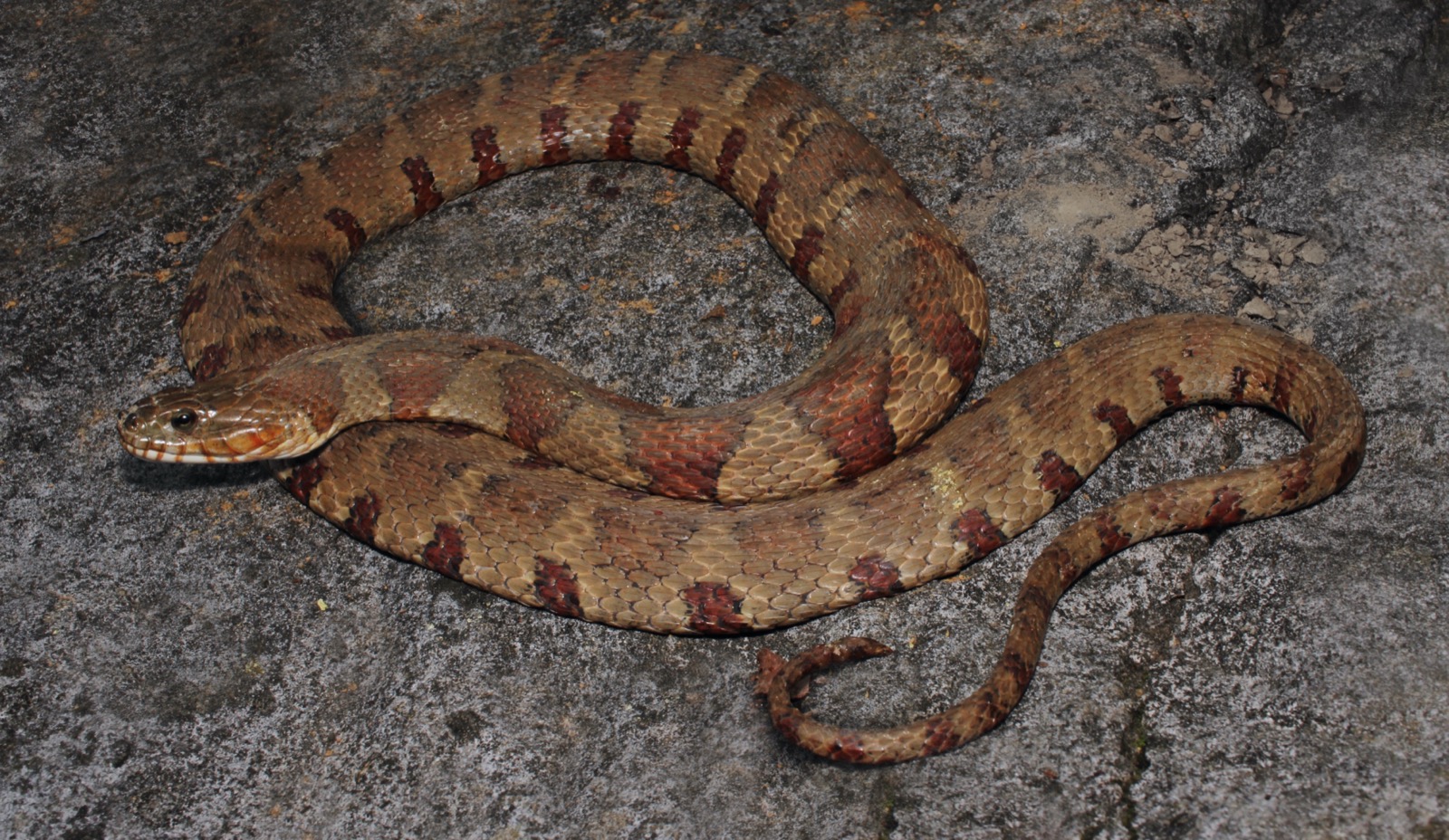
Fish are one of the most common prey types for snakes that live near water. Snakes have no single fishing technique, but the basic idea is simple. A snake either waits motionless in shallow water or along a bank until a fish swims within reach, or it actively searches under rocks, along weed beds, and in muddy shallows, pushing its head into crevices where small fish hide. Once it grabs a fish, it usually carries it to the bank or a log and swallows it headfirst, which folds the fins and spines flat so they do not catch in the throat. Most fish-eating snakes are not constrictors and not venomous in any meaningful way. They just grab, hold, and swallow.
In the United States, the snakes most often seen eating fish are the water snakes in the genus Nerodia, such as the northern water snake, the Midland water snake, and the banded water snake. These heavy-bodied, harmless snakes take minnows, sunfish, catfish, and whatever else they can catch, along with frogs and tadpoles. Cottonmouths, which are venomous pit vipers, also eat fish but are true generalists that take frogs, other snakes, small mammals, and even carrion. Garter and ribbon snakes take small fish when they find them stranded in shallow pools. One well-documented example of how flexible these diets are comes from the Lake Erie water snake. After the invasive round goby spread through the Great Lakes, researchers found that gobies came to make up the large majority of the snakes' diet, a shift credited with helping the snake's population recover.
India and Australia have their own fishing specialists. In India, the checkered keelback is one of the most familiar snakes in ponds, paddy fields, wells, and village tanks, and it feeds heavily on fish and frogs. It is non-venomous but can be quick to bite when cornered, and it is sometimes mistaken for a dangerous species simply because it is so common near people. In northern Australia, the Arafura file snake lives almost entirely in water and eats fish, using its rough, baggy skin to help grip slippery prey. Australia's seas, along with those around India and Southeast Asia, are home to many sea snakes, and most of them eat fish or eels. A few have narrowed their diet remarkably, such as the turtle-headed sea snake, which feeds on fish eggs. Unlike the freshwater species above, sea snakes are venomous elapids and should always be left alone.
A persistent belief among anglers and pond owners is that water snakes ruin fishing by eating all the game fish. The evidence does not support this. Studies of water snake diets generally show that they take mostly small fish and the slow, sick, or injured individuals that are easiest to catch, along with plenty of frogs and invasive species where those are abundant. In a natural lake or river, snakes are a minor predator compared with larger fish, herons, otters, and kingfishers. Killing water snakes does not improve fishing, and it puts people at real risk, because many of the snakes killed are misidentified and a cornered snake is far more likely to bite than one left alone.
Backyard ponds are a different situation, because a small, clear pond with no hiding places makes fish unusually easy to catch. A water snake or garter snake that finds a stocked garden pond may keep coming back. If you want to reduce that, give fish deep areas and submerged shelters such as pipes or stacked stone where they can escape, keep tall grass and dense ground cover trimmed back from the edge so the pond is less inviting to a snake, and remember that frogs breeding in the pond will attract snakes too. Avoid loose garden or bird netting over the water, which commonly entangles snakes and other wildlife. Rigid mesh panels are safer. Never try to grab, pin, or net a snake out of a pond, and do not reach into water plants or filter boxes without looking first.
If you see a snake hunting along your pond, dock, or creek bank, the safest move is to step back and give it room. Many harmless water snakes look dark and bulky in the water and are confused with cottonmouths, while in India and Australia a fishing snake near a home could be harmless or could be something you should not get near. From a safe distance, take a clear photo of the head, body pattern, and how the snake sits in the water, then let SerpentID compare those markings against the species most likely in your area. If the result points to a venomous snake, or if you are unsure and it is close to a home, contact your local wildlife services or a licensed snake removal service rather than handling it yourself. If anyone is bitten, seek professional medical help immediately.