


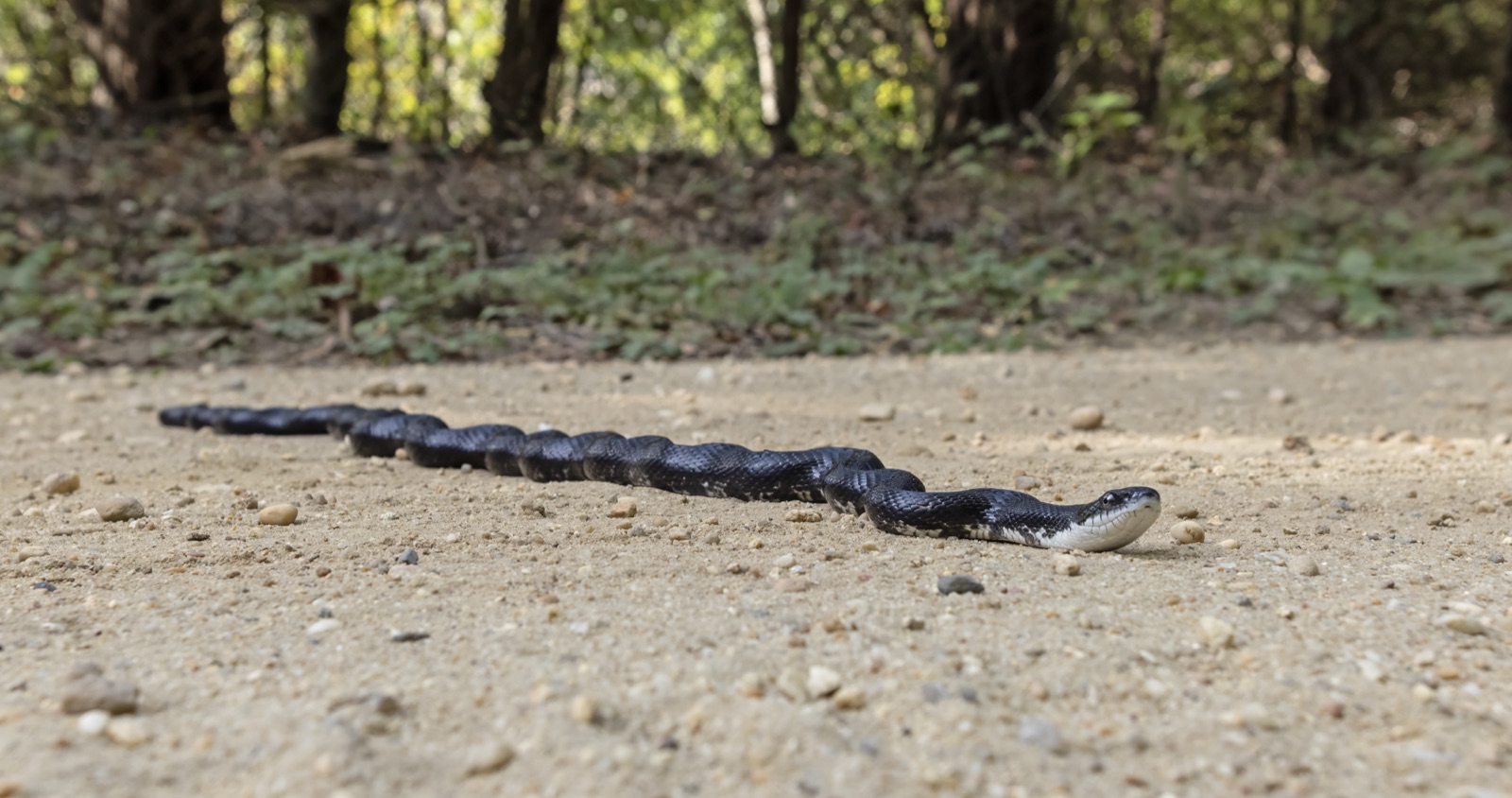
Snakes do eat birds, and for some species birds are a regular and important part of the diet. What most people actually witness, though, is not a snake catching a flying adult bird but a snake working its way into a nest. Eggs, helpless nestlings, and clumsy fledglings that have just left the nest are easy meals: they cannot fly away, they are packed with nutrition, and they sit in predictable places. That is why backyard birdwatchers in the United States, Australia, and India sometimes discover a snake coiled inside a nest box or stretched along a branch beside a robin's nest. It can be upsetting to see, but it is a normal predator-prey relationship that has existed for millions of years.
In North America, rat snakes are the best-known nest predators. Eastern and Texas rat snakes are excellent climbers that can move up rough bark, along gutters, and onto poles, and field studies in eastern forests have repeatedly identified them as major predators of songbird nests. Researchers have found that rat snakes tend to hunt along forest edges, which is exactly where many backyard birds build, and some work suggests they may notice nests partly by watching the comings and goings of parent birds. Racers, kingsnakes, and corn snakes also take eggs and nestlings when they find them, and ground-hunting species such as rattlesnakes occasionally eat quail chicks or other birds that nest on the ground. None of these snakes specialize only in birds; rodents, lizards, and frogs still make up much of their diet.
In Australia, carpet pythons are the snakes most often blamed for missing birds. They are nonvenomous constrictors that regularly eat birds, possums, and rodents, and they are notorious for slipping into aviaries and poultry pens, where a caged bird has nowhere to go. The native brown tree snake of northern and eastern Australia also hunts birds and eggs at night. That same species became a textbook example of what can go wrong when a bird-eating snake reaches a new place: after it was accidentally introduced to Guam around the end of World War II, it wiped out most of the island's native forest birds, which had never evolved defenses against a climbing snake predator.
In India, the Indian rat snake, often called the dhaman, is a fast, nonvenomous generalist that eats rodents, frogs, and sometimes birds and their eggs. Cat snakes, a group of slender, mostly nocturnal tree snakes with mild venom that is not considered dangerous to people, are well known for raiding nests in trees and hedges. The trinket snake and young Indian rock pythons also take birds when the chance arises. Because cobras and other dangerous species can also turn up near poultry or ground nests while hunting rats, any snake near a coop or nest site in India should be treated with caution until it is properly identified.
A common myth is that snakes hypnotize birds or charm them out of trees. There is no scientific support for this. Birds that seem frozen near a snake are usually nestlings too young to flee, or adults mobbing the snake with alarm calls and dive-bombing to drive it off. If you want to make nest boxes harder for snakes to reach, the most reliable approach is to mount them on smooth metal poles away from trees, fences, and shrubs, and add a cone or stovepipe-style baffle below the box. Avoid loose plastic netting or sticky barriers, which entangle and kill snakes, lizards, and birds alike. Feed spilled from bird feeders can attract rodents, which in turn draw snakes, so keeping the ground beneath feeders clean also helps.
If you find a snake inside a nest box, aviary, or coop, resist the urge to reach in, pull the snake out, or try to kill it. Most bites happen when people try to handle or harm a snake, and a snake wedged in a box may strike defensively if a hand appears in front of it. Step back, keep pets and children away, and photograph the snake from a safe distance. SerpentID can compare its markings, body shape, and pattern against the species most likely in your area, so you know whether you are looking at a harmless rat snake or carpet python or something that needs more caution. If the snake turns out to be venomous, or you simply need it moved, contact local wildlife services or a licensed snake catcher, and if anyone is bitten, seek professional medical help immediately.