


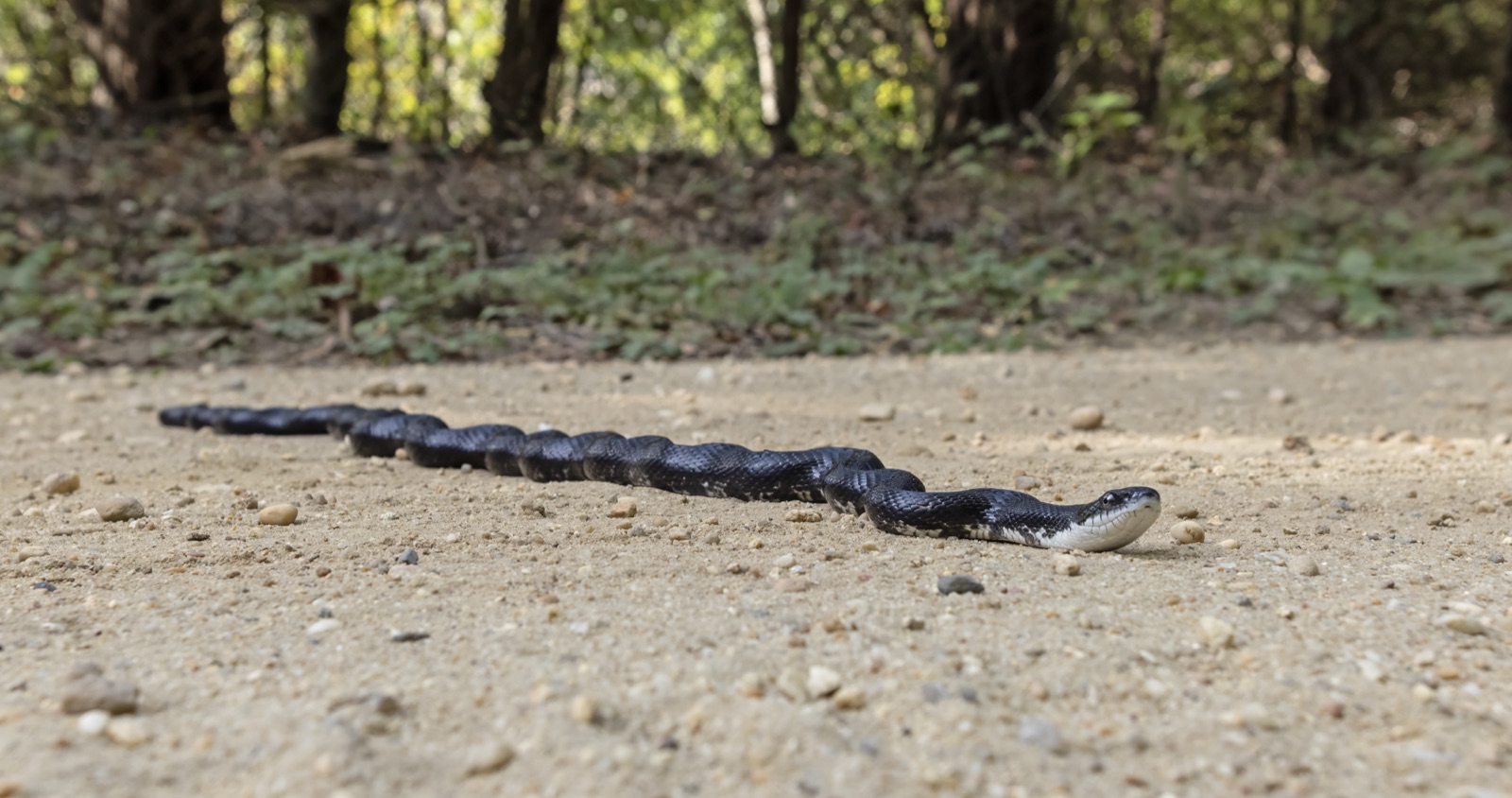
Snakes do eat bats, but bats are not a staple food for most species. A bat is fast, flies at night, and roosts in places that are hard to reach, so only snakes that climb well and are willing to wait tend to catch them. When a snake does eat a bat, it is usually because the bat was resting, roosting, or emerging from a crowded roost where it could be grabbed in a single strike. Most of what herpetologists know comes from field observations at caves, barns, tree hollows, and buildings where bats gather in large numbers.
The best documented bat hunters live in the Caribbean. The Cuban boa and the Puerto Rican boa are known to position themselves at cave entrances and hang from rock or vegetation as bats stream out at dusk, snatching individuals out of the air and constricting them. Researchers in Cuba have described boas spacing themselves across a cave passage in a way that appears to increase their success, a finding that drew attention because snakes are rarely thought of as coordinating with one another. These observations are notable precisely because they are unusual; they involve a predictable, dense food source that most snakes never have access to.
In the United States, rat snakes are the group most often reported eating bats. These strong climbers explore barns, rafters, hollow trees, and occasionally attics and wall voids, where they may find roosting bats or flightless young. Other climbing snakes may take a bat opportunistically, but there is no common American snake that specializes in them. In Australia, pythons such as carpet pythons have been recorded feeding on flying foxes and smaller bats near roosts, and tree-dwelling species can take bats from foliage or hollows. In India and the rest of South Asia, climbing snakes including some rat snakes and tree-living species have been observed taking bats, though records are scattered and bats remain a minor part of their diets compared with rodents, birds, lizards, and frogs.
A common belief is that bats attract snakes into houses in large numbers. The reality is more modest. Snakes follow food, shelter, and temperature, and a bat colony is one possible food source among many. A rat snake that finds its way into an attic is more often hunting mice, rats, or nesting birds than bats. Still, a long-established roost in a barn, shed, or roof space does create a reliable meal, and a climbing snake that discovers it may return. If you hear bats in your roof and later find a shed snake skin in the same area, the two are probably connected.
For people with bat houses, the main concern is placement. Bat boxes mounted on trees or near dense shrubs are easier for snakes to reach than boxes mounted on smooth poles or building walls, and many bat conservation groups recommend predator guards on poles. Inside barns and outbuildings, the practical lesson is to avoid reaching blindly onto rafters, beam tops, and ledges where bats roost, since a snake may be resting there too. It is equally important not to handle bats themselves; in all three countries bats can carry rabies or related lyssaviruses, so any bat contact should be reported and assessed by a health professional, and any snake bite should be treated by seeking professional medical help immediately.
Seeing a snake take a bat can be startling, but it is a natural predator-prey interaction and not a sign that the snake is dangerous to people. Bats in many regions are protected species, and so are many snakes, so the best response is to leave both alone and avoid disturbing the roost. If the activity is inside a living space or an attic you need to use, a licensed wildlife removal service or local snake catcher can handle the snake, and a bat specialist can advise on safe exclusion of the colony outside the breeding season.
If you spot a snake near a roost, on a rafter, or in an attic space, stay well back and do not try to grab, poke, or move it. Take a clear photo from a safe distance, using zoom rather than stepping closer, and let SerpentID compare its markings, body shape, and pattern against the species most likely to occur in your area. Most bat-eating snakes in the US, such as rat snakes, are harmless to people, but in Australia and India climbing snakes near buildings can include venomous species. If the result suggests a venomous snake, or you are unsure, contact your local wildlife service or a licensed snake catcher and keep children and pets away until it has been dealt with.