


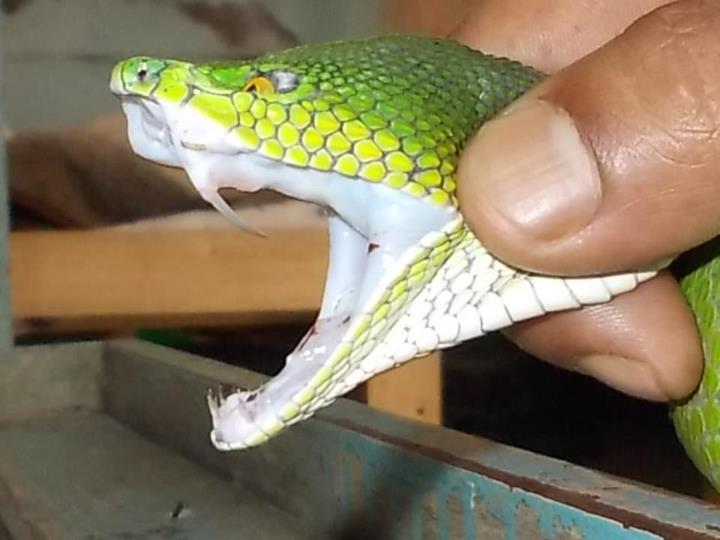
It’s a common misconception that snakes dislocate their jaws to swallow large prey. While it certainly looks like a painful and unnatural feat when a snake engulfs an animal several times wider than its own head, snakes do not actually dislocate their jaws. Instead, they possess an incredibly specialized and flexible jaw and skull structure that allows for an extraordinary gape, far beyond what most other vertebrates can achieve. This isn't a painful injury, but rather a normal, functional aspect of their anatomy, critical to their survival.
The key to this remarkable ability lies in the snake's lower jaw, or mandible. Unlike mammals, whose two halves of the lower jaw are fused at the chin, a snake's mandibles are connected only by a highly elastic ligament. This ligament acts like a stretchy rubber band, allowing the two sides of the jaw to separate and move independently. When a snake is eating, it can literally 'walk' its lower jaw over its prey, alternating the movement of each side to pull the meal deeper into its throat.
Beyond the flexible lower jaw, the rest of the snake's skull is also uniquely adapted for swallowing. Many of the bones in a snake's head, including those connecting the jaws to the skull, are not rigidly fused. A particularly important bone is the quadrate bone, which acts as a hinge, allowing the lower jaw to swing outward and downward. This, combined with other loosely articulated bones, means the entire jaw apparatus can expand dramatically, creating an enormous opening that can accommodate prey much larger than the snake's own head.
The process of swallowing a large meal is a slow and deliberate one. The snake uses its numerous backward-curving teeth, not for chewing, but for gripping and pulling the prey. By alternately advancing one side of the jaw and then the other, the snake effectively 'ratchets' its way over the prey. This methodical action ensures a secure grip and prevents the meal from slipping out. It's a testament to evolutionary design, allowing a legless predator to consume substantial, nutrient-rich meals.
This incredible jaw flexibility provides snakes with a significant evolutionary advantage. As ambush predators, many snakes do not hunt frequently. Being able to consume a large meal when the opportunity arises means they can go for extended periods without needing to eat again, conserving energy and reducing their exposure to potential threats. This feeding strategy is highly efficient for their carnivorous diets, which often consist of rodents, birds, or other reptiles that are much larger than the snake's resting head size.
So, while the term 'dislocation' implies a painful, abnormal separation of bones from a joint, a snake's expanded jaw is a perfectly normal and healthy function. It’s an essential part of their predatory biology, allowing them to thrive by consuming large prey items. This unique anatomical adaptation ensures that for snakes, a wide-open mouth isn't a medical emergency, but simply the act of having a meal.
Observing a snake swallowing prey can be fascinating, but it's crucial to always maintain a safe distance. Snakes, especially when they are focused on a meal or digesting a large one, can be particularly vulnerable and may strike defensively if approached. If you encounter a snake and are unsure of its species, remember to take a photo from a safe distance and use the SerpentID app to compare its markings against local species. If it's a venomous species, contact your local wildlife services for guidance.