


Walk through the camping aisle of almost any outdoor store and you may still find a small plastic snake bite kit: a suction pump, a few cups of different sizes, sometimes a razor blade or a strap. The packaging promises to pull venom out of a wound before it spreads. It is an appealing idea, and it has been sold for decades. The problem is that when researchers actually tested these devices, they did not do what the box claims, and the people who write snake bite guidance for doctors and wilderness responders now recommend leaving them at home.
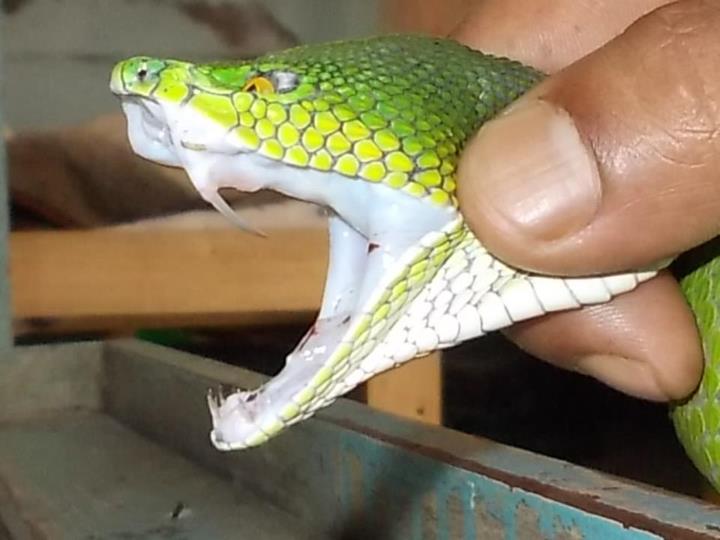
The reason starts with how a venomous bite works. Pit vipers such as rattlesnakes and copperheads, and elapids such as cobras, kraits, and Australian brown snakes, deliver venom through fangs that act like hollow or grooved needles. The venom is placed under the skin or into muscle and begins moving into surrounding tissue and the lymphatic system almost at once. By the time anyone opens a kit, the venom is no longer sitting in a neat pool at the puncture site waiting to be drawn back out. A surface cup pressed against the skin simply has very little to work with.
Studies from the early 2000s put this to the test. In one widely cited experiment using a simulated bite with radio-labelled venom in human volunteers, a popular extractor pump removed only a trivial fraction of the venom, an amount too small to change the outcome of a real envenomation. Animal studies of the same type of device found no benefit and, in some cases, more local tissue damage where the suction cup had been applied. Based on that evidence, organisations such as the Wilderness Medical Society advise against suction devices for snake bites. Older kits that include blades are worse still, because cutting across fang marks adds bleeding, infection risk, and nerve or tendon injury without removing venom.
Suction is only one of several remedies that have hung on long past their evidence. Sucking venom out by mouth carries the same failure plus the risk of contaminating the wound. Ice and cold packs were once popular but have been linked to additional tissue injury. Tight tourniquets that cut off blood flow can cause serious harm to a limb, and electric shock treatments, which circulated in the 1980s, were studied and found to be ineffective and dangerous. Herbal pastes, black stones, and alcohol show up in folklore in the United States, Australia, and India alike, and none of them neutralises venom. The common thread is that these steps feel active and reassuring while delaying the one thing that genuinely helps, which is getting the person to a hospital where trained staff can assess them and, if needed, give antivenom.
It is worth knowing that official first aid guidance is not identical everywhere, because the snakes are not identical everywhere. Health authorities in Australia, for example, publish specific first aid protocols suited to local elapids, and India's national guidelines are written around the Big Four. These are taught properly in accredited first aid courses, which are a far better investment for anyone who lives, works, or hikes in snake country than any kit sold in a blister pack. What every reputable source agrees on is simple: do not cut, do not suck, do not rely on a gadget, keep the person as calm as possible, and seek professional medical help immediately by calling emergency services.
The best protection, of course, is never needing help in the first place. Most bites happen when people try to handle, move, or kill a snake, or when they put hands and feet where they cannot see. Giving any snake plenty of room, watching where you step, and leaving it alone prevents far more injuries than any kit ever could. If you come across a snake and want to know what it is, take a photo from a safe distance rather than moving closer, and let SerpentID compare its markings against the species likely to occur in your area. If the result points to a venomous species near your home, contact your local wildlife service or a licensed snake catcher to handle it safely.