


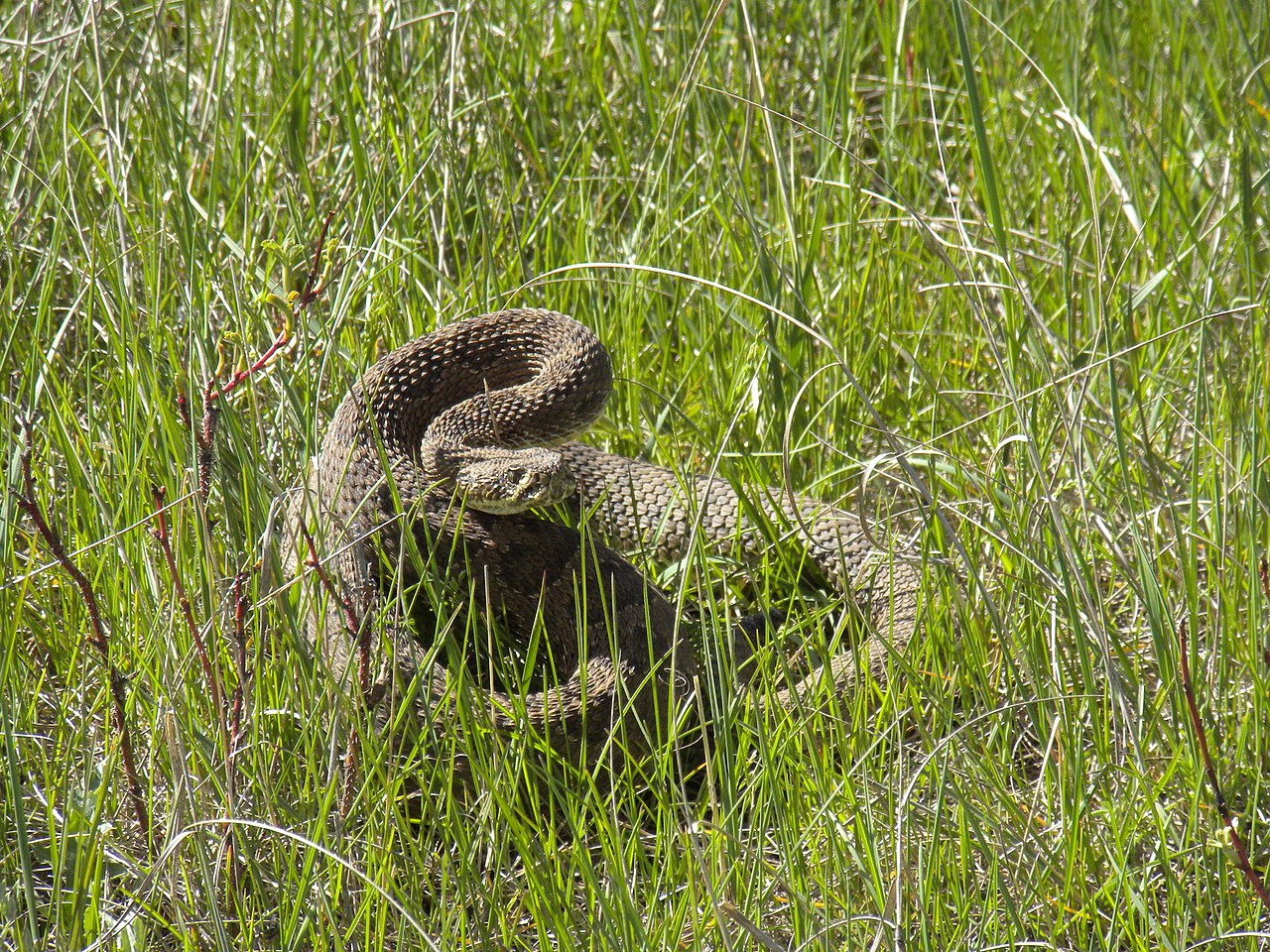
One of the most common beliefs about rattlesnakes is that they will always announce themselves before biting. It is an appealing idea, because it suggests that as long as you listen carefully, you will never be surprised. Unfortunately, it is not how rattlesnakes actually behave. A rattlesnake's first line of defense is not its rattle but its camouflage. Most of the time, a resting rattlesnake stays motionless and quiet, counting on its blotched, earth-toned pattern to keep it unnoticed. Many hikers walk past rattlesnakes every season without ever knowing they were there, precisely because the snake chose silence.
The rattle comes into play when a snake decides that hiding is no longer working. If a person, dog, or predator approaches closely, keeps coming, or lingers nearby, the snake may begin to buzz as a warning to back off. Research published in 2021 found that western diamondbacks raise their rattling rate as a threat gets closer and can abruptly switch to a higher-frequency buzz, which listeners tend to perceive as the snake being nearer than it really is. That is a sophisticated warning system, but it is still a choice the snake makes based on how it reads the situation. Nothing compels a rattlesnake to rattle, and a snake that is suddenly stepped on, grabbed, or pinned may simply strike in self-defense with no warning at all.
Several practical factors can also keep a rattle quiet even when a snake would otherwise use it. Newborn rattlesnakes have only a single prebutton at the tip of the tail and cannot produce a buzz until they have shed and added segments, yet they are born with functional venom. Adult rattles break off, so an older snake may have a short, weak rattle or none at all. A wet rattle after rain or near water makes much less noise, and a snake that is cold may respond sluggishly. On a windy day, near running water, or with traffic or machinery nearby, a rattle that is sounding can be easy to miss. It is also worth correcting a related myth: the number of segments does not reveal a snake's age, because a new segment is added with each shed, and snakes can shed several times a year.
You may also have heard that rattlesnakes are evolving to stop rattling because loud snakes get killed more often by people or livestock. This idea circulates widely, but it is not supported by solid scientific evidence. What is well established is that individual rattlesnakes vary in how readily they rattle, and that many simply prefer to stay hidden. In other words, you do not need an evolutionary story to explain a silent rattlesnake; silence was always part of their normal behavior.
The reverse mistake is also common. Plenty of harmless snakes vibrate their tails when threatened, including rat snakes, racers, bullsnakes, kingsnakes, and many others. In dry leaves or grass, that vibration can sound remarkably like a rattle. So a buzzing sound does not prove a rattlesnake, and a quiet snake does not rule one out. Outside North America the same lesson applies to other warning sounds. In India, saw-scaled vipers rub their keeled scales together to make a rasping noise, and cobras may hiss and raise a hood, but neither species is obliged to warn before biting. In Australia, most dangerous elapids give no audible warning at all. Sound is useful information when you get it, but never a guarantee.
The safest habits therefore do not depend on hearing anything. In rattlesnake country, watch where you put your hands and feet, step onto logs and rocks rather than over them where you cannot see the far side, use a light at night, keep dogs leashed on trails, and give any snake you spot generous space, at least the snake's full body length and preferably much more. If you do hear a rattle, stop, locate the snake with your eyes before moving, and then back away slowly along the path you came. Never try to provoke a snake into rattling, move it with a stick, or kill it, since most bites happen when people interact with snakes. If anyone is bitten, seek professional medical help immediately.
When you come across a snake and are not sure what it is, quiet or not, the best tool is a photo taken from a safe distance. Use your phone's zoom rather than stepping closer, and try to capture the head shape, body pattern, and tail if you can see it. SerpentID can compare those markings against the species most likely to occur in your area, helping you tell a rattlesnake from a harmless lookalike that happens to be shaking its tail. If the result points to a venomous species near your home, trail, or workplace, keep people and pets away and contact your local wildlife service or a licensed snake removal professional to handle it.