


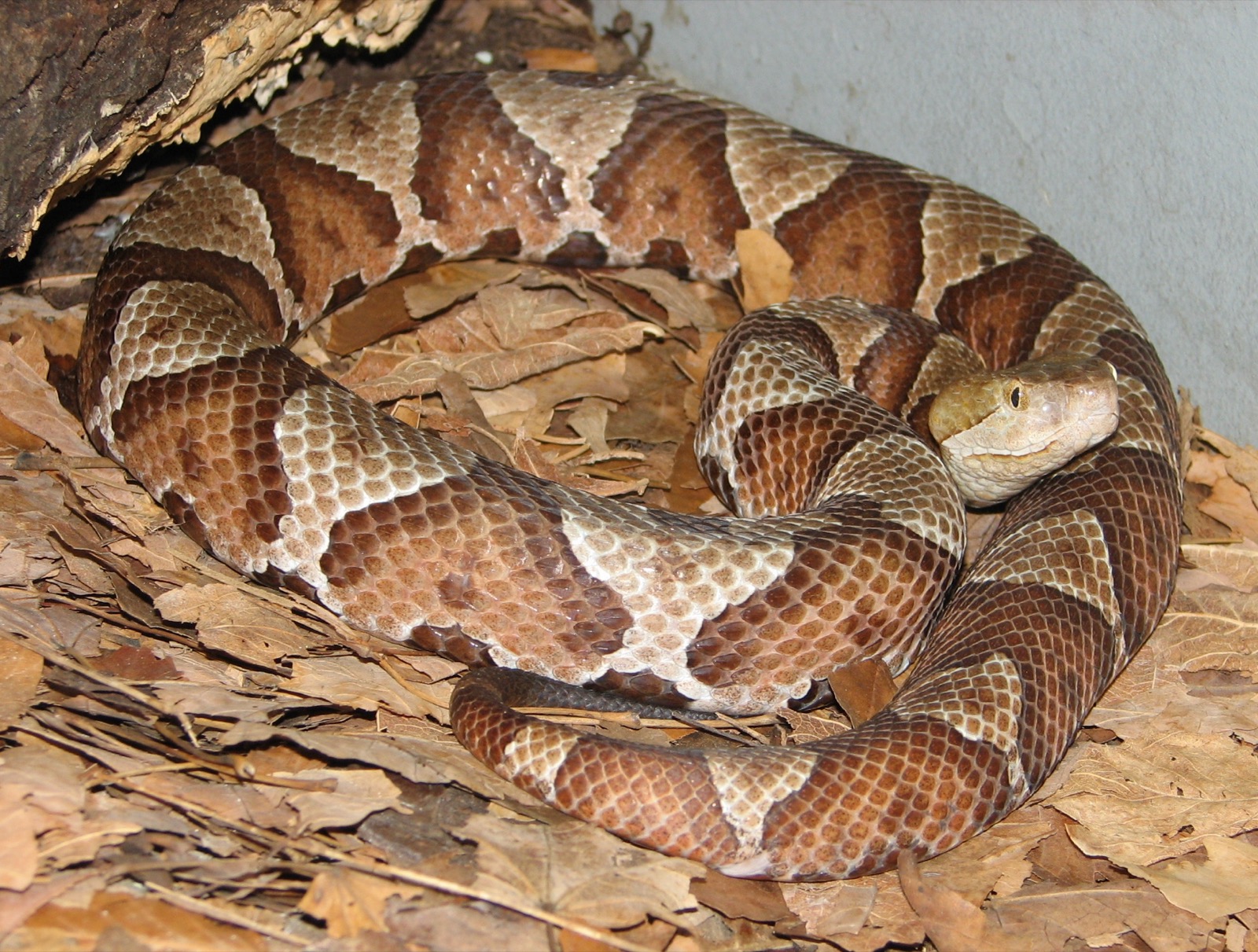
Cottonmouth vs copperhead is a strong search because both snakes sit inside the same danger conversation for many homeowners. People know both names, know both can be serious, and then panic when the scene only provides a partial body, bad light, or one fast photo from a trail edge or canal bank.
Habitat helps frame the comparison without solving it alone. Cottonmouth discussions usually start closer to water, marsh margins, drainage channels, pond edges, and wet low cover. Copperheads also use damp habitat, but many sightings happen in woodland litter, brushy yard edges, rock piles, and dry-to-mixed suburban cover.
Pattern rhythm matters more than a single color impression. Copperheads often show those darker hourglass-style crossbands that narrow across the spine and widen down the sides. Cottonmouths can vary with age and region, but the overall look often feels blockier, darker, and less cleanly hourglass-based from mid-body through tail.
People also over-trust head shape in this comparison. A phone photo taken from above can make almost any defensive snake look broad-headed. A better workflow is to compare body thickness, posture, habitat, and whether the visible markings read like organized crossbands or heavier blotches.
SerpentID is useful here because it can narrow the comparison set and surface the cues to re-check from a safe distance. But if the app returns cottonmouth, copperhead, or low confidence between the two, the field decision stays conservative. Back up, keep pets and children clear, and let the snake have the route.