

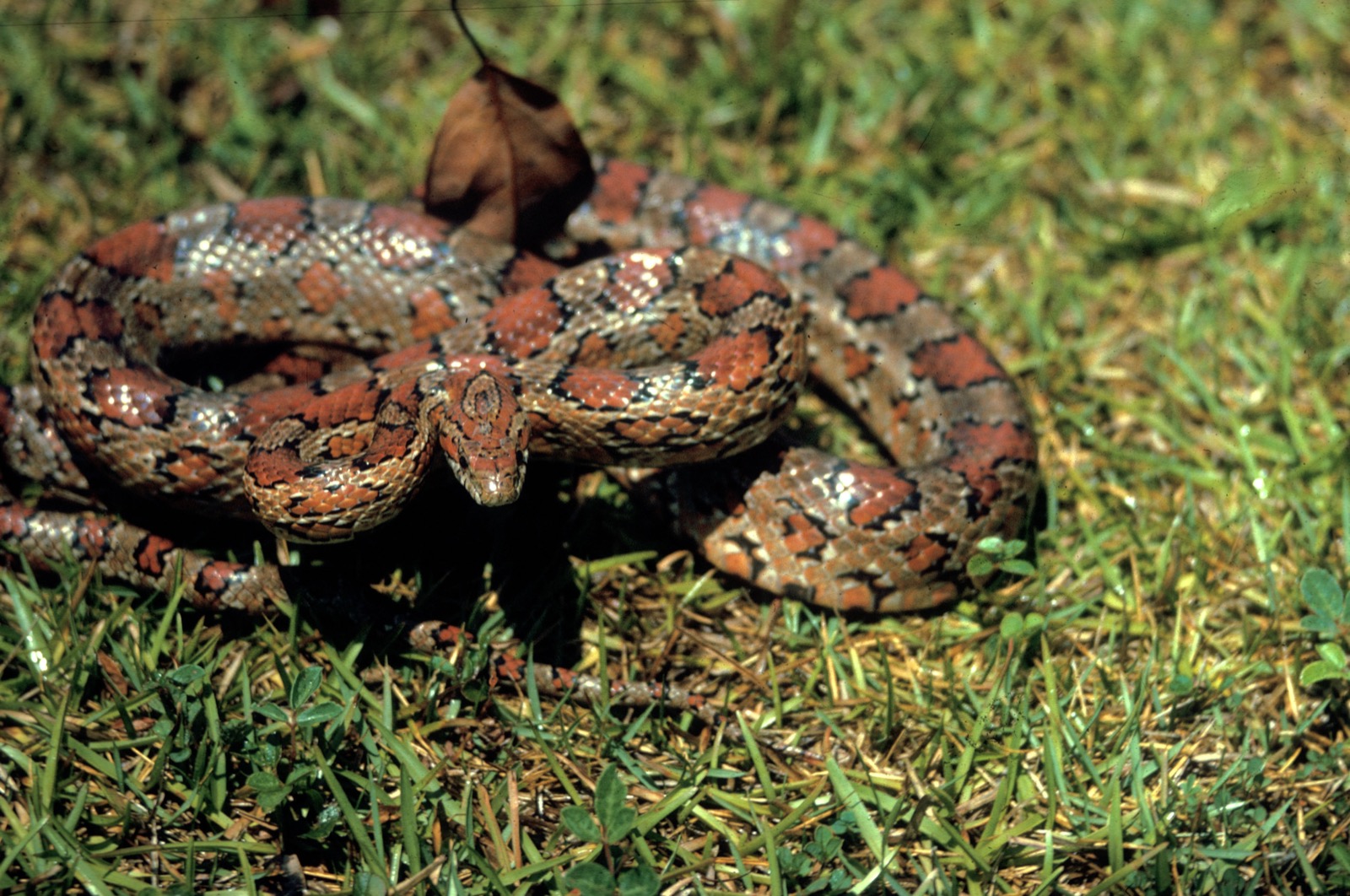
Corn snake vs copperhead is a strong search because both snakes can read as warm brown, orange, or rusty in leaf litter, pine straw, mulch beds, and shed corners. The danger is that color alone pushes people toward copperhead before they compare the actual pattern structure across the body.
The cleanest separator is the rhythm of the markings. Copperheads usually show darker crossbands that narrow over the spine and widen down the sides, creating the classic hourglass feel. Corn snakes more often show blotches or saddles that sit on the back rather than those tight waist-like bands wrapping across the body.
Body impression helps when the photo is imperfect. Corn snakes often look longer, smoother, and more evenly tapered from neck to tail. Copperheads usually read heavier through the middle with a more compact, dense profile even when the total length is not dramatic.
People often over-trust a head crop or one reddish patch. That shortcut fails fast, especially in porch light or late-evening photos. A safer workflow is to compare the whole visible body, ask whether the marks cross the body like bands or sit on the back like blotches, and keep distance while you decide.
SerpentID is useful here because it can surface corn snake as a real alternative when the brain wants to label every reddish snake as copperhead. If the app still returns copperhead or low confidence, the field decision stays conservative: no handling, no one-more-photo move, and no pets or children near the snake.