


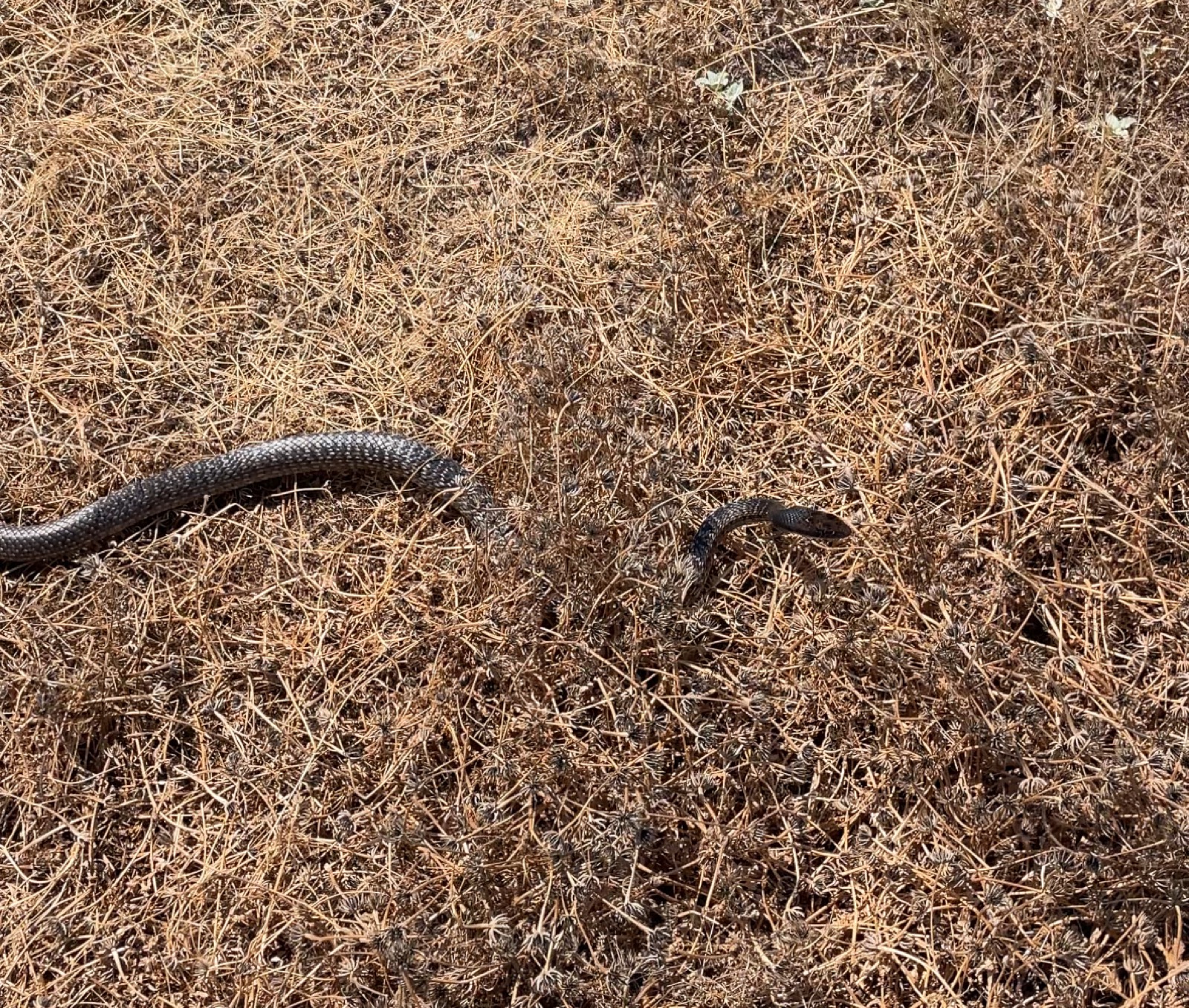
Coachwhip vs rattlesnake is a strong intent query because a fast-moving snake in dry grass or open ground tends to feel more dangerous than it really is. People often remember speed, length, and color in a blur, then search for confirmation after the animal is already gone.
Coachwhips usually give a very different full-body impression from rattlesnakes. They tend to look long, thin, and progressively tapered, especially toward the tail. Rattlesnakes usually read as thicker, more compact, and less whip-like across the whole body silhouette.
Pattern fade is another useful clue. Many coachwhips show stronger patterning toward the front and a smoother or more blended look farther down the body. Rattlesnakes usually keep a more obviously organized series of blotches, diamonds, or bands that stays visually important from mid-body through tail.
Movement can mislead people in both directions. A snake that moves quickly is not automatically harmless, but coachwhips are famous for speed and for covering open ground in a way that looks very different from the heavy coiled posture people associate with rattlesnakes. Use behavior as support for the ID, not as the whole case.
SerpentID helps most when you catch one safe mid-distance photo showing the entire snake instead of a rushed zoomed head shot. If the app cannot rule out rattlesnake with confidence, default to space and caution. SEO-friendly advice still needs to end with the correct field behavior.