


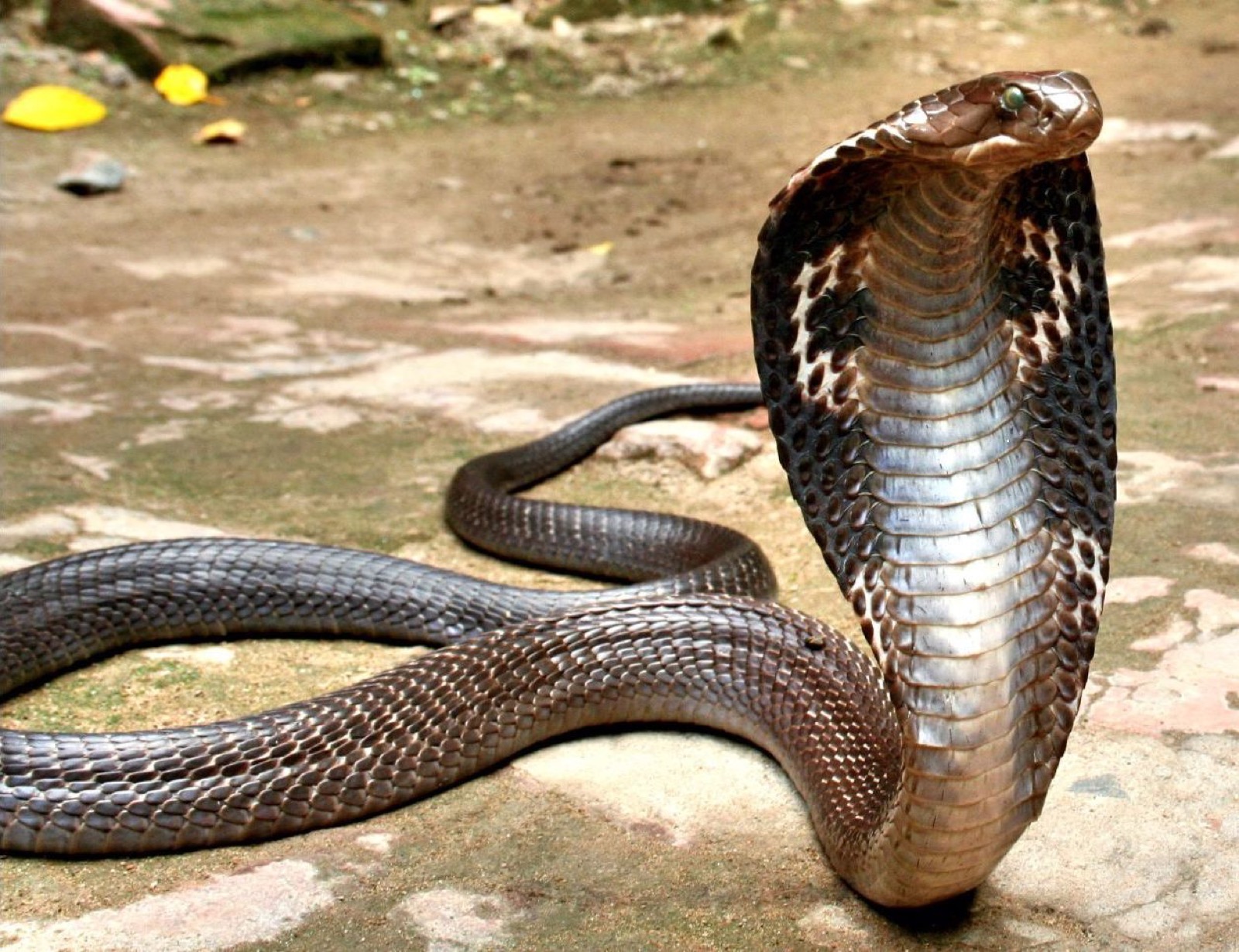
Spitting venom sounds like something out of a movie, but it is a real and well-documented defensive behavior. It is also far rarer than many people assume. Out of more than 4,000 snake species worldwide, only around 15 to 20 can deliberately project venom through the air, and almost all of them are cobras in the genus Naja. The best known include the Mozambique spitting cobra, the black-necked spitting cobra, and the red spitting cobra in Africa, and species such as the equatorial spitting cobra and Indochinese spitting cobra in Southeast Asia. The rinkhals of southern Africa, a cobra-like snake that is not a true cobra, can spit as well. Every other venomous snake, from rattlesnakes to taipans, delivers venom only by biting.
The word spit is a little misleading, because the venom does not come from the mouth the way saliva would. It comes out of the fangs. In most venomous snakes, venom travels down a channel in each fang and exits through an opening near the tip, which points downward so venom flows into a wound. In spitting cobras that opening is smaller, rounder, and angled forward, and the inside of the fang has ridges that help shape the stream. When the snake contracts the muscles around its venom glands, venom is forced out under pressure as a pair of fine jets. The snake often rocks or twitches its head as it sprays, which spreads the venom into a pattern that makes it more likely to reach a moving target's face.
Spitting is a defensive act, not a hunting technique. These cobras still bite and inject venom to subdue prey, just like their non-spitting relatives. The spray is reserved for large animals that seem threatening, and research suggests it is aimed at the eyes. Studies of spitting cobras have shown they tend to track the face of an approaching person and adjust their aim to head movements. The effective range is usually cited at around two to three meters, which is a good reason to treat that distance as a minimum rather than a comfortable buffer when any cobra is raised and hooded. A spitting cobra can also spray more than once, so stepping in closer after the first spray only makes things worse.
Venom on intact skin is generally far less of a concern than venom in the eyes. In the eyes it causes immediate, intense burning pain, tearing, and swelling, and without proper treatment it can damage the cornea and lead to lasting vision problems or blindness. Anyone who gets venom in their eyes, or who is bitten by any cobra, should seek professional medical help immediately. It is also worth remembering that a spitting cobra that has sprayed can still bite, so the priority is getting away from the snake, not investigating what happened.
Scientists have found that spitting evolved independently at least three separate times: once in African cobras, once in Asian cobras, and once in the rinkhals. A 2021 study published in Science found that in these lineages, venom composition shifted in a similar way, with extra components that boost the pain caused by the snake's typical cytotoxins. That combination makes the spray a very effective deterrent against large mammals, and some researchers have suggested the timing of its evolution points to pressure from early primates, possibly including our own ancestors. Whatever the cause, the result is a snake that can drive off a predator without ever making contact.
Several myths cling to this topic. No rattlesnake, copperhead, cottonmouth, or coral snake can spit venom, so stories of spitting snakes in the United States are misunderstandings, often of a snake's musk or a defensive hiss with a little spray of moisture. Australia has no spitting snakes either. In India, the spectacled cobra and monocled cobra are dangerous because of their bites, and while occasional reports describe venom being ejected during defensive displays, they are not considered true spitting species. Spitting cobras are a real concern mainly for people living, working, or traveling in parts of sub-Saharan Africa and Southeast Asia, where wearing glasses or sunglasses and keeping your distance from any raised, hooded snake are sensible habits.
Because only a few species spit and most cobra-like displays happen at close range, the safest response to any hooded or raised snake is the same everywhere: stop, back away slowly, and keep your face turned away from it. If you want to know what you saw, take a photo from a safe distance, using zoom rather than stepping closer, and let SerpentID compare its markings and shape against the species likely to live in your area. If the app suggests a cobra or any other venomous snake near your home, do not try to move it yourself. Contact your local wildlife service or a licensed snake catcher and let trained professionals handle it.