


The idea that a single drop of blood can summon predators from miles around is a persistent trope in survival fiction, but the reality for snakes is much more nuanced. Snakes can indeed chemicalize and detect blood, yet their response to it is entirely bound to their natural hunting strategies. Unlike mammals that inhale scent particles through nostril membranes, a snake collects chemical traces on the tips of its split tongue and transfers them to a specialized sensory structure called the Jacobson's organ in the roof of its mouth. Through this process, a snake can break down complex molecular signatures, including the proteins, lipids, and iron compounds found in fresh blood.
When a snake flickers its tongue, it gathers chemical particles floating in the air or deposited on soil, leaves, and rocks. Once these molecules reach the vomeronasal system, the snake's brain interprets the information as a spatial map of scent trails. Blood provides a particularly rich collection of chemical cues, allowing a serpent to discern whether a scent belongs to a potential prey item, a competitor, or a predator. However, a snake does not experience scent as an odor in the human sense, but rather as a detailed chemical profile that indicates direction, freshness, and identity.
A common misconception is that human blood will draw wild snakes toward an injured hiker or swimmer. In practice, human blood holds no intrinsic attraction for wild snakes because humans fall completely outside their diet. A snake's predatory response is tightly tuned to specific chemical profiles associated with its natural prey, such as rodents, birds, amphibians, or fish. Even if a snake detects human blood on vegetation or clothing, the overwhelming scent and physical presence of a large mammal signals danger rather than food, causing the reptile to retreat or remain hidden.
Where blood plays a functional role in a snake's life is in the context of feeding and tracking prey. Venomous snakes like pit vipers often strike a small mammal and immediately release it to avoid retaliatory bites. As the envenomated prey wanders off before succumbing to the venom, it leaves behind a faint trail of biological fluids, including microscopic amounts of blood and glandular secretions. The viper then uses its precise chemo-sensory apparatus to follow this exact chemical highway through dense underbrush until it locates the dispatched prey.
Scavenging species and opportunistic feeders may also react to blood scents associated with dead animals. Certain rat snakes, water snakes, and garter snakes will investigate fresh animal remains if the chemical signals match prey they typically consume. However, even during these encounters, the snake moves cautiously, relying on its keen sense of ground vibration and vision to ensure no larger threat is nearby. Blood acts as a subtle breadcrumb trail for survival, not an overpowering trigger that overrides a snake's natural instinct to avoid conflict.
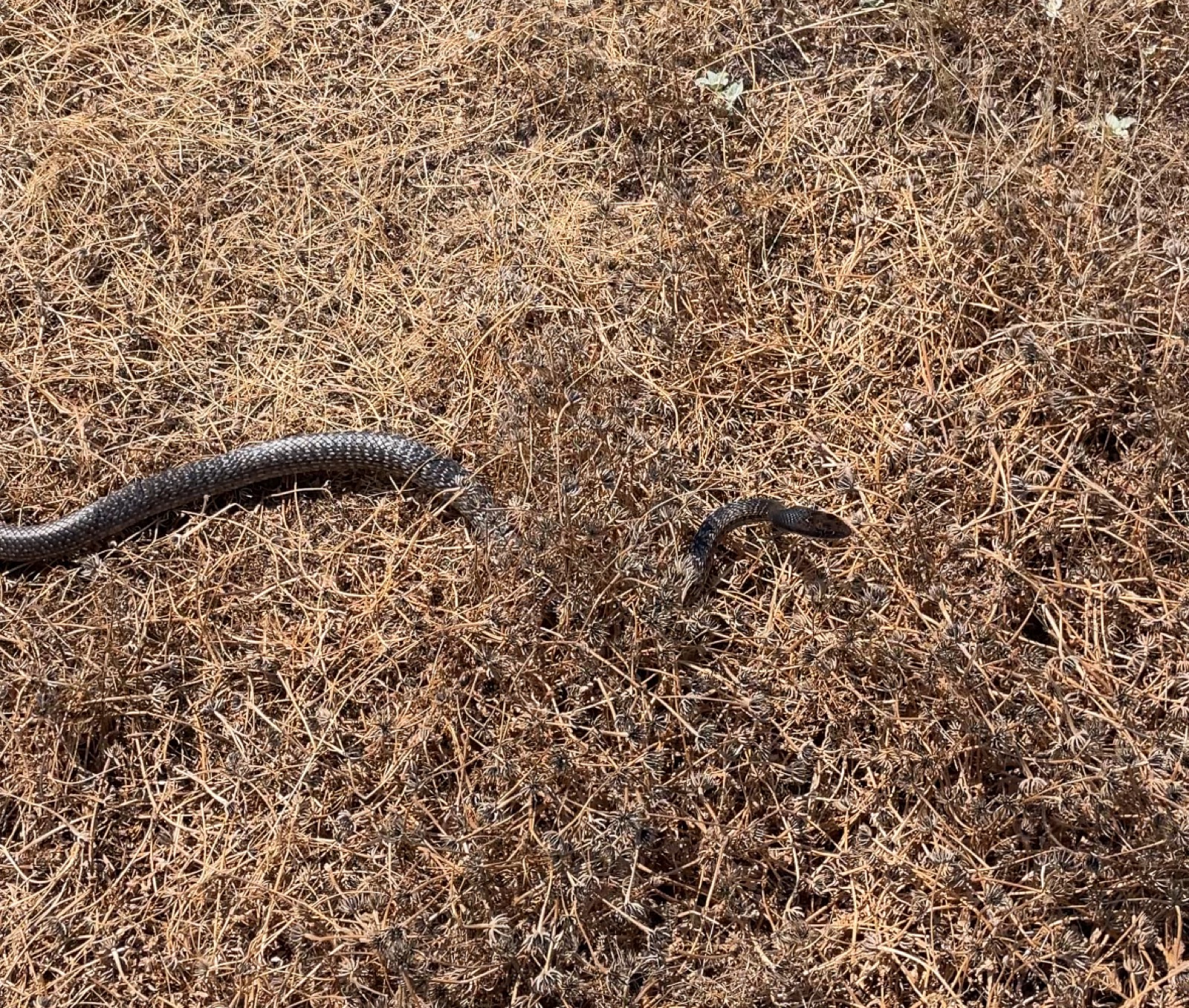
Regardless of whether you are carrying fresh fish, tending to a minor scrape on a trail, or simply working in the garden, encountering a snake in the wild is almost always an accidental event. If you come across a serpent in your yard or out on a path, keep a respectful distance and leave the animal room to retreat. Taking a clear photograph from several feet away allows you to use SerpentID to compare its pattern, head shape, and scale texture against regional species profiles. If you suspect the snake is a venomous species in a high-traffic area, contact local professional wildlife removers to manage the situation safely.