


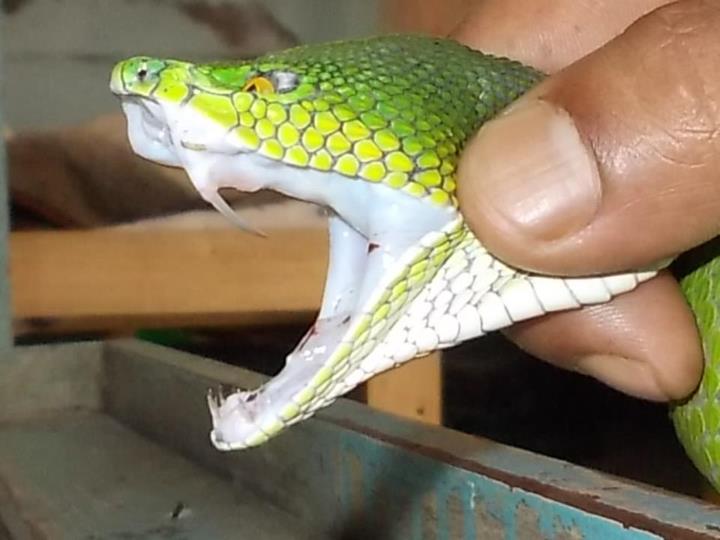
It is a question people often ask after a dog tangles with a snake, or after hearing a story about a snake that had just eaten: does that snake still have venom left? The short answer is that a venomous snake can technically deplete its venom glands, but this happens far less often than people imagine, and nothing about a snake's appearance or recent history tells you it is empty. Treating any venomous snake as fully capable of a serious bite, every single time, is the only safe assumption.
The main reason snakes rarely run dry is that they do not empty their glands with each strike. Herpetologists describe a behavior called venom metering, in which a snake appears to adjust how much venom it releases depending on the situation. Studies on rattlesnakes and other vipers have found that the amount injected can vary with the size of the prey, the type of target, and whether the bite is a feeding strike or a defensive one. Venom is metabolically expensive to produce, so it makes evolutionary sense for a snake to spend only what it needs. The result is that a snake that has just killed a mouse typically still holds a substantial reserve.
This is also why a single snake can bite more than once. If a person, pet, or predator stays within range after the first strike, the snake may bite again, and a second or third bite can still contain venom. Folklore sometimes claims that a snake is harmless right after it bites or eats, or that it 'used up' its venom on the family dog. These ideas are not supported by research and can lead people to approach or handle a snake at exactly the wrong moment. The same caution applies to snakes that have been milked for antivenom production: even professional extraction does not reliably leave the glands empty.
When a snake does use a large portion of its venom, the glands begin to refill. Research on pit vipers and elapids shows that the gland tissue becomes highly active after venom is removed, producing new venom proteins over a period that generally ranges from several days to a few weeks before the supply is fully restored. Some venom is replaced fairly quickly, so a snake is not left defenseless while it recovers. Refill times vary by species, body size, temperature, and the snake's overall condition, which is another reason no one can estimate a particular snake's venom level by looking at it.
It is worth separating this topic from dry bites. Venomous snakes sometimes bite without injecting any venom at all, and a meaningful share of pit viper bites in the United States are thought to fall into this category. A dry bite is a choice or circumstance of that particular strike, not a sign that the snake has run out. Because there is no way to know in the moment whether venom was delivered, every bite from a snake that could be venomous should be treated as an emergency: seek professional medical help immediately, keep the person as calm and still as possible, and do not try to capture or kill the snake to bring it along.
The practical takeaway is simple. A snake that has just struck, just eaten, or just been in a fight is still a snake to give plenty of room. Rather than guessing about its venom supply, focus on what you can safely learn from a distance: its shape, color, pattern, and the habitat where you found it. Take a clear photo from well outside striking range and let SerpentID compare the markings against the species most likely in your area, whether you are in the United States, Australia, or India. If the result points to a venomous species, or you simply are not sure, keep people and pets away and contact your local wildlife service or a licensed snake catcher to handle the situation.