


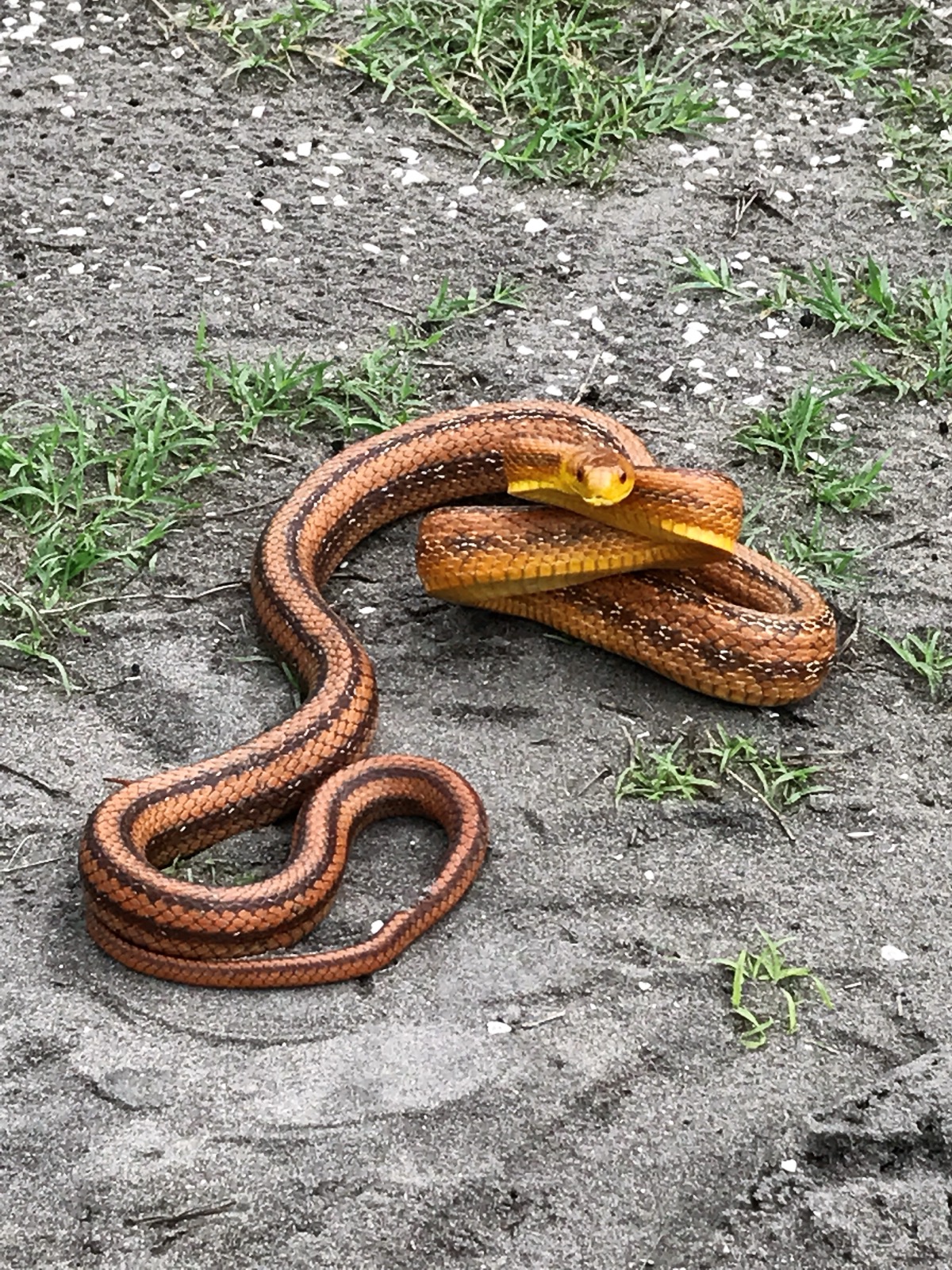
When observing a snake, most people expect to see it glide gracefully forward, utilizing its remarkable musculature and scales to propel itself across various terrains. However, a less commonly discussed, yet entirely natural, aspect of snake movement is their ability to move backward. While not a primary or rapid mode of travel, reverse locomotion is a vital part of a snake's behavioral toolkit, allowing them to navigate challenging situations and respond to their environment in nuanced ways.
The mechanics of backward movement in snakes differ significantly from their more familiar forward gaits like serpentine, rectilinear, or sidewinding. Instead of pushing off with their ventral scales to propel themselves forward, snakes moving backward often employ a modified concertina-like motion or a simple retraction. This involves anchoring a section of their body, typically towards the rear, and then pulling the rest of their body, including the head, backward. The intricate coordination of hundreds of vertebrae and thousands of muscles allows for this precise, controlled retraction, using their scales to find purchase and resist forward slipping.
One of the most common reasons a snake might move backward is as a defensive response to a perceived threat. If a snake feels cornered or too close to a potential predator, including a human, it may slowly back away to create distance or seek cover. This is not a sign of aggression or confusion, but rather a deliberate attempt to disengage from a stressful situation without turning its back completely or exposing itself to further risk. Observing a snake retreating backward is often a clear signal that it feels uncomfortable and wishes to avoid confrontation.
Beyond defense, snakes also utilize backward movement for practical navigation, particularly in tight or confined spaces. Imagine a snake exploring a burrow, a rock crevice, or dense vegetation. Rather than attempting a difficult turn, it can efficiently back out of an enclosed area or adjust its position within a confined space. This ability is crucial for finding shelter, escaping from small traps, or simply maneuvering through the intricate environments they inhabit, showcasing their adaptability to complex physical surroundings.
It is important to understand that backward movement is generally much slower and less fluid than a snake's forward locomotion. Snakes are optimized for forward propulsion, which allows them to hunt effectively and escape quickly over open ground. Moving in reverse is a more deliberate, less efficient process, not designed for rapid travel or pursuit. Therefore, any notion of a snake 'chasing' someone backward at speed is a myth; their backward motion is typically a measured and cautious maneuver.
Encountering a snake moving backward in your yard or home might seem unusual, but it is a perfectly natural behavior. It often indicates that the snake has been disturbed, feels exposed, or is attempting to extricate itself from a tight spot. Instead of interpreting it as a sign of aggression or distress that requires intervention, understand it as the snake's way of managing its immediate environment and safety.
If you observe a snake moving backward, the best course of action is to maintain a respectful distance and allow it to proceed undisturbed. Give it space to move away or find cover. If you need to identify the snake, take a clear photo from a safe distance, and use the SerpentID app to compare markings against local species. If the snake is identified as venomous and poses a risk, contact local wildlife services or a professional snake handler for safe removal, rather than attempting to approach or handle it yourself.