


Snakes are ectotherms, which means their body temperature tracks the temperature of their surroundings rather than being held steady by internal heat the way ours is. That simple fact explains why cold is such a serious threat. As the air and ground cool, a snake's muscles slow, its digestion stalls, and its reactions become sluggish. Most species become largely unable to move well before the temperature reaches freezing. If the snake's body fluids drop low enough to form ice inside its tissues, the ice crystals damage cells and disrupt circulation, and for the great majority of snakes that is fatal. So the short answer to whether snakes can freeze to death is yes, and it happens more often than people realize during sudden cold snaps.
The main way snakes survive winter is not by tolerating freezing but by avoiding it. In cold climates across North America and in the cooler southern parts of Australia, snakes retreat into a state called brumation, a period of greatly reduced activity and metabolism. They choose sites that stay above freezing all winter: rock crevices that reach deep underground, abandoned rodent burrows, root channels beneath old stumps, gaps in building foundations, and in some regions communal dens used year after year. The key feature of a good site is that it extends below the frost line, the depth to which the ground freezes. A snake sitting a little too shallow in a harsh winter can still be killed, and researchers studying overwintering snakes have documented losses in years with unusually deep frost or little insulating snow cover.
There is one well-studied exception that often gets exaggerated online. Laboratory work on some northern garter snakes, including the red-sided garter snake of Canada and the northern United States, has shown that these animals can survive a short period of partial freezing, roughly a few hours with a portion of their body water turned to ice, and recover afterward. Some snakes can also briefly supercool, meaning their body fluids stay liquid slightly below the normal freezing point. But these abilities are limited. Longer freezing kills even these hardy garter snakes, and this is a narrow survival margin for an unlucky night, not a winter strategy. Stories of snakes frozen solid in ice blocks and later slithering away belong to folklore, not herpetology, and you will sometimes see freeze-tolerant frogs or turtles confused with snakes in these tales.
High-altitude and cool-climate snakes push the limits further without truly freezing. In India, species such as the Himalayan pit viper live at elevations where nights are bitterly cold, and they rely on rocky shelters, sun-warmed slopes, and long inactive periods to get by. In southern Australia, species like the tiger snake and copperheads of the genus Austrelaps are known for tolerating cooler conditions than many relatives, sometimes basking on mild winter days. Even in warmer regions of the United States, Australia, and India, a sudden cold spell can catch snakes out in the open, especially in early spring or late autumn when they may be traveling between summer habitat and winter shelter.
This is where a real safety issue comes in. During or after a cold snap, people sometimes find a snake lying motionless on a path, porch, or driveway and assume it has frozen to death. It may simply be cold-stunned, too chilled to move quickly but still alive. As the sun or a warm surface heats it, it can become responsive surprisingly fast, and a cold venomous snake can still deliver a defensive bite. The old fable of the farmer who warms a frozen viper inside his coat is a warning worth taking literally: never pick up, poke, or carry a cold snake indoors to warm it, and keep children and pets away. If a stiff, motionless snake is in a spot where it poses no risk, the best thing to do is leave it alone and let the day warm up. If it is somewhere people must pass, give it a wide berth and contact local wildlife services or a licensed snake relocator rather than moving it yourself.
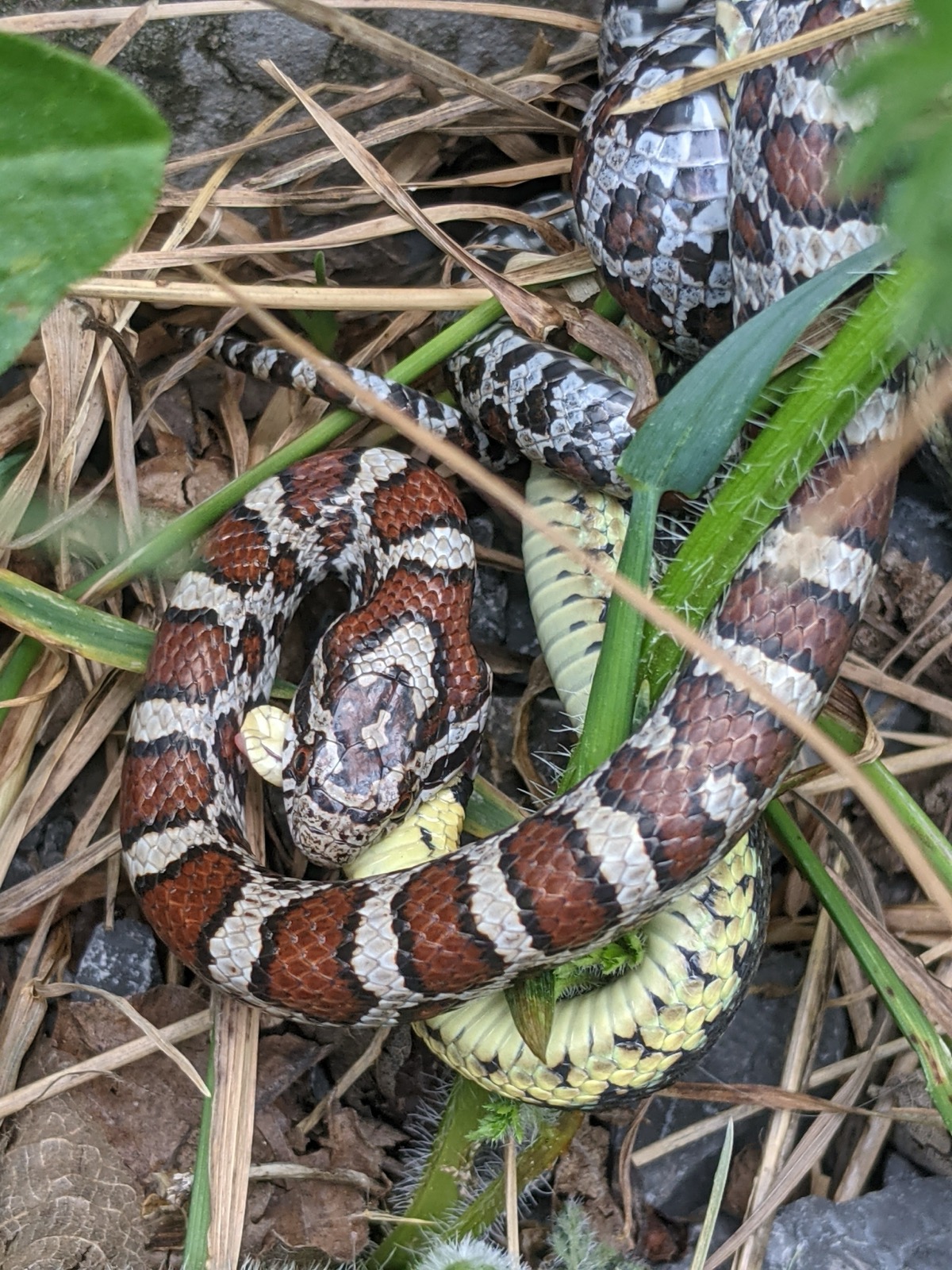
Winter also explains why snakes sometimes turn up in odd places around homes. Foundations, basements, crawl spaces, woodpiles, and wall voids can stay above freezing and offer exactly what an overwintering snake is looking for, which is why harmless species such as milk snakes and rat snakes are often found in these spots during cold months or as they emerge in spring. Finding a snake on a chilly day does not mean it is dying or that something is wrong with it, and it does not mean the snake is aggressive. It usually means the snake was caught between shelters or was drawn to a warm, protected microhabitat. Sealing gaps and clearing clutter in autumn is far more effective than any attempt to deal with snakes once the weather turns.
If you come across a sluggish or motionless snake in cold weather and want to know what it is, keep your distance and take a photo from a safe spot rather than leaning in for a closer look. SerpentID can compare the markings, body shape, and pattern in your picture against the species most likely to occur in your area, which helps you decide whether it is a harmless resident or something that needs professional attention. If the app suggests the snake may be venomous, contact your local wildlife service or a licensed snake catcher and let them handle it. And if anyone is bitten, by a cold snake or otherwise, seek professional medical help immediately.