


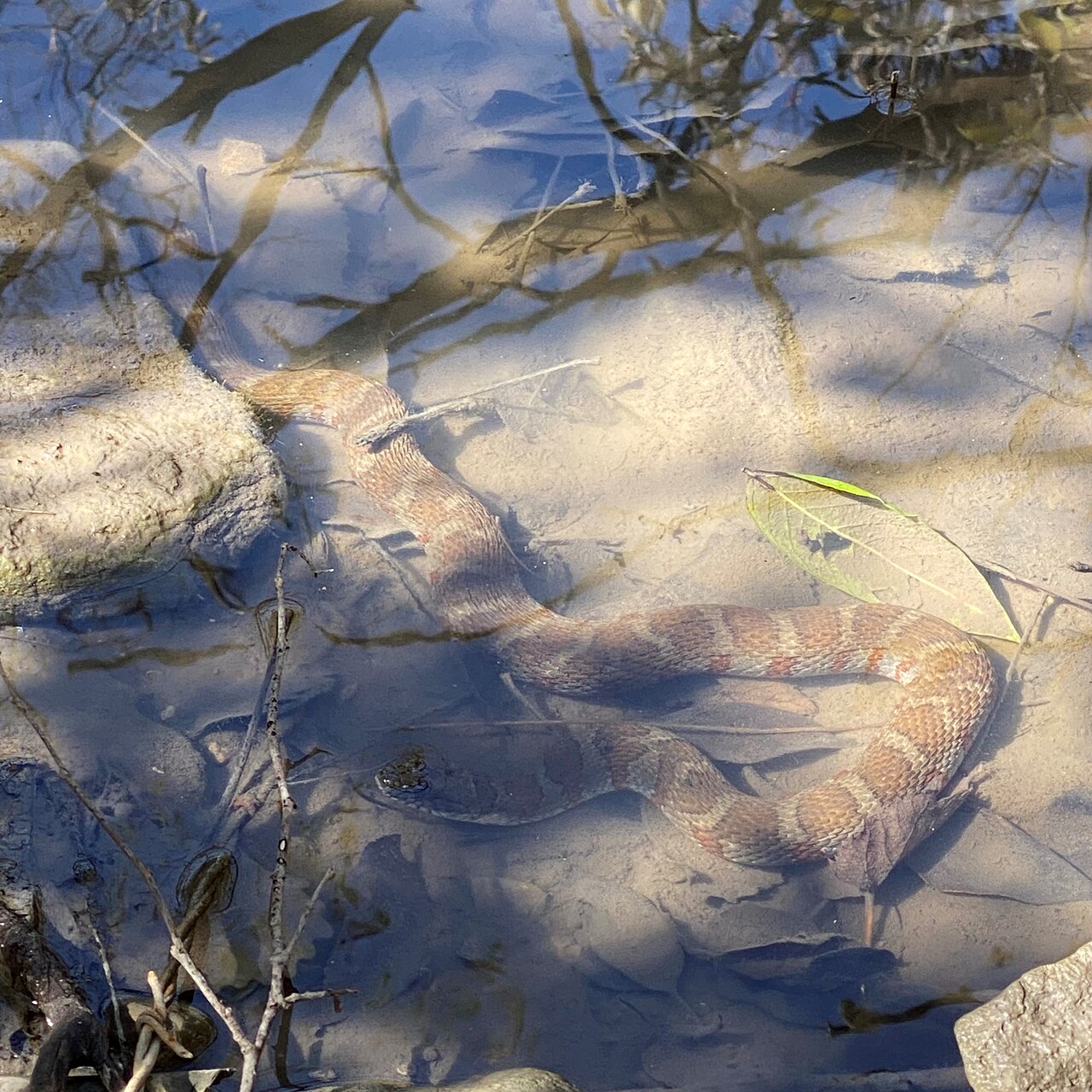
Despite their agility in creeks, lakes, and oceans, all snakes are air-breathing reptiles that rely on lungs rather than gills. This means that, without exception, every snake species can drown if submerged beyond its physical limits. While sea snakes and highly aquatic species like water snakes have evolved remarkable physiological traits to stretch their underwater endurance, they still must return to the surface periodically to exchange carbon dioxide for oxygen.
The primary anatomical barrier to breathing underwater is the simple fact that snakes possess standard vertebrate lungs. When a snake dives beneath the surface, it voluntarily closes its glottis—a muscular valve located at the floor of the mouth that leads directly to the trachea. This tight seal prevents water from entering the respiratory tract while the snake is submerged. As long as the glottis remains firmly shut, water cannot enter the lungs, but the snake is operating entirely on a finite supply of stored oxygen.
To maximize time underwater, aquatic and semi-aquatic species utilize specialized physiological adaptations. Many water snakes can slow their heart rate during a dive, a reaction known as bradycardia, which significantly reduces oxygen consumption by metabolic tissues. Some sea snakes have even evolved the ability to absorb a small percentage of dissolved oxygen directly through their vascular skin while simultaneously expelling carbon dioxide. However, cutaneous respiration in sea snakes only supplements their air supply; it cannot permanently replace atmospheric breathing.
In everyday scenarios, drowning most frequently occurs when snakes become trapped in artificial, steep-sided water bodies. Swimming pools, open rain barrels, sump pump basins, and agricultural livestock tanks often present smooth, vertical walls that prevent snakes from climbing out once they tire. A snake entering a swimming pool may glide across the water effortlessly at first, but as fatigue sets in and it fails to find an easy exit point, it will eventually exhaust its energy reserves, submerge, and drown.
It is also a common myth that snakes can swallow prey underwater without inhaling water into their lungs. When a snake like a cottonmouth or northern water snake captures a fish underwater, it almost always brings the struggling prey to the surface or onto nearby shore before attempting to swallow it. Swallowing requires opening the mouth wide, which breaks the seal around the glottis and leaves the airway vulnerable to flooding if submerged.
If you encounter a snake swimming in a pool, lake, or garden pond, give it space and observe it from a safe distance without attempting to touch or corner it. You can photograph the snake from a secure spot and let SerpentID compare its markings against species native to your region to verify if it is a harmless water snake or a venomous species like a cottonmouth. If the snake appears trapped in a deep pool or container and poses a potential venom risk, contact local animal control or wildlife relocation services to assist safely.