


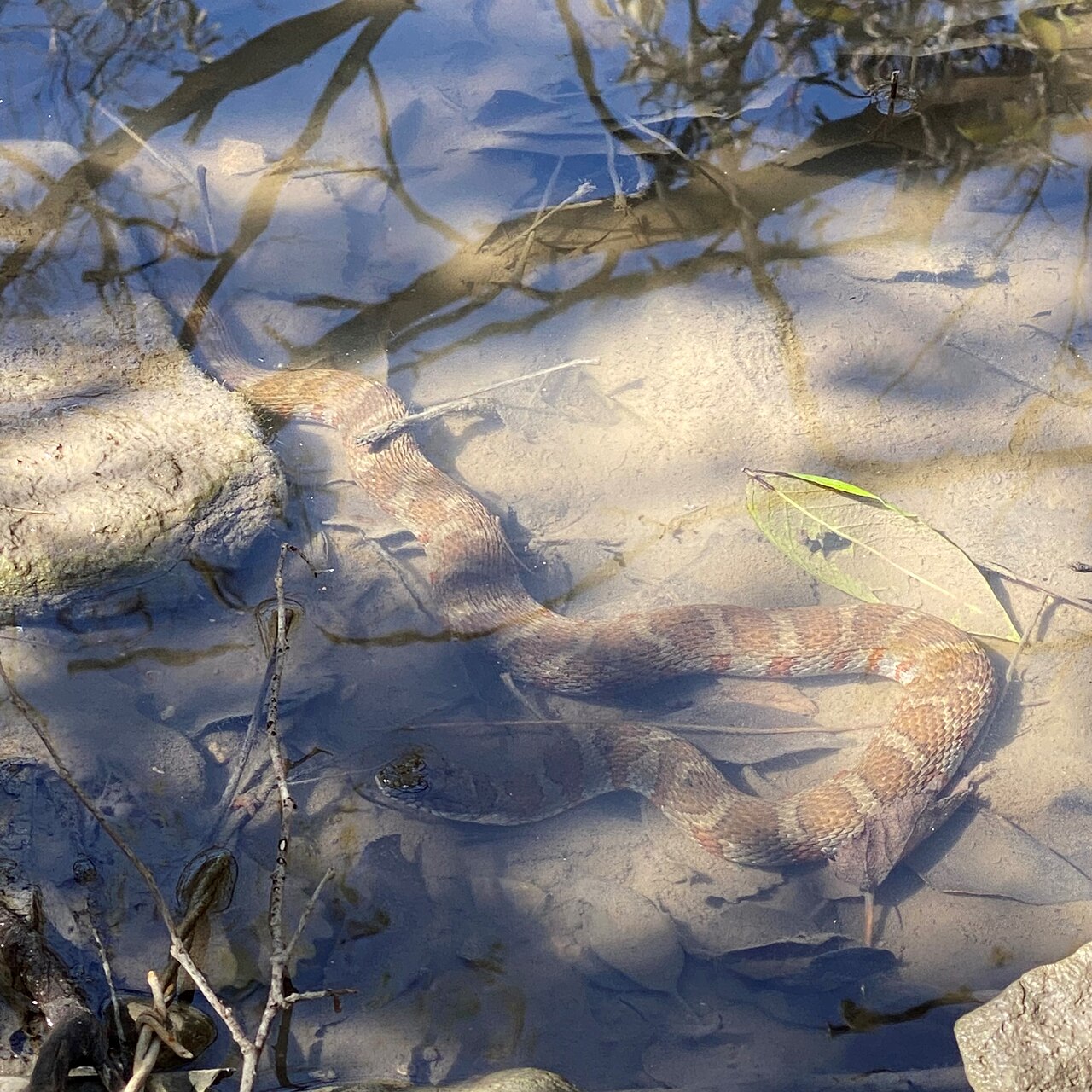
A common misconception among homeowners and outdoor enthusiasts is that only aquatic or semi-aquatic snakes enter the water. In reality, almost every snake species possesses the innate ability to swim and will readily cross streams, ponds, flooded ditches, and swimming pools when searching for food, mates, or new habitat. Because a snake's lungs occupy a large portion of its long body, these reptiles are naturally buoyant. When a land-dwelling snake enters the water, it simply floats effortlessly on or near the surface while undulating its body to propel itself forward.
While true water snakes and cottonmouths are adapted to spend much of their lives near or in water, terrestrial species like garter snakes, rat snakes, racers, and even rattlesnakes regularly cross aquatic barriers. To a land snake, a small river or garden pond is rarely a impassable barrier. They may enter the water deliberately to reach the opposite bank, escape a land predator, or cool down on exceptionally hot days. In many suburban settings, land snakes cross ornamental ponds, drainage channels, or flooded yards simply because the water lies along their normal travel path.
The way a snake moves through water can sometimes offer subtle clues about its habits, though it is not an absolute rule for identification. True aquatic species often swim with their entire body elevated or move with powerful, effortless S-curves, while heavier land species may swim with more of their lower body submerged. However, water conditions, swimming speed, and individual snake size can alter this appearance significantly. Expecting a snake to stay strictly on land or strictly in water often leads to misidentifications, such as mistaking a swimming rat snake or copperhead for a harmless water snake or vice versa.
Recognizing that land snakes cross water is particularly important for property owners along lakes, creeks, or marshes. Seeing a snake swimming toward your dock or lawn does not automatically mean you are dealing with a water-dwelling species or an aggressive animal. Snakes swimming across water are usually intent on reaching the shore to resume foraging or seek shelter under rocks, brush, or decking. Distracting or cornering a swimming snake can make it feel trapped, causing it to display defensive postures once it touches land.
If you spot a snake crossing water on your property or along a trail, give the animal plenty of space to complete its journey safely. To confirm what species you observed, take a clear photo from a safe distance once the snake reaches land or rests near the bank, and let SerpentID compare its markings, head structure, and scale texture against regional species. If you suspect the snake is a venomous species like a copperhead or cottonmouth near a high-traffic family area, keep children and pets away and contact local wildlife management professionals to assist with relocation.