


Anglers, waterfowl hunters, and wetland workers frequently navigate murky streams, marshes, and flooded brush where snakes are active. Wearing chest or hip waders provides essential waterproofing and warmth, but outdoor enthusiasts often wonder if these heavy garments double as effective armor against venomous bites. The short answer is that modern waders offer substantial protection compared to ordinary street clothes, but their defensive strength varies dramatically depending on material construction and the size of the snake involved.
The primary factor in whether a snake can puncture a wader is material density. Heavy neoprene waders, particularly those three to five millimeters thick, create a dense foam barrier that is extremely difficult for small or medium-sized fangs to penetrate completely. Even if a small venomous snake like a young copperhead or juvenile cottonmouth strikes, its fangs are rarely long or rigid enough to pass through thick neoprene and into the skin beneath. Breathable waders made from multi-layer laminate fabrics like Gore-Tex also offer good puncture resistance against sliding brush, but their thin nature means a large viper's strike could potentially push a fang through under direct pressure.
The boot section of your wader system plays an equally critical role in safety. Integrated rubber boots or dedicated wading boots worn over stockingfoot waders offer thick rubber, synthetic leather, or reinforced canvas around the feet and ankles where ground strikes most commonly land. However, unreinforced thin PVC boots or worn-out rubber seams present weak points that sharp, curved fangs can penetrate if compressed directly during an accidental stepping event. Keeping your gear in good repair and choosing models with reinforced lower legs significantly lowers the risk of defensive bites.
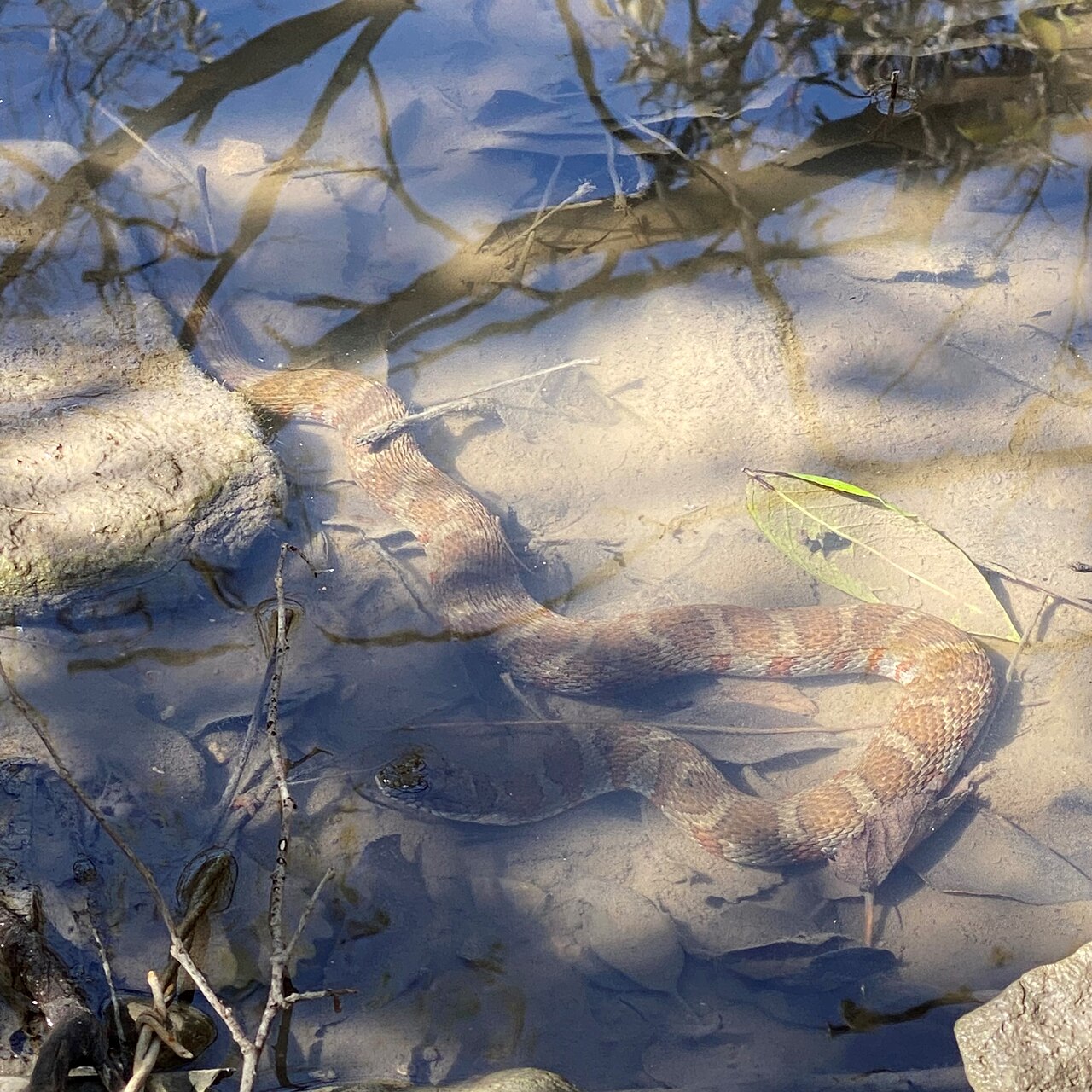
Behaviorally, snakes encountered in aquatic environments rarely attack wading humans deliberately. Species like the non-venomous northern water snake or the venomous cottonmouth typically use water to escape approaching danger, preferring to submerge or glide toward bank cover long before a human reaches them. Defensive bites almost always occur when an angler steps directly onto a hidden snake resting in shallow aquatic weed beds, under submerged logs, or along muddy bank edges where visibility is zero. In those moments, the mechanical layer of a thick wader acts as a crucial buffer between the animal and your skin.
To maximize your safety when wading in snake-prone waters, combine gear selection with situational awareness. Avoid stepping blindly over large fallen logs or into dense mats of floating vegetation where snakes bask or hunt for fish and frogs. When moving through heavy bank brush before entering the water, use a wading staff to test the ground ahead. Wearing thick socks beneath stockingfoot waders adds an extra layer of soft padding that further reduces the chance of a successful puncture.
If you encounter a snake coiled on a bank, resting on low branches overhanging the water, or swimming nearby, stop and give the animal room to retreat. You can safely document the encounter by snapping a quick photo from a safe distance and letting SerpentID evaluate the snake's body shape and markings against local species patterns. Knowing whether you are sharing the marsh with a harmless water snake or a venomous cottonmouth helps you make informed choices while enjoying your time on the water.