


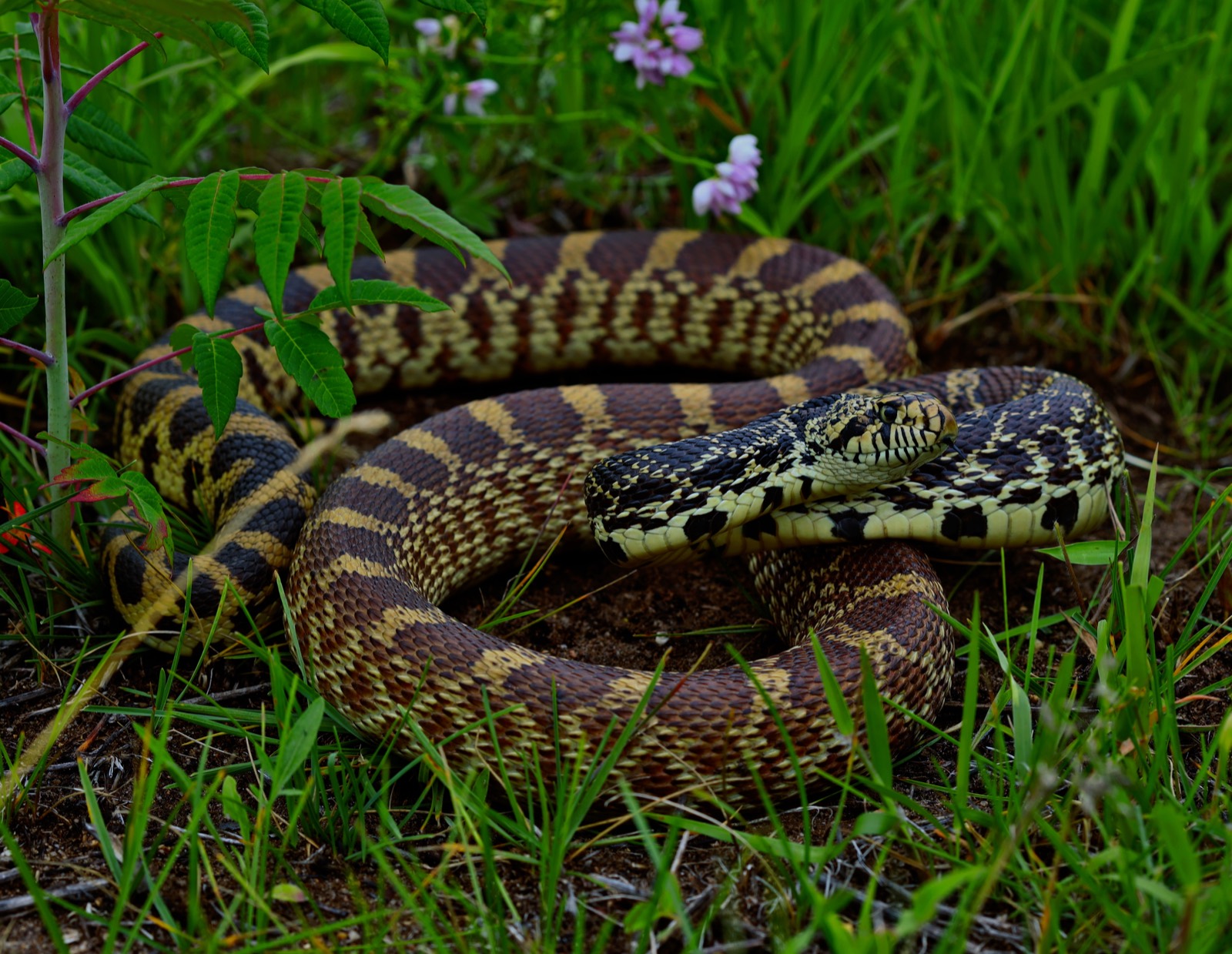
Bullsnake vs rattlesnake is a durable search because the scene is always tense: a large patterned snake in dry country, a yard edge, or a trail crossing, and someone trying to decide whether the next step is simple distance or immediate danger. The mistake is expecting one tail glance to solve a full-body identification problem.
Start with the overall build. Bullsnakes often look longer, more stretched, and more gradually tapered through the body and tail. Rattlesnakes usually give a heavier, more compact impression, especially through the middle, even when only part of the snake is visible in brush or gravel.
Pattern rhythm matters too. Bullsnakes often show a chain of darker blotches that stay clear but feel more open and elongated as they run down the back. Rattlesnakes usually look bolder and more organized, with a heavier dorsal pattern that reads dense and rugged instead of long and drawn out.
Behavior creates a lot of false confidence here. Bullsnakes can hiss, flatten slightly, and vibrate the tail against dry leaves, which is exactly why so many homeowners assume rattlesnake before comparing anything else. Bluffing behavior is useful context, but it is not proof of venomous status.
SerpentID helps when you can safely capture one stable photo showing the full body instead of only the head or tail. If the app still leaves rattlesnake in the top matches, the correct field decision stays conservative: keep distance, block the area for pets and children, and let the snake move off or call local wildlife help.