


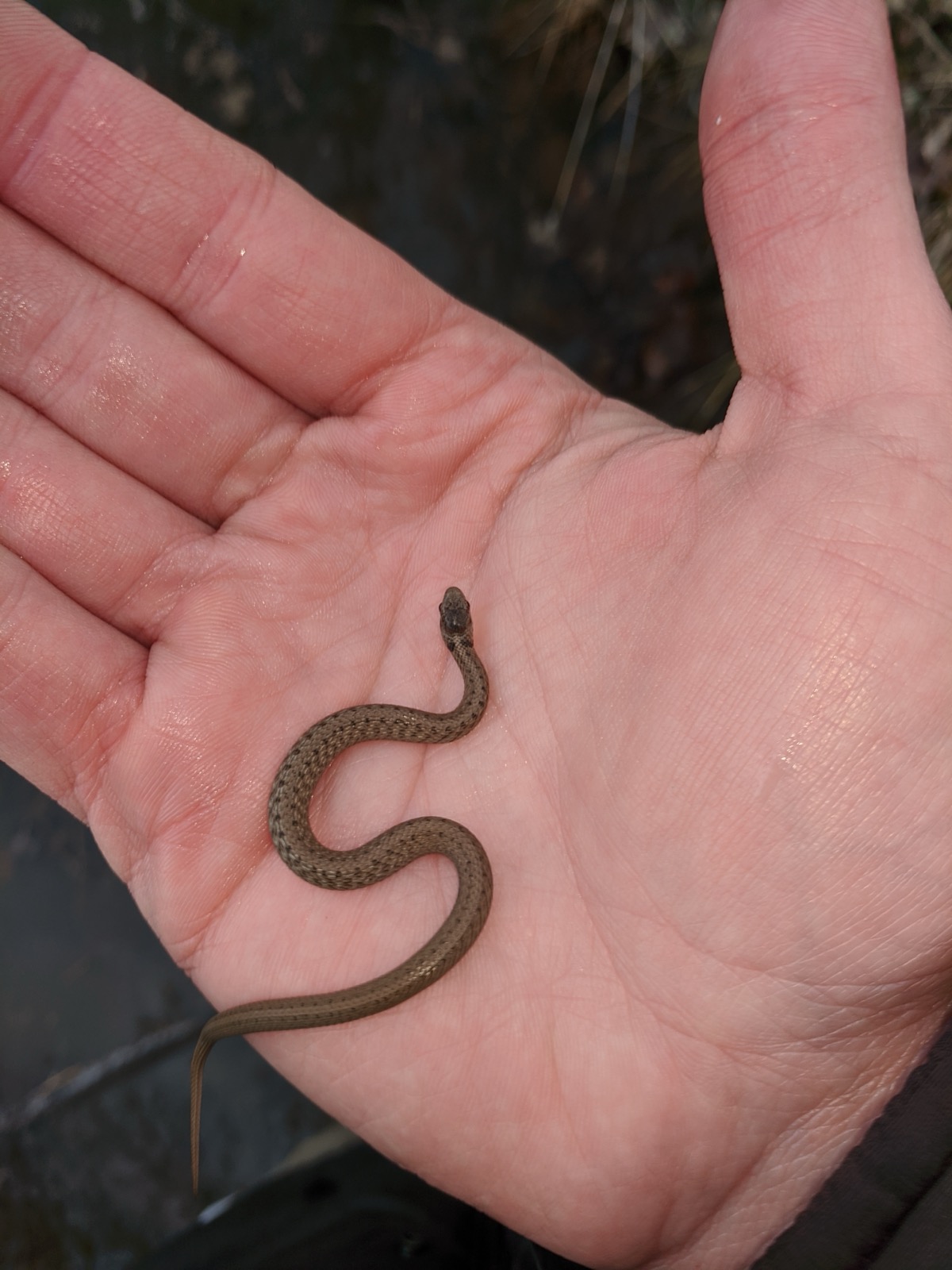
Searches for brown snake vs copperhead usually happen after someone spots a short, earth-toned snake near mulch, garden borders, or a wet backyard edge. The problem is that stress compresses the decision into one vague question: brown equals dangerous or not? That framing is what causes most false alarms.
A safer comparison starts with the whole pattern. Dekay's brown snakes and similar harmless brown snakes tend to read as soft rows of darker spots or a subtle stripe line down the back. Juvenile copperheads usually show much bolder hourglass-style crossbands, with the band narrowing across the spine and widening down the sides.
Body proportions also matter. A small harmless brown snake often looks slimmer and more delicate, especially through the neck and tail. Young copperheads usually keep a stockier midsection, even when the animal is short. That difference is easier to trust than trying to judge head shape from a rushed phone photo.
People often overuse tail color as the deciding factor. Yes, juvenile copperheads can show a yellow-green tail tip, but lighting, leaves, and image processing can make that cue look clearer than it really is. Pattern blocks and body build are more stable markers from a safe distance.
If SerpentID returns copperhead, or if the app cannot separate the possibilities with confidence, the right field decision does not change. Back up, keep pets and children away, and avoid touching or moving the snake. Good SEO answers should still end in good safety behavior, not in false certainty.