


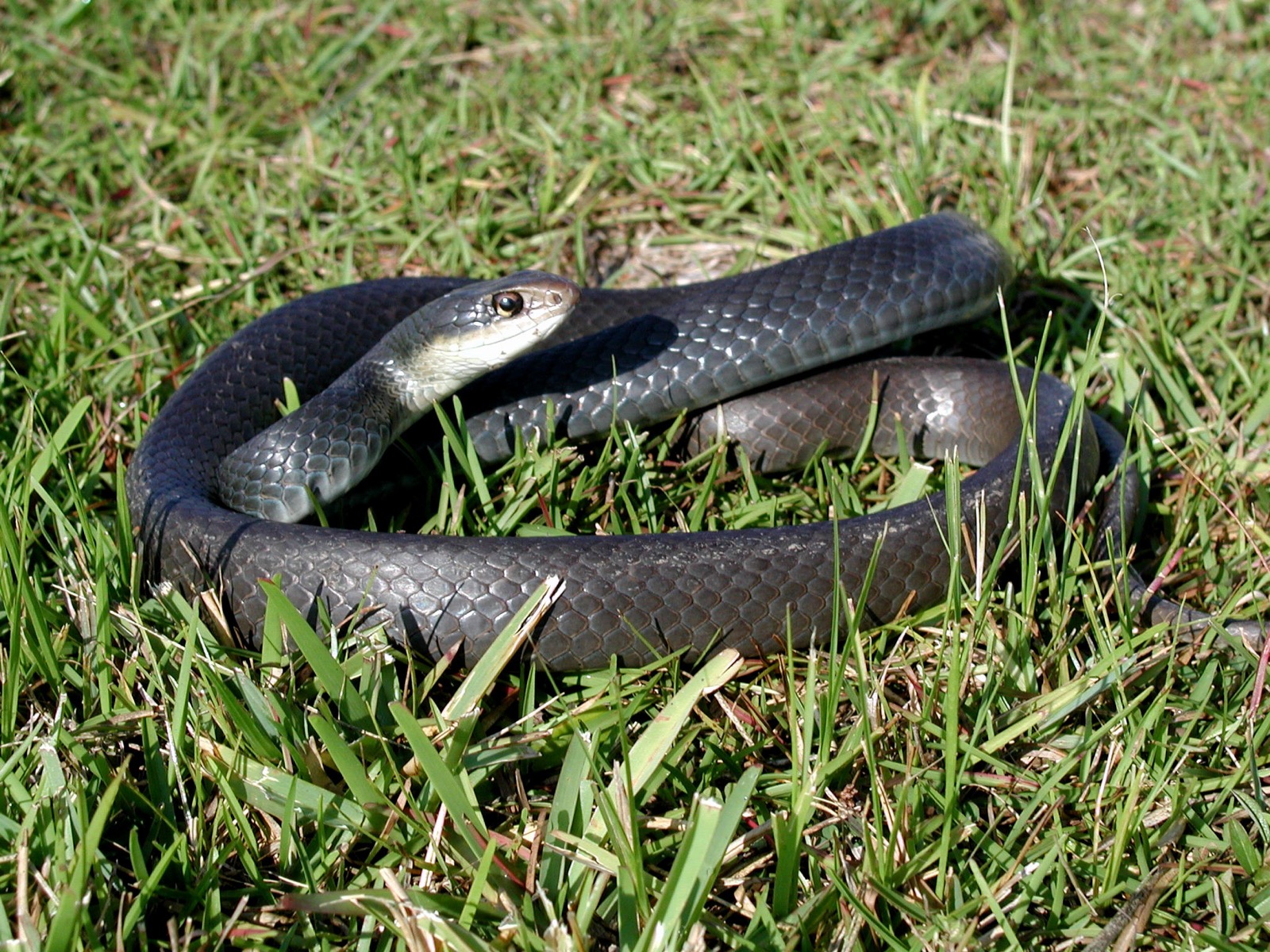
Black snake identification is one of those search terms that sounds precise but is actually broad. In many parts of the United States, people use black snake to describe several harmless species at once, especially black racers and eastern rat snakes. That is why a generic label often creates more confusion than clarity.
Start with posture and movement. Black racers usually look smoother, slimmer, and more athletic in the field. They often appear stretched out and ready to move. Rat snakes more often look heavier-bodied and can hold a more deliberate, anchored posture when they pause near fences, shrubs, or wood piles.
Texture matters too. Rat snakes typically show more visibly keeled scales, which can make the body look slightly rough or matte. Racers usually read cleaner and glossier when the light hits the body well. On a low-quality phone image that difference can disappear, so it helps to compare body shape at the same time.
Location in the yard can be a clue without becoming a shortcut. Rat snakes are famous for climbing and for showing up around sheds, barns, bird feeders, and places with rodent activity. Racers also move through yards, but the overall impression is often a faster, lighter snake crossing open ground rather than holding a thick coiled position.
SerpentID is useful here because it can narrow a broad black snake search into likely species and show you what to re-check. If the app confidence is weak, treat the result as a shortlist, not as proof. The safest homeowner workflow is still distance first, identification second.