


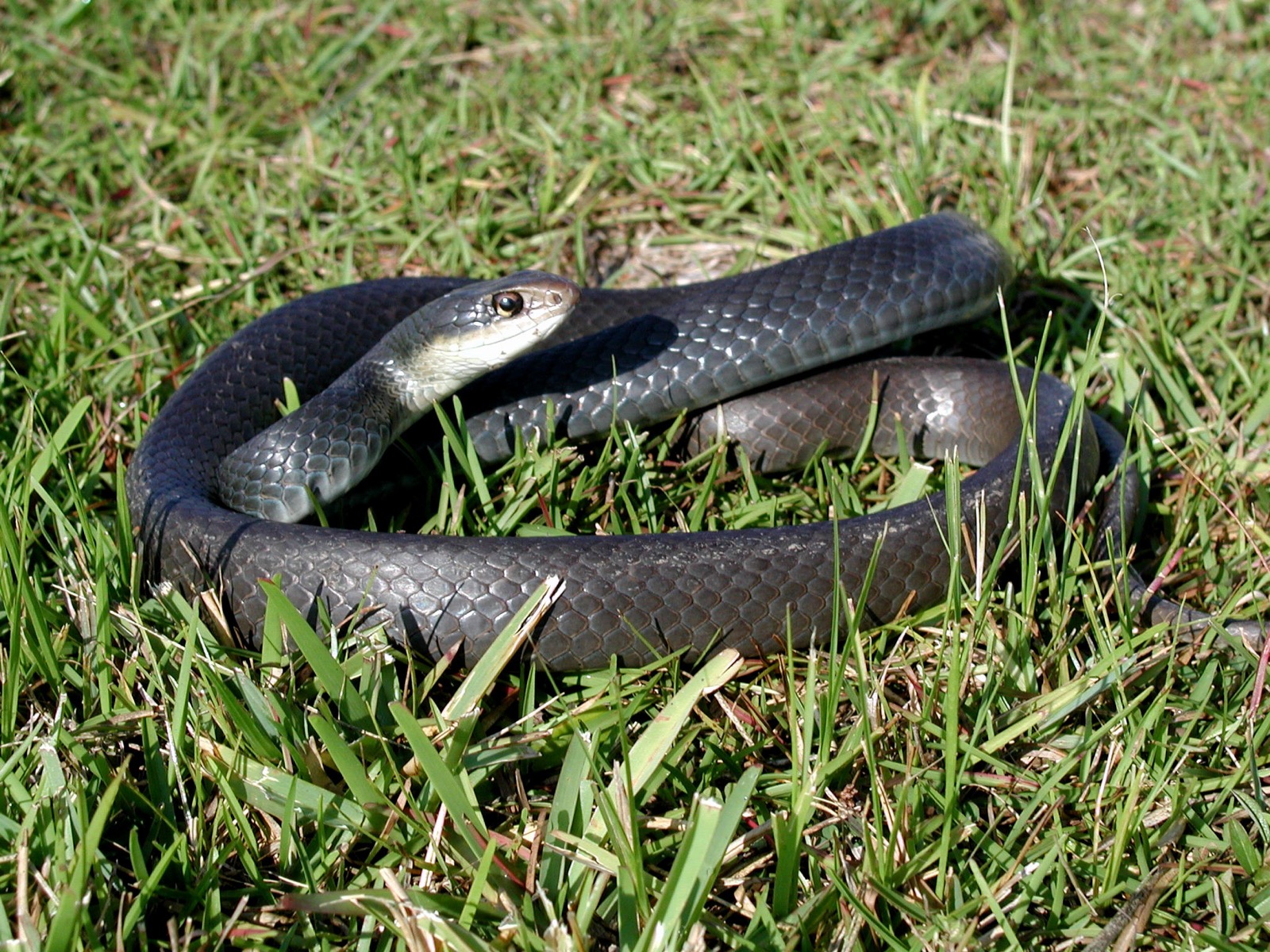
Black racer vs copperhead is a practical homeowner query because many people remember only two things from the encounter: the snake looked dark and it moved quickly. That combination creates panic, but it also points to why whole-body behavior and overall shape matter more than one blurry close-up.
Black racers usually look slim, smooth, and athletic in a way copperheads do not. A racer often reads like a long line pulled tight across the grass, driveway edge, or garden bed. Copperheads usually give a heavier, more anchored visual impression, even when they are moving away.
Pattern visibility is another clue. Adult black racers often look much more uniform and cleaner-bodied, especially in good light. Copperheads keep a strong crossband structure that should still matter from mid-body through tail. If the only thing you can say is dark, you probably do not have enough signal yet to force a call.
Scene context helps too. Racers commonly use open ground, lawn edges, sunny margins, and active movement routes through suburban habitat. Copperhead encounters more often feel tied to concealment like leaf litter, brush, timber, rock edges, and shaded ambush cover rather than a fast exposed sprint.
SerpentID is most useful when you capture one safe full-body photo instead of chasing the head. If the app still includes copperhead in the likely matches, treat uncertainty correctly. Create space, stop traffic through the area, and let the snake clear before you do anything else.