


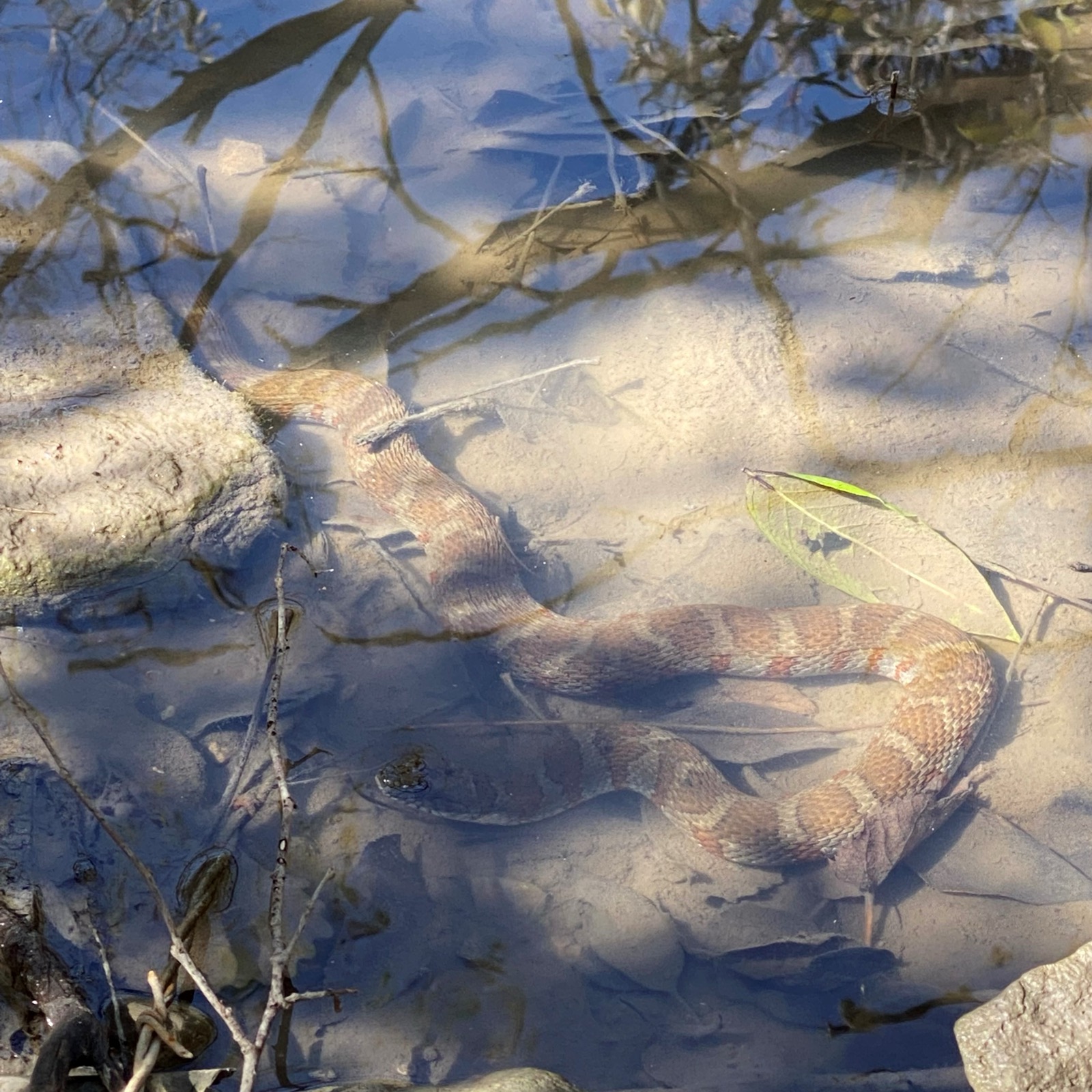
Baby cottonmouth vs water snake is a stressful comparison because both can appear short, patterned, and tied to wet habitat in one quick sighting. Once the snake is small and close to a shoreline, many people jump straight to juvenile cottonmouth even when the image or scene does not support that level of certainty.
Body build is one useful separator. Juvenile cottonmouths usually read thicker and denser through the middle, while young water snakes often look more evenly cylindrical and less heavy-bodied overall. That does not solve the call by itself, but it helps prevent the common mistake of treating every short snake near water as the same risk profile.
Pattern still matters from a safe distance. Young cottonmouths often show strong contrast and cleaner band logic than many water snakes, which can read messier, more irregular, or more broken across the body. People over-focus on the head and miss the larger clue: whether the whole body pattern feels organized or chaotic from shoulder to tail.
Behavior and scene context add signal too. A small snake moving actively along shoreline rocks, dock edges, or emergent vegetation may fit water snake behavior well, while a juvenile cottonmouth can present with a more anchored posture in shallow cover. But context should support the call, not replace the visible body markers.
SnakeSnap helps when the photo captures both the pattern and the shoreline setting without forcing a closer approach. If the app surfaces cottonmouth among the likely matches or confidence is low, treat the scene conservatively. Keep pets and children away from the bank, skip the one-more-photo move, and let uncertainty drive the decision.