


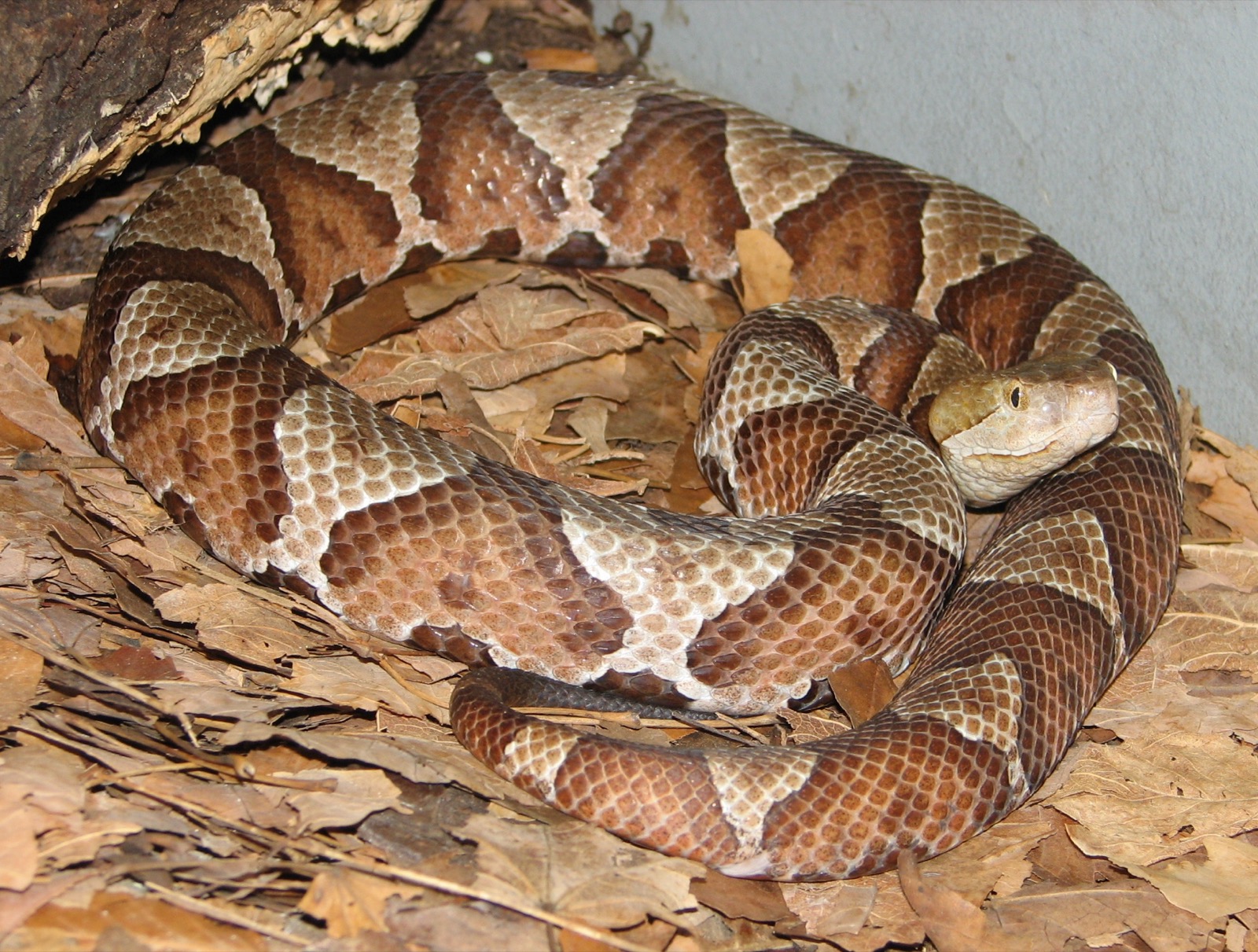
Searches for baby copperhead identification usually happen after a stressful yard or trail encounter. The safest starting point is not to chase a perfect answer. It is to create distance, keep pets and children away, and compare only the markers you can see clearly.
A juvenile copperhead often shows the same hourglass-style crossbands seen on adults, with the narrow part of the band running across the spine and the wider sections dropping down the sides. Corn snakes usually read as blotch-based rather than hourglass-based when you step back and look at the whole body.
People often focus on tail color because young copperheads can show a yellow or greenish tail tip. That can help, but it is not strong enough to use alone. Light conditions, mud, leaves, and camera processing can make tail color look more certain than it really is.
Body build matters too. Copperheads tend to look heavier through the middle than many harmless lookalikes of a similar length. If the photo is unclear, posture and pattern blocks are more reliable than trying to judge the head from one angle.
SerpentID is most useful here when it narrows the comparison set and shows you which markers to re-check from a safe distance. If the result points toward copperhead or confidence stays low, the correct field decision is still conservative: give the animal room and avoid any attempt to move it yourself.