


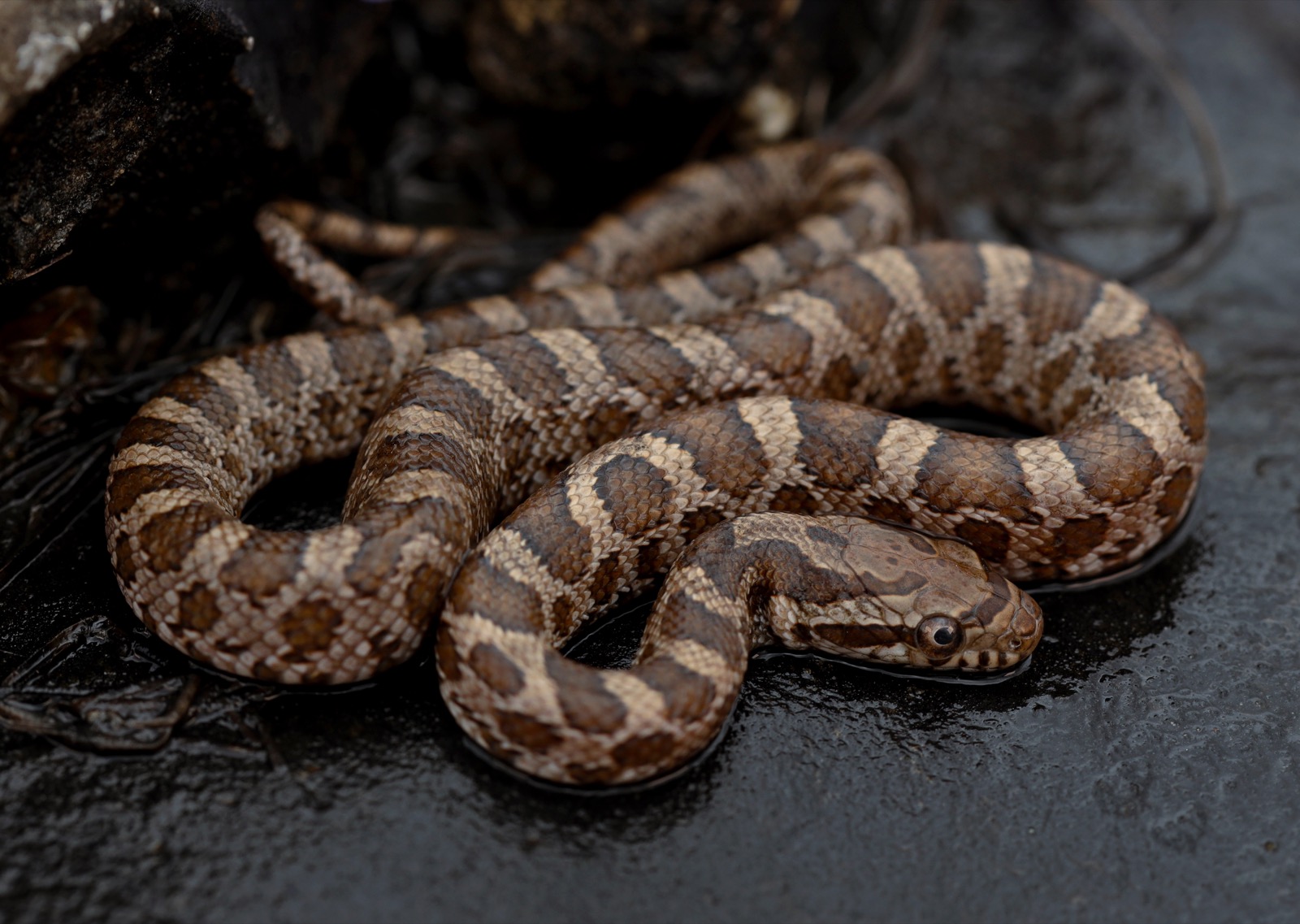
Snakes are indeed reptiles, a classification that might seem obvious to some, but is a common point of curiosity for many. To be precise, snakes belong to the class Reptilia, an ancient and diverse group of vertebrates. This places them alongside more familiar creatures such as lizards, turtles, and crocodiles. The defining features of reptiles, all of which snakes possess, include their characteristic scaly skin, a backbone (making them vertebrates), and their ectothermic metabolism, often referred to as 'cold-bloodedness,' meaning they rely on external environmental sources to regulate their body temperature.
The ectothermic nature of snakes is a crucial aspect of their reptilian identity and profoundly influences their daily lives. Unlike mammals and birds, snakes cannot generate their own significant body heat internally. Instead, they actively seek out warm spots, like sun-drenched rocks or asphalt, to raise their body temperature, a behavior known as basking. Conversely, they retreat to cool, shaded areas or burrows to prevent overheating. This constant thermoregulation dictates when and where snakes are active, making them most visible during periods of moderate warmth and explaining their absence in extremely cold climates.
While sharing the overarching reptilian traits, snakes also possess a unique set of adaptations that distinguish them. Their most obvious characteristic is the complete absence of limbs, a feature that evolved from lizard-like ancestors over millions of years. This limb-loss, coupled with their elongated, flexible bodies, allows for remarkable agility and diverse forms of locomotion, from slithering across land to swimming through water or climbing trees. Their bodies are covered in overlapping scales, which provide protection, reduce water loss, and aid in movement, acting like tiny traction pads.
Reproduction in snakes also aligns with reptilian patterns. Snakes exhibit both oviparous (egg-laying) and viviparous (live-bearing) strategies, with many species laying clutches of leathery-shelled eggs in hidden, warm locations. Other species, particularly those in cooler climates or aquatic environments, give birth to live young. This live-bearing can take two forms: ovoviviparous, where eggs hatch internally and the young are born alive, or truly viviparous, where the mother provides direct nourishment to the developing embryos, much like mammals, though without a placenta.
Snakes have a long and successful evolutionary history, having diversified into over 3,900 known species across nearly every continent except Antarctica. Their ability to adapt to a vast array of habitats, from deserts and rainforests to oceans and mountains, is a testament to the effectiveness of their reptilian body plan. This evolutionary success is built upon fundamental reptilian characteristics, fine-tuned over millennia to produce the incredible diversity of forms and functions we see today.
It is important to dispel common misconceptions about snakes. Despite their sometimes moist appearance (after rain, for example), snakes are not amphibians; they lack the smooth, permeable skin of frogs and salamanders and do not require water for reproduction in the same way. Nor are they worms; snakes possess a complex internal skeleton, including a skull, ribs, and a long vertebral column, which is a hallmark of all vertebrates. Understanding their true classification as reptiles helps to appreciate their unique biology without resorting to folklore or misidentification.
Recognizing snakes as reptiles, with their specific needs and behaviors, is fundamental to safe coexistence. Their reliance on external temperatures means they seek sun in cool weather and shade in hot weather, often bringing them into proximity with human activity. When you encounter a snake, respecting its natural reptilian instincts and maintaining a safe distance is paramount. If you need to identify a snake, take a clear photo from a safe distance and use tools like SerpentID to compare its markings against local species, especially if you suspect it might be venomous. In such cases, contact local wildlife services for assistance.