


Are snakes cold-blooded is a question with a yes answer, but the phrase 'cold-blooded' is a little misleading. Snakes are ectotherms, which means they do not produce their own internal body heat the way mammals and birds do. Their body temperature rises and falls with the environment around them, so a snake's blood is not perpetually cold — it is whatever temperature its surroundings have made it, warm on a sunny rock and cool in the shade.
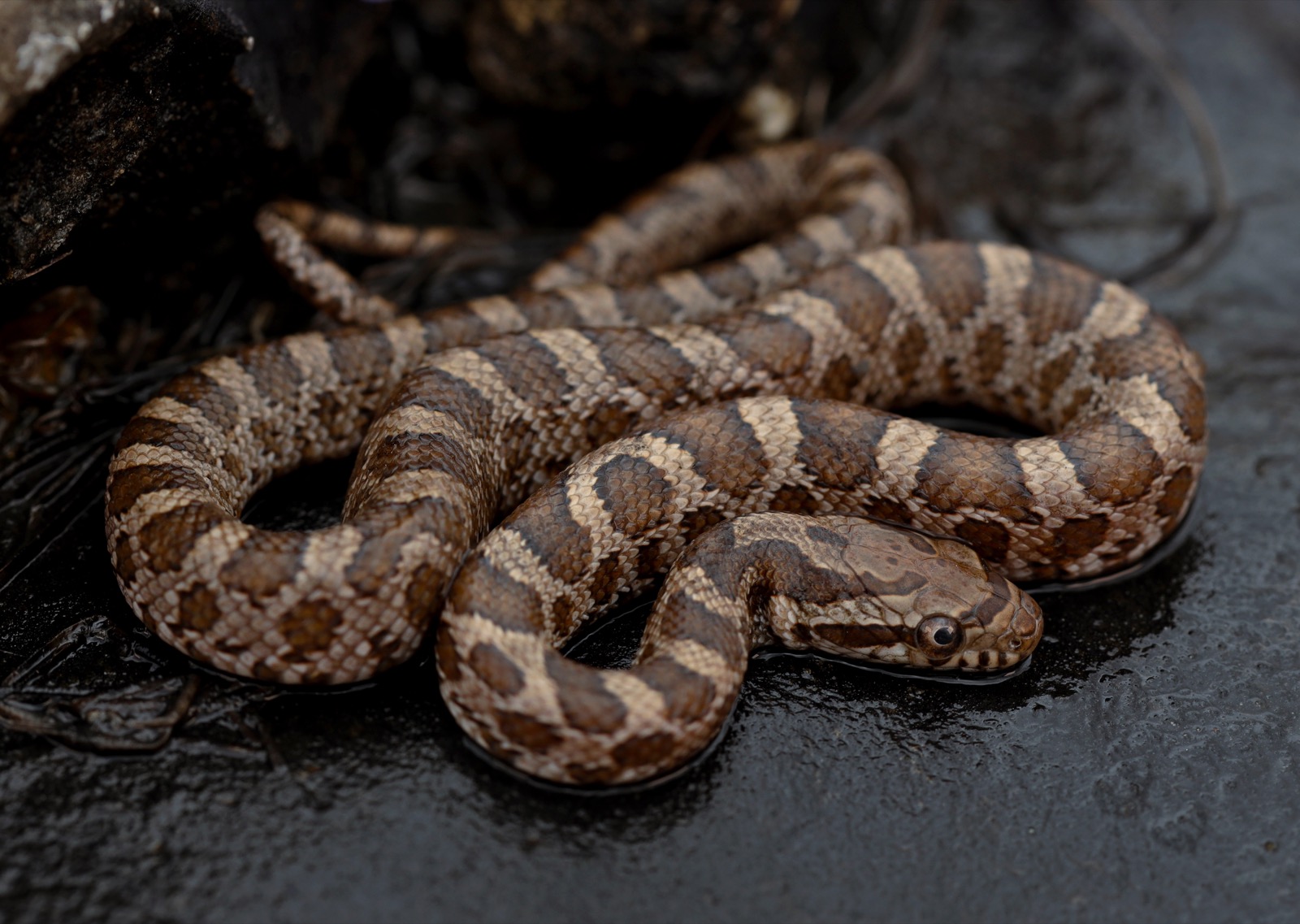
Because snakes cannot burn food to stay warm, they manage their temperature by moving between hot and cool places — a behavior called thermoregulation. A cool snake will seek sun, a warm surface like a road or rock, or a sheltered pocket that traps heat, while a snake at risk of overheating retreats into shade, a burrow, or under cover. Basking, like the rat snake here might do on a warm morning, is not laziness; it is the snake actively raising its body to a working temperature.
This dependence on outside heat is also a huge energy advantage. Not having to spend calories keeping a constant internal temperature is exactly why snakes can survive on so few meals and go weeks or months between them. The trade-off is that a snake is only as capable as its current temperature allows — warm snakes are alert, fast, and able to digest, while cold ones become sluggish, slow to react, and unable to process food well.
Temperature shapes when and where you actually meet snakes. On cool spring and fall days, snakes come out into open sun in the middle of the day to warm up, which is when they are most visible. In the heat of summer they often shift to dawn, dusk, and night to avoid dangerous midday temperatures. And in winter, cold-climate snakes cannot simply tough it out — they enter brumation, a dormant state, and shelter underground until warmth returns.
Being ectothermic has a safety implication worth remembering: a cool, sluggish snake is not a safe snake to approach. It may be slow to flee and slow to warn, but it can still strike if cornered or handled, and its stillness should be read as 'leave me alone,' not 'I am harmless.' A snake stretched out on a warm path or coiled in a sunny spot is simply doing its job of staying alive, and the right move is to give it room.
Knowing that a basking snake is just thermoregulating does not tell you whether it is harmless or venomous — that comes down to the species. If you find one warming itself near your home or on a trail and want to know what it is, photograph it from a safe distance and let SerpentID compare its markers against likely local species, then decide whether to simply step around it or, for a venomous match, keep clear and call local wildlife help.