


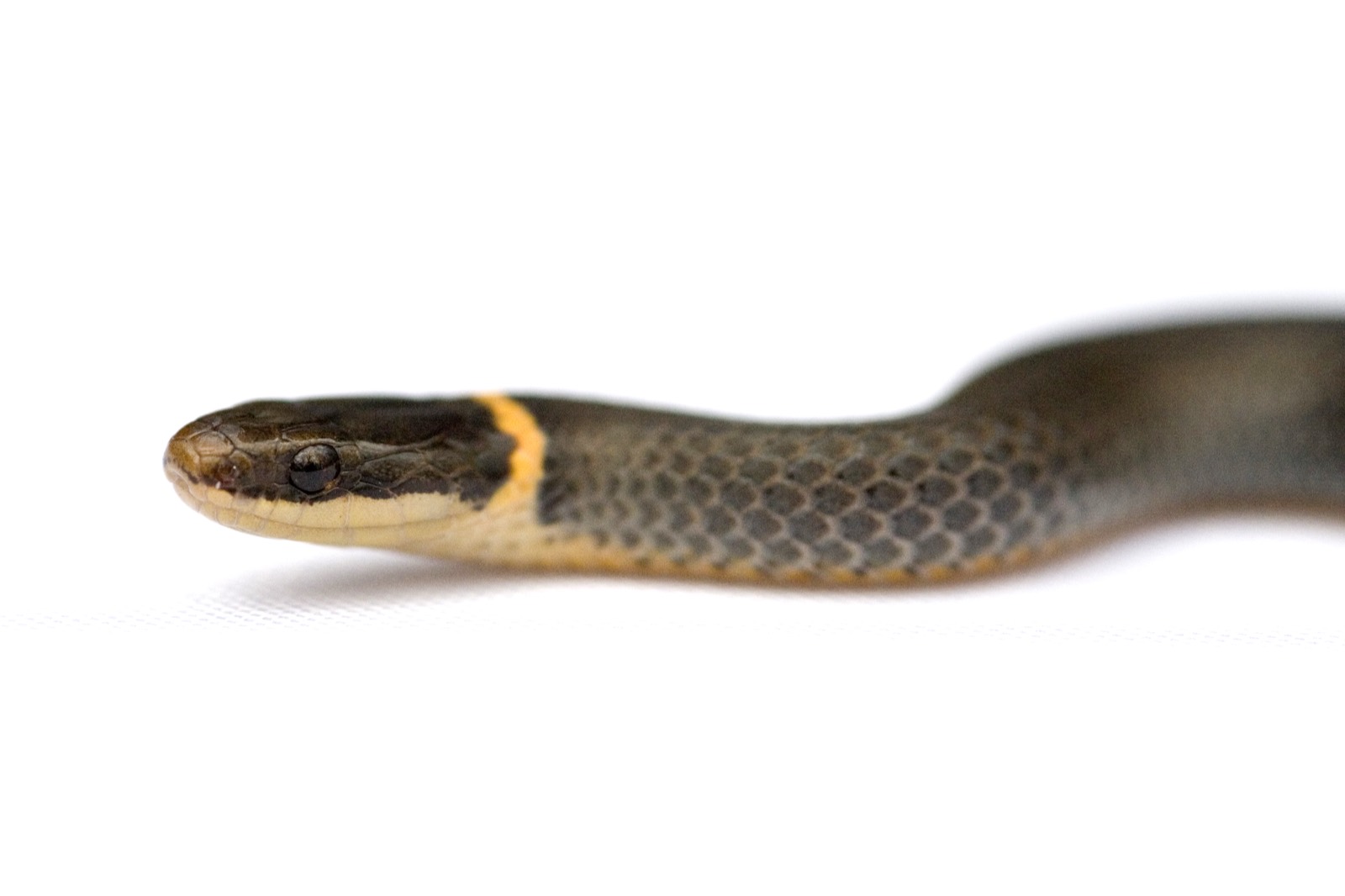
The query are ring-necked snakes venomous usually comes from a simple scene: a small dark snake, a bright collar near the neck, and a homeowner trying to decide whether the yard just became dangerous. What most people need first is not a taxonomy debate. They need a calm, practical safety answer.
Ring-necked snakes are small, secretive snakes that often turn up under logs, stones, garden cover, or damp debris. Their size and the colored neck ring can look unusual enough to trigger alarm, especially if the snake flips or exposes a brighter underside while defending itself.
The safe interpretation is to treat any unknown snake with respect while recognizing that this type of encounter is usually far lower urgency than a viper-style sighting. For children and pets, the rule stays the same: create space first and avoid touching or cornering the animal.
Photo quality matters because small snakes are easy to misread. Muddy light can hide the ring, and dark-bodied harmless snakes can get mislabeled fast when only part of the body is visible. That is why SerpentID works best when you capture the whole snake or at least the head-neck-body transition from a safe distance.
If the app returns ring-necked snake with good confidence, use that as reassurance to keep your response calm, not as permission to handle wildlife. And if confidence is poor, keep the same conservative approach. Good field judgment means respecting uncertainty instead of forcing a label.