


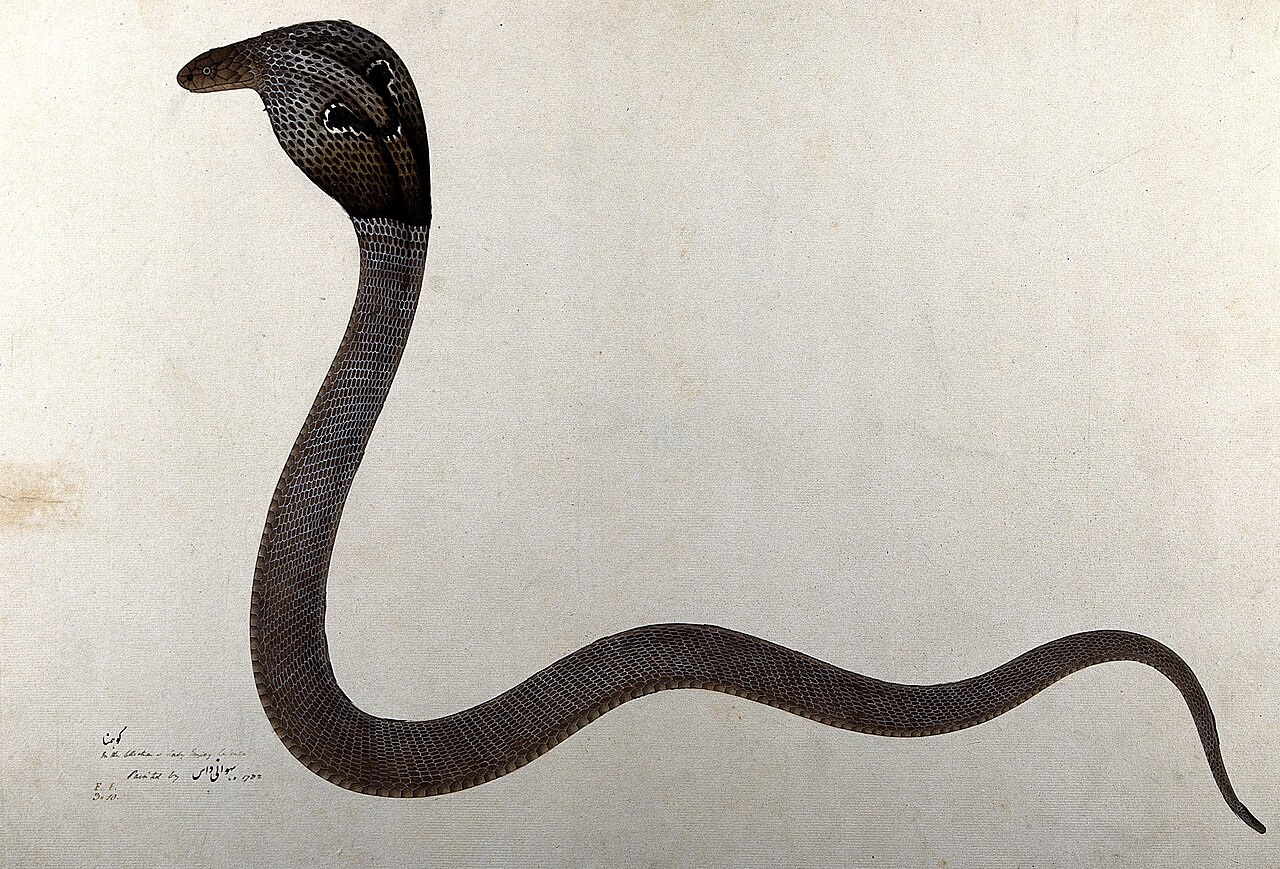
Few animal rivalries are as famous as the mongoose and the cobra. Kipling's Rikki-Tikki-Tavi made it a childhood story, and roadside performances in South Asia once staged it as a spectacle. That fame has produced a common belief that mongooses are completely immune to snake venom. The reality is more interesting and more limited. Several mongoose species, especially the Indian grey mongoose, have real, measurable resistance to certain snake toxins. Resistance is not immunity, though. It is one advantage among several, and it has clear limits.
The best-studied part of that resistance sits at the junction between nerve and muscle. Cobras and many other elapids rely heavily on alpha-neurotoxins. These proteins attach to the acetylcholine receptors that let nerves tell muscles to contract. When the receptors are blocked, muscles stop responding, including the ones used for breathing. Researchers have found that mongooses carry small changes in the shape of this receptor, including added sugar groups at the binding site. These changes make it much harder for the toxin to latch on. The receptor still does its normal job for the mongoose, but the venom's key no longer fits the lock well. Honey badgers, hedgehogs, and some other snake-eating mammals have evolved similar receptor changes on their own, which is a striking example of convergent evolution.
That protection works mainly against neurotoxins. Cobra venom is a mixture, not a single chemical, and it also contains tissue-damaging cytotoxins and other components. Viper venoms such as those of Russell's viper or saw-scaled vipers act mainly on blood and tissue, and receptor resistance does little against them. Reports and laboratory work suggest mongooses can tolerate doses of cobra venom that would kill a similar-sized animal many times over. Even so, a bite that delivers enough venom, or a bite to a vulnerable spot, can still sicken or kill one. Mongooses do die from snakebite, so the word immune overstates the case.
Behavior matters as much as biochemistry. A mongoose facing a cobra relies on fast reflexes and constant movement. It provokes repeated strikes, dodges them, and lets the snake tire. When it gets an opening, it aims for the back of the head or neck. Its long, coarse, bristling fur makes it harder for fangs to reach skin. In the wild, though, mongooses are opportunistic generalists that mostly eat insects, rodents, birds, eggs, lizards, and small snakes. A confrontation with a large adult cobra is risky, and many encounters end with one animal simply leaving. The idea of mongooses seeking out cobras as a favorite prey comes from folklore and staged fights, not field observation. Those staged fights involve captured, stressed animals, and in India both mongooses and snakes are protected under the Wildlife Protection Act, so such performances are illegal.
It is tempting to see the mongoose as natural snake control, but history argues strongly against that. The small Indian mongoose was introduced to Hawaii, several Caribbean islands, and other places in the nineteenth and early twentieth centuries to control rats in sugarcane fields. The results were damaging. The mongooses are active by day while many rats are active at night, so the two rarely met. Instead the mongooses preyed heavily on ground-nesting birds, reptiles, and other native wildlife, and they contributed to the decline or loss of several species. For this reason mongooses are regulated as injurious wildlife in the United States and generally cannot be imported or kept. Australia has no established mongoose populations and keeps strict biosecurity rules to keep it that way. Other mammals with documented venom resistance, such as the Virginia opossum and some California ground squirrels, show that resistance often evolves around specific local snakes. It is not a general shield.
For people, the practical lesson is simple. No animal, product, or trick makes a venomous snake safe to approach, and keeping or attracting predators is not a reliable way to protect a home. If you see a snake you are unsure about, stay well back. Take a photo from a safe distance and let SerpentID compare its markings against the species likely in your area. If it turns out to be venomous, or you cannot rule that out, contact local wildlife services or a licensed snake catcher to deal with it. If anyone is bitten, seek professional medical help immediately.