


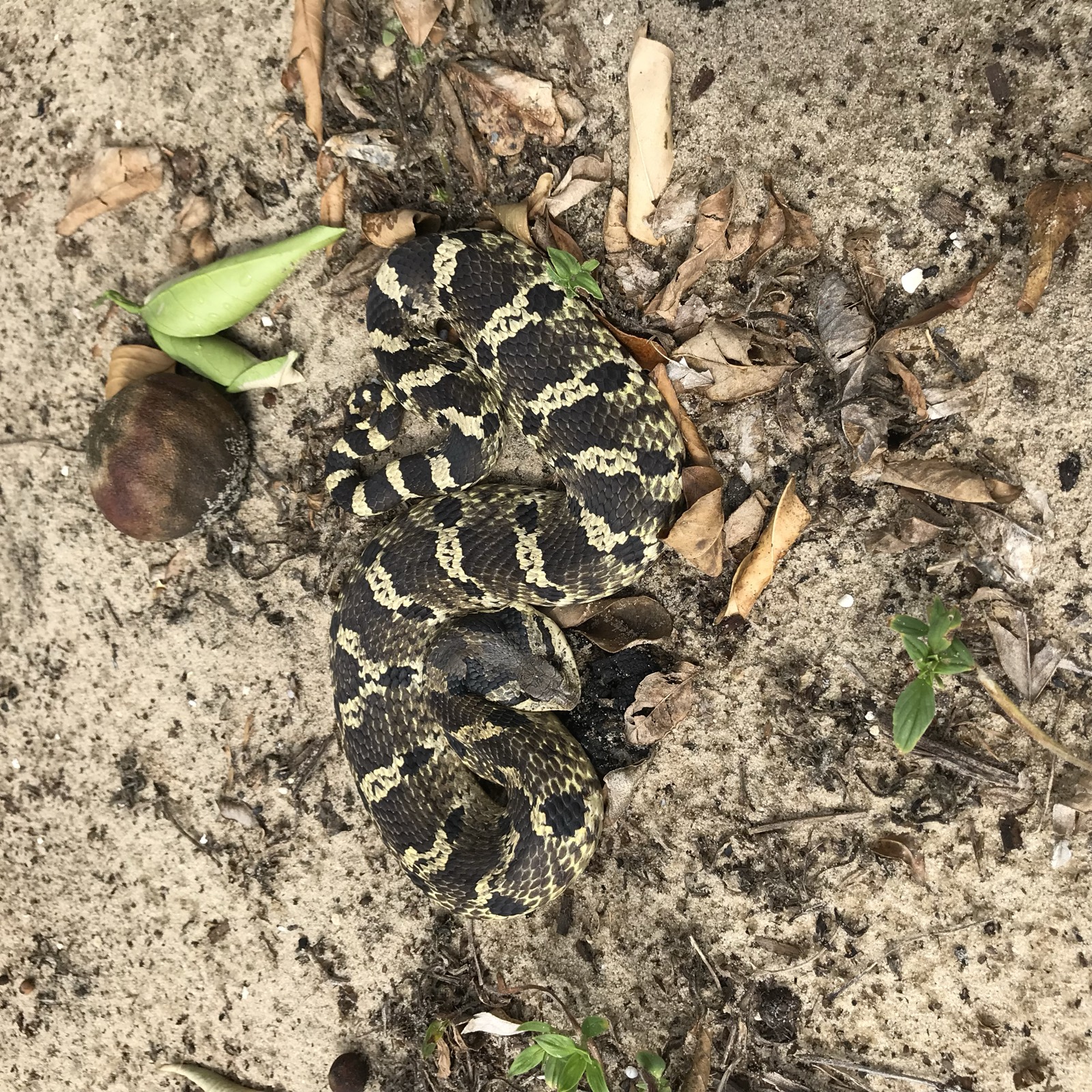
Few North American snakes cause as much alarm as the hognose. When disturbed, it flattens its neck, hisses loudly, and lunges, and plenty of people walk away convinced they met a cobra or a viper. Local nicknames like puff adder, spreading adder, and hissing adder only add to the reputation. The reality is much less frightening. The hognose snakes of the United States, a group that includes the eastern hognose, the western hognose, and the rare southern hognose, are considered harmless to people. Understanding why they look so threatening and what their mild secretion actually does helps you respond calmly instead of reacting out of fear.
The question of venom is where things get nuanced. Hognose snakes have a gland on each side of the upper jaw, often called a Duvernoy's gland, that produces a secretion delivered by enlarged teeth near the back of the mouth. These snakes have no front fangs and no high-pressure venom system like a pit viper's. Herpetologists generally describe hognose secretions as mildly toxic and adapted for subduing prey rather than for defense. Hognose snakes are toad specialists, and the enlarged rear teeth are thought to help them grip toads and possibly deflate toads that puff themselves up with air to avoid being swallowed. So while it is technically accurate to say hognose snakes have a weak venom-like saliva, it is misleading to group them with dangerous venomous species.
Bites to people are uncommon, and the documented cases mostly involve western hognose snakes kept as pets, usually when the snake mistook a hand that smelled of food for prey and chewed for a prolonged period. Reported effects in those cases have been local, such as swelling, redness, bruising, and discomfort around the bite. No human deaths are attributed to hognose snakes. Even so, individual reactions can vary, and anyone bitten by any snake should seek professional medical help immediately rather than assuming the bite is harmless. The far better approach is simply not to handle wild snakes in the first place.
What makes the hognose famous is its defensive theater. When threatened, it first tries to look big and dangerous. It spreads the skin of its neck into a flattened hood, inflates its body, hisses with surprising force, and makes false strikes, often with its mouth closed. If that does not work, it switches strategies entirely. The snake writhes, rolls onto its back, opens its mouth, lets its tongue hang out, and may release foul-smelling musk and even a little blood from the mouth. If someone flips it right side up, it often rolls back over, as though insisting it is dead. Once the threat leaves, it slowly rights itself and crawls away. This bluff is the snake's main defense, and biting is rarely part of it.
That performance is exactly why hognose snakes are so often misidentified. Their thick bodies, blotchy brown, tan, or yellow patterns, and widened heads during a display can resemble a copperhead or a young rattlesnake, especially in leaf litter or sandy soil. Some eastern hognose snakes are almost entirely black or gray, which adds more confusion. A helpful clue is the sharply upturned, shovel-like scale at the tip of the snout, which the snake uses to dig in loose soil while hunting toads. Still, color and posture alone are not reliable enough for a confident call, and folk rules about head shape or behavior can easily lead you astray. It is worth noting that hognose snakes in this sense are found only in North America; snakes called hognose in South America and Madagascar belong to different groups, and readers in Australia and India will not encounter Heterodon in the wild.
Because so many hognose snakes are killed by people who mistake their bluff for aggression, a moment of careful observation matters. Stay back, give the snake room, and let it finish its act and move on. If you want to know what you are looking at, take a photo from a safe distance and let SerpentID compare the markings, snout shape, and body pattern against the species likely to occur in your area. If the result points to a copperhead, rattlesnake, or another venomous species, or you are unsure and the snake is near your home, contact local wildlife services or a licensed snake removal professional rather than trying to move it yourself.