


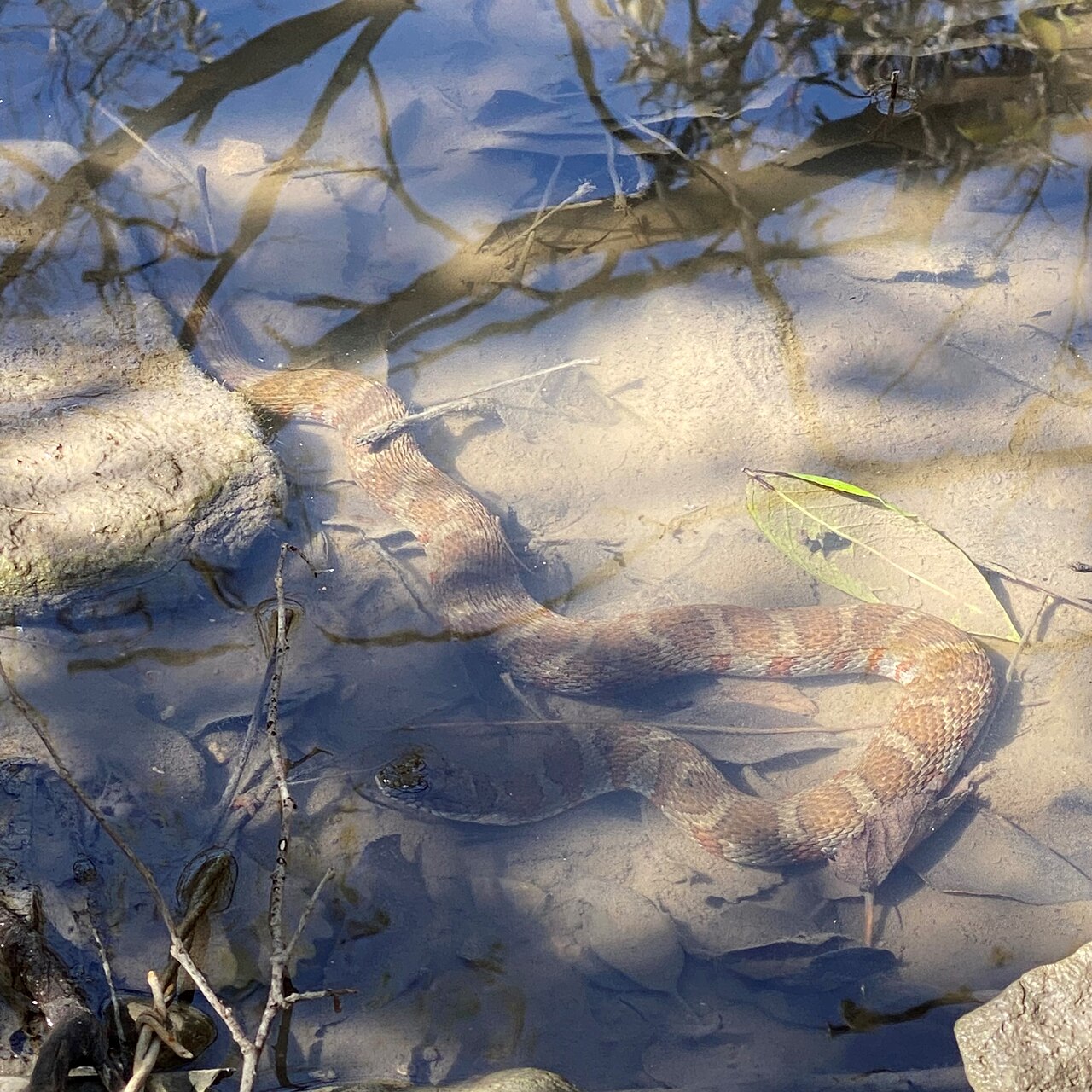
Few snakes in the United States carry a fiercer reputation than the cottonmouth, also known as the water moccasin. Stories describe moccasins chasing swimmers, dropping into boats, and attacking anglers for no reason. Cottonmouths are venomous pit vipers, and a bite is a genuine medical emergency, so caution is fully justified. But the idea that they actively seek out people does not hold up well when researchers watch how these snakes actually behave. The more useful picture is of a heavy-bodied, fairly slow snake that prefers to avoid trouble and uses intimidation rather than pursuit to protect itself.
Cottonmouths are found across the southeastern United States, from southeastern Virginia through Florida and west into eastern Texas, with populations reaching up the Mississippi River valley into southern Illinois. Scientists currently recognize two species, the northern cottonmouth and the Florida cottonmouth. They live in swamps, marshes, slow streams, ponds, drainage ditches, and wooded wetland edges, and they eat fish, frogs, other snakes, small mammals, birds, and even carrion. Because they share habitat with fishermen, kayakers, hunters, and lakeside homeowners, encounters are common, which helps explain why so many stories circulate about them.
The best-known field test of cottonmouth temperament was carried out by researchers at the Savannah River Ecology Laboratory in South Carolina, who recorded how wild cottonmouths responded when a person approached, stood next to them, and stepped near them with protective boots. Most snakes tried to escape or held their ground with threat displays, and very few struck at the boot. Bites became noticeably more likely only when the snake was physically grabbed and lifted with a mechanical tool. That pattern matches what herpetologists see repeatedly: cottonmouths bite when they are touched, pinned, or trapped, not because a person merely came near.
Part of the reputation comes from the cottonmouth's defensive display, which is dramatic. Instead of fleeing immediately, a disturbed cottonmouth may coil, draw its head back, vibrate its tail, release a strong musky odor, and open its mouth wide to show the bright white lining that gives the species its name. To a startled person this looks like a snake preparing to attack, but it is a warning meant to make a predator back off. A snake that stands its ground is not advancing. If you step away, the encounter almost always ends there. Reports of cottonmouths chasing people usually describe a snake fleeing toward water or cover that happened to be behind the person, which is the same misreading that fuels stories about other species.
Mistaken identity is the other big factor. Across the Southeast, harmless water snakes in the genus Nerodia are far more frequently seen than cottonmouths and are routinely called moccasins. Water snakes often bask on branches over water, drop into the water when disturbed, and will bite readily and repeatedly if grabbed, which feeds the legend of aggressive moccasins falling into boats. Some clues help separate the two, such as the cottonmouth's thick body, blocky head with a dark stripe through the eye, and tendency to swim with much of its body riding high on the surface, but none of these traits is foolproof from a distance, especially with dark adult snakes or patterned juveniles. Treat any thick-bodied snake near water in cottonmouth range with caution until it is reliably identified.
None of this makes a cottonmouth harmless. Their venom can cause severe pain, swelling, and tissue damage, and anyone bitten should seek professional medical help immediately. Deaths are rare in the United States thanks to modern medical care, but a bite can still lead to lasting injury. The practical lesson is that distance prevents nearly every bite. Watch where you step along shorelines and in tall marsh grass, use a light when walking near water at night, look before reaching into brush piles, docks, or boat storage, and never try to pick up, move, or kill a snake you suspect is a cottonmouth. Most bites in the United States happen when people try to handle or harm snakes.
If you come across a snake near a creek, pond, or wet yard and are not sure what it is, stop, give it plenty of room, and take a photo from a safe distance rather than moving closer for a better look. SerpentID can compare the head shape, pattern, and body proportions in your photo against the snakes most likely to occur in your area, helping you tell a harmless water snake from a cottonmouth. If the result points to a venomous species and the snake is near a home, dock, or play area, contact your local wildlife services or a licensed snake removal professional rather than dealing with it yourself.